





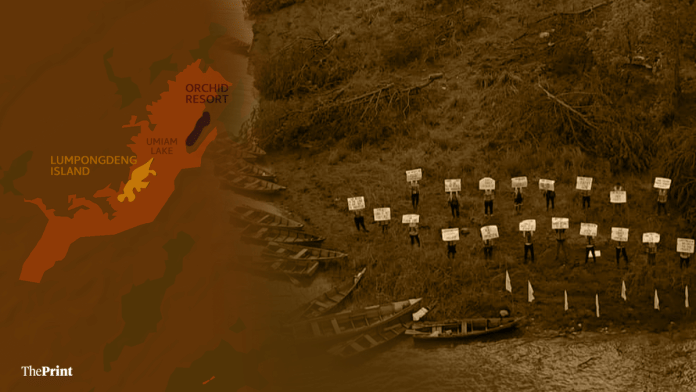

Shillong: Strong pushback from environment groups, civil society and local residents has prompted the Meghalaya government to scrap part of a Taj resort and spa project planned around Shillong’s famous Umiam Lake.
The government has announced that it was excluding one of the two locations for a proposed five star resort to be developed by India Hotels Company Limited (IHCL), which owns the Taj brand.
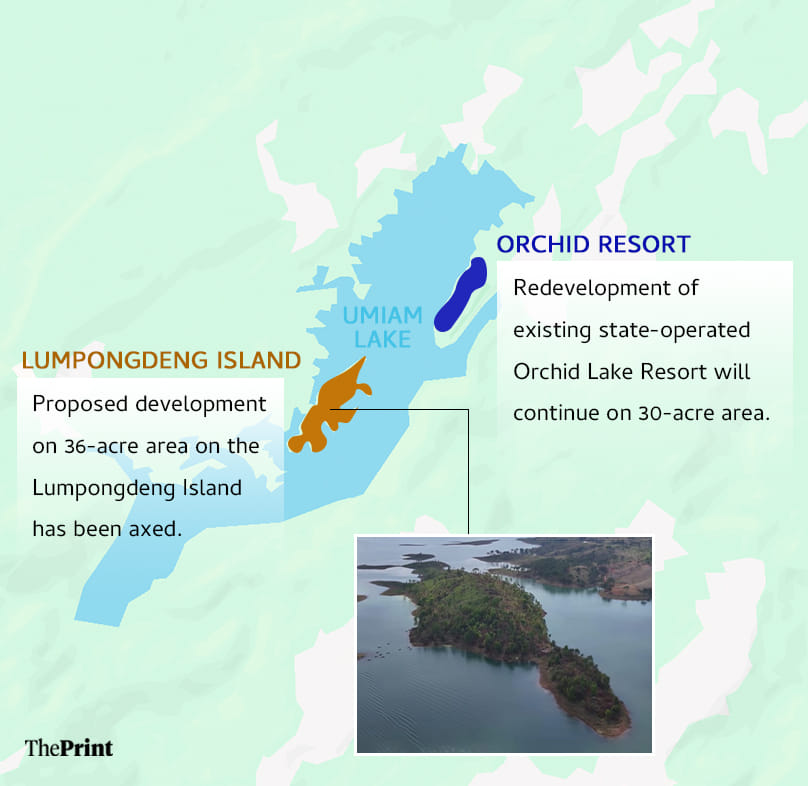
In December 2025, the Meghalaya Tourism Department allotted 66 acres for the two-part project. This included a 30-acre redevelopment of the state-run Orchid Lake Resort on the Umiam Lake waterfront, and a 36-acre development on Lumpongdeng Island, envisaged as a limited, sustainable tourism facility.
According to initial plans, the lakefront redevelopment on the mainland would have served as the primary resort, from where guests could have been taken by boat to Lumpongdeng Island for special events and functions.
When the project was announced, Chief Minister Conrad Sangma had said that it would be a sustainable high-end tourism complex. The project is part of the state government’s tourism plan to promote a mix of luxury projects and affordable homestays.
The land lease—for 60 years—was handed over to the Umiam Hotels Private Limited, the Special Project Vehicle set up to execute the project. Subsequently, Umiam Hotels Private Limited signed a Memorandum of Understanding with the India Hotels Company Limited to develop the resort and spa.
Located on the outskirts of Shillong, the Umiam Lake is a 10-square kilometre waterbody created in the 1960s, when the Umiam River was dammed as part of the Umiam hydroelectric project. The lake submerged a section of the surrounding hills creating ‘artificial islands’ including the one in Lumpongdeng.
Umiam Lake has since emerged as a picturesque tourist location, with some state and privately-operated resorts. Together with the adjoining Riat Khwan reserve forest, it also forms a vibrant ecosystem, especially for migratory birds.
The area already has some well-known resorts overlooking the Umiam Lake, including the 45-acre Ri Kynjai Resort (which also has a spa), and the La Nicholas Lake View (by Summit Hotels).
ThePrint has reached Kirti Dhingra, Vice-President, Corporate Communications, at IHCL for comment via a detailed email sent on 1 and 12 May. The report will be updated if and when a response is received.
Also Read: India’s ‘cleanest village’ Mawlynnong banned tourists on Sunday. Villagers need a break
The controversy
The latest project courted controversy right from the outset. Public opinion was especially divided over the inclusion of the Lumpongdeng Island in the project.
Several local NGOs felt the project would be ecologically disruptive, even as they questioned the need for a 60-year lease period.
Opposition Voice of the People’s Party (VPP) claimed that such projects largely benefit ‘outsiders’ while most locals are restricted to entry-level roles. The government has pointed out that the two existing luxury hotels in Shillong—The Vivanta Meghalaya by Taj and Courtyard by Marriott—employ 130 local staff out of a total workforce of 268.
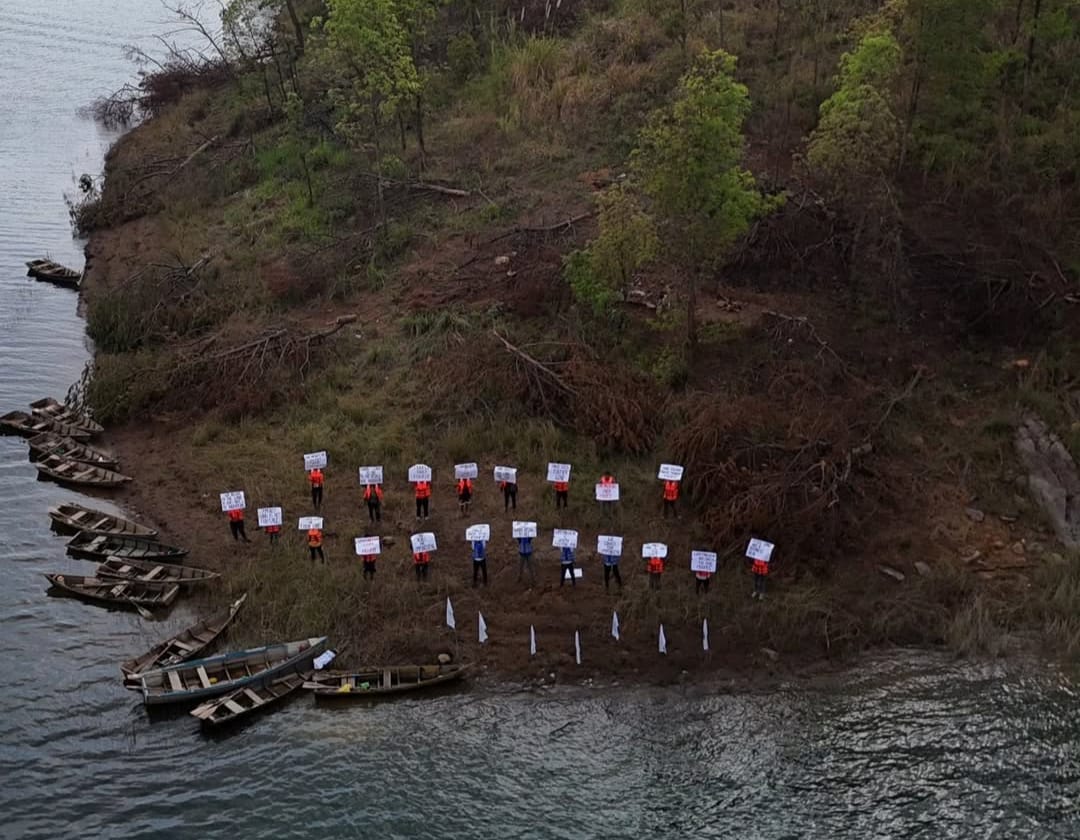
Spearheading the protest was the Green-Tech Foundation (GTF), an environmental NGO, which called for the Lumpongdeng Island to be excluded from the five-star resort project on ecological grounds.
GTF argued that the proposed development would entail “tree feeling, noise pollution, and soil dumping” which would pollute the lake and disrupt the island’s ecology.
The NGO’s concerns also reflect how Umiam Lake’s ecosystem has already been affected by Shillong’s urban expansion, with a government committee in 2022 observing how much of the city’s untreated wastewater flows into the lake.
The state government had previously passed the Meghalaya Waterbodies (Preservation and Conservation) Guidelines, 2023 which prohibits unregulated construction and untreated sewage discharge into the state’s waterbodies.
The government initially assured the public that while these guidelines allowed for regulated construction activities on the 33-acre island, the proposed project would further include “rigorous measures for biodiversity conservation” guided by IHCL’s established track record of sustainable tourism.
With the government not relenting, GTF chairman Bansiewdor Nonglang went on a hunger strike on 9 April in Shillong’s Malki ground, attracting support from several civil society groups and opposition parties.
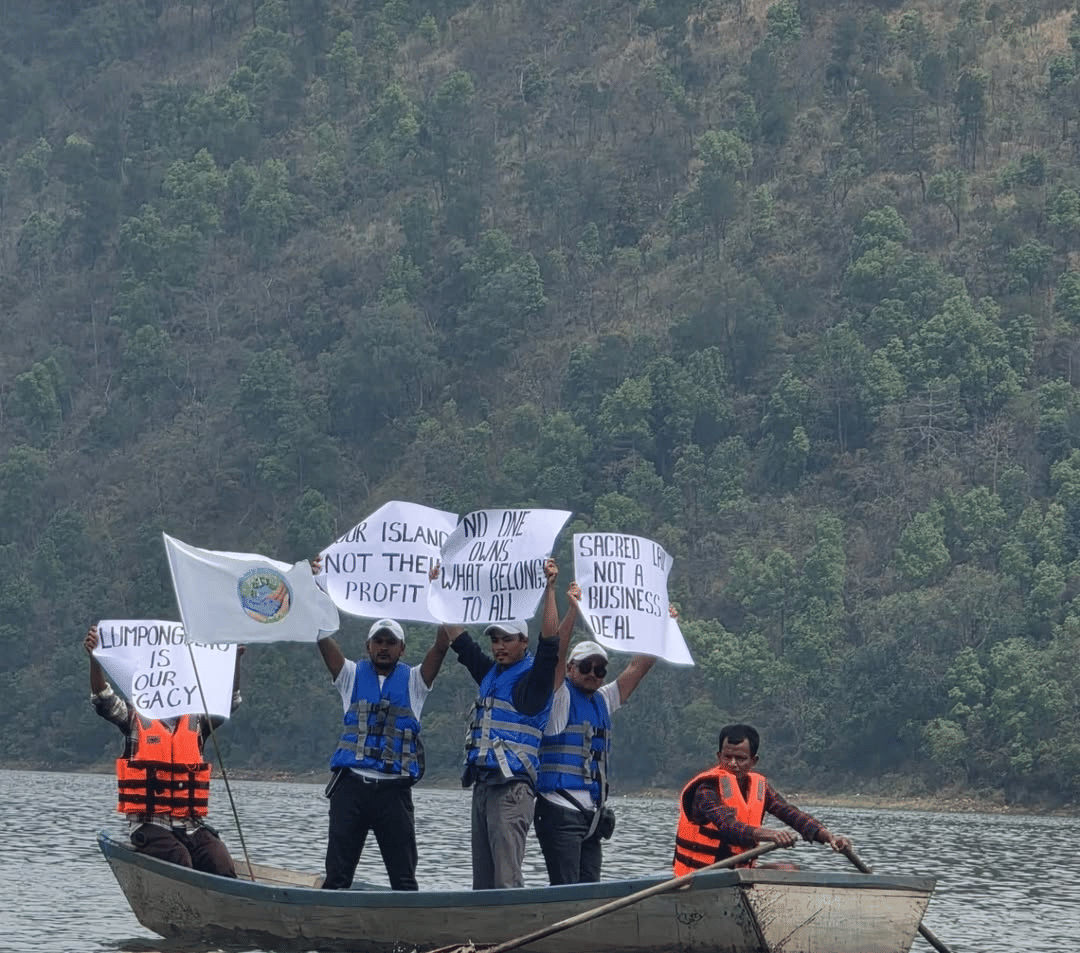
The relentless pressure from the NGO and opposition parties forced the state government to accept their demands. The government announced on 20 April, it was excluding the Lumpongdeng island from the project.
Not all naysayers
The resort and spa project is part of the state government’s ambitious Rs 3,914-crore plan to develop 254 tourism infrastructure projects in the state.
According to Timothy D. Shira, Meghalaya tourism minister, once complete, the proposed resort and spa would have generated revenue to the tune of Rs 1,982 crore for the government over the 60-year lease period.
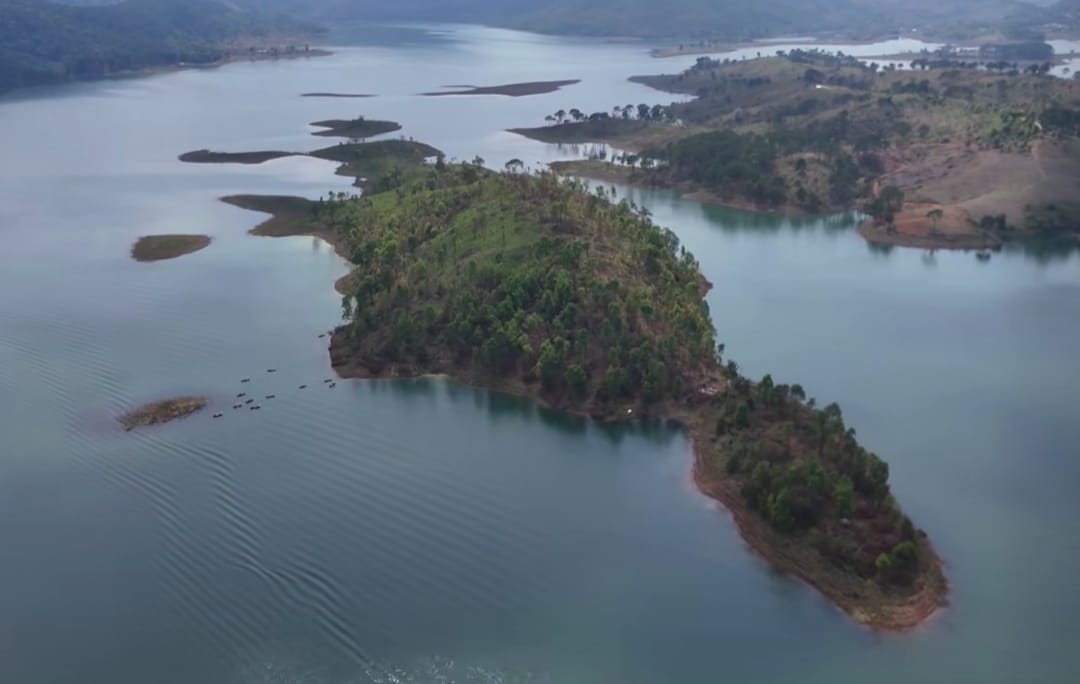
Supporters of the project also argue that the Taj brand name would foster a sustainable tourist economy, boosting local employment, organic supply chains, and water-sports tourism.
The Lumpongdeng Island was an important component of this vision. Speaking to ThePrint, Vijay Kumar, Meghalaya commissioner and secretary, Department of Tourism, said, “The island would have added a special attraction to the project; it would have made it one of the best properties in India.”
Kumar added that since the beginning, the government made it clear that only temporary structures like stalls and pandals would be erected for special events.
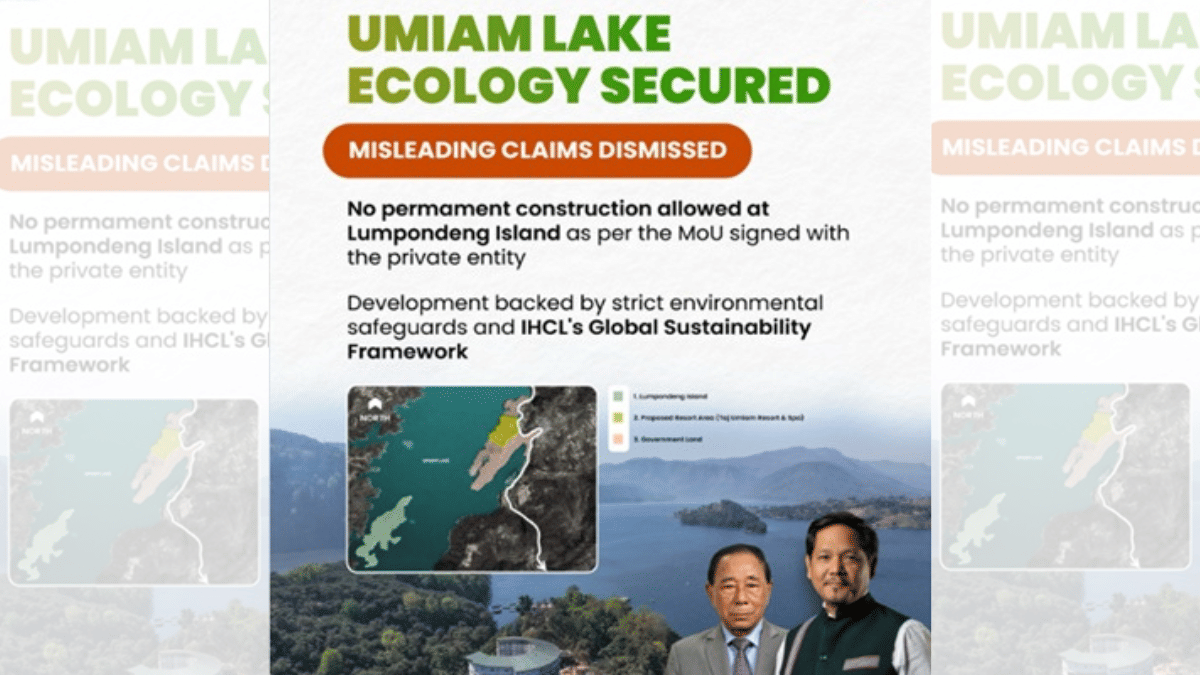
GTF, however, argued that the Meghalaya State Pollution Control Board had previously provided the Umiam Hotels Private Limited with a ‘Consent to Establish’ (CTE) up to ‘25 luxury villas’ on the island, which would entail permanent construction.
The Tourism Department has maintained that the CTE was only a provisional document, which has since been amended to prohibit permanent construction. Despite these assurances, the members of GTF remained unconvinced.
GTF secretary Ritre Lyngdoh told ThePrint, “From day one, we have remained firm in our demand that Lumpongdeng should be excluded from the project.”
Despite Lumpongdeng’s exclusion, several prominent civil society figures have spoken in favour of the project.
Even amongst those who wanted the island excluded, there is an understanding that the state needs greater investments to generate employment opportunities.
Pywanbor Sylliang, the general secretary of the Synjuk ki Rangbah Shnong Ri-Bhoi (An association of Local Headmen from the Ri-bhoi district), told ThePrint, they “are pro-development and pro-tourism”.
He urged the government, NGOs, and private sector to work with local residents to address both employment and environmental issues in the area.
GTF has reiterated that they were not necessarily ‘against Taj’ as long as the project is aligned with existing environmental regulations.
In the aftermath of these events, GTF has claimed a moral victory for their “peaceful, non-political environmental protest”. On its part, the government is projecting itself as being sensitive and amenable to public sentiment.
Rahul Saikia is a TPSJ alum, currently interning with ThePrint.
(Edited by Ajeet Tewari)
Also Read: Meghalaya doesn’t want samosa tourists. It needs slow, phased development: CM Conrad K Sangma