



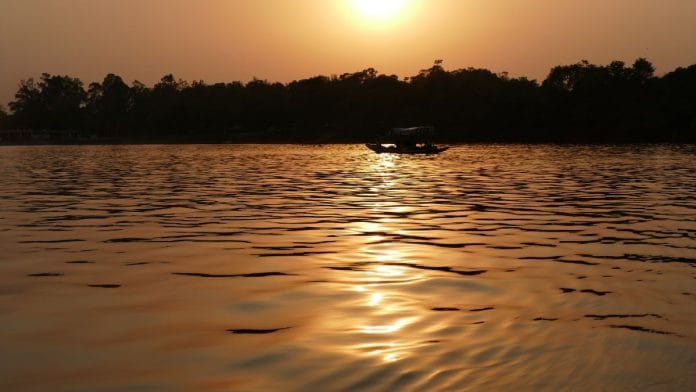
New Delhi: The 68-year-old man-made Sukhna Lake in Chandigarh has been declared a Ramsar wetland site, along with Uttar Pradesh’s Sauj Jheel, bringing India’s total Ramsar sites to 103.
Sukhna Lake marks Chandigarh’s entry into the Ramsar List of Wetlands of International Importance, and the designation recognised the lake’s support for endangered waterbirds such as the common pochard and Pallas’ fish eagle.
Meanwhile, the Sauj Jheel in UP’s Mainpuri district is a shallow lake near the Ganga River, and is part of a larger wetland network. The Jheel is also close to the Saman Bird Sanctuary, another Ramsar site, and regularly hosts over 20,000 waterbirds, including Great White Pelicans, Black-necked Storks, and even Sarus cranes.
The Union Minister for Environment, Forests and Climate Change, Bhupendra Yadav, in a X post on Thursday, highlighted India’s efforts to conserve wetlands and wetland ecosystems.
Ramsar wetlands are thus designated because of the 1971 Ramsar Convention on Wetlands, which sought to protect marshes, peatlands, lakes, rivers, floodplains, estuaries, mangroves, and artificial reservoirs, which help maintain the hydrological balance of the region and also support essential wetland biodiversity.
India’s famous Ramsar wetland sites include Odisha’s Chilika Lake, West Bengal’s Sunderbans wetlands, and the Wular Lake in Jammu and Kashmir.
Also read: Yellow groundwater in Nashik contains 1,000 times the acceptable chromium level
Why Sukhna and Sauj Jheel?
Sukhna Lake was an artificial reservoir made in 1958 by Le Corbusier, the designer of Chandigarh, who imagined the region to be an ecological buffer for Chandigarh’s residents. It is watered by the Sukhna Choe, which is a seasonal rivulet; however, over the last few decades, it has lost more than 50 per cent of its water-holding capacity due to silting and erosion.
The lake still attracts tourists and is a major destination in Chandigarh, and in June 2026, the Chandigarh engineering department undertook de-silting activities to enhance the lake’s water storage capacity.
The 493-acre lake was officially declared a wetland in 2020 by the Chandigarh administration, under the Wetlands (Conservation and Management) Rules, 2017.
For KBS Sidhu, former Punjab Special Chief Secretary, giving the lake the Ramsar tag won’t mean much unless the wetland and its birds are well protected.
“Sukhna has earned its place on the world’s map of important wetlands, and every resident of Chandigarh can share in that pride,” the former IAS officer said in a press release. “The real measure of this recognition will not be a certificate, but whether Sukhna’s water, birds and catchment are better protected ten years from now.”
Meanwhile, the Sauj Jheel makes Mainpuri the only district in the country with two Ramsar Wetland sites, the other one being the Saman Bird Sanctuary. Unlike Sukhna Lake, Sauj Jheel is a natural, shallow lake and has been a regular haunt for waterbirds for over three decades.
In 2004, the lake was assessed and designated as an Important Bird and Biodiversity Area (IBA) by BirdLife International, a global NGO partnership that conserves avian habitats.
Home to the endangered Sarus Crane, Sauj Jheel is seen as an important location for Gangetic biodiversity. Presently, it also faces threats from sewage, pollution, and excessive agriculture causing eutrophication i.e. too many plants and algae growing on the lake’s surface.
(Edited by Aamaan Alam Khan)