





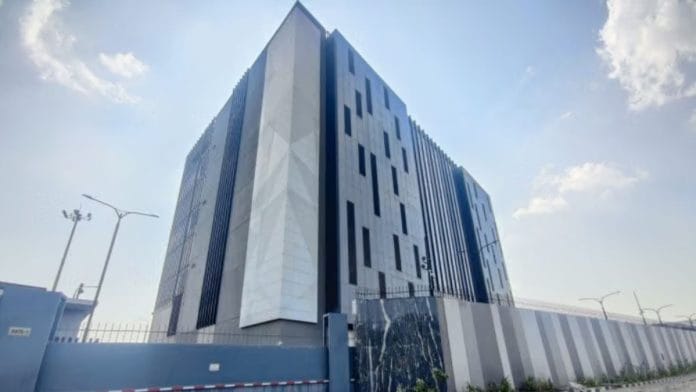


New Delhi: Artificial Intelligence data centres do not require a separate clearance under the 2006 Environmental Impact Assessment notification, the Union Ministry of Environment, Forests and Climate Change said in a written reply to the Parliament on Thursday. The Ministry said that data centre operations in India were governed under other existing laws, and that the Centre was ensuring that “appropriate environmental safeguards” were followed
“Artificial Intelligence (AI) Data Centres do not, per se, require Environmental Clearance (EC) under the Environmental Impact Assessment (EIA) Notification, 2006, as amended,” the Centre’s response read.
In their reply, the ministry added that prior environmental clearance will be required for AI data centres if they are proposed as a part of a building and construction project, with a built-up area over 20,000 square metres, or a township and development project covering 50 hectares or more, or if it has a built-up area of 1,50,000 square metres or more.
Under these conditions, a clearance will be granted by the State Environment Impact Assessment Authority, the reply read.
Also read: UP, Punjab, Haryana facing below-normal rainfall. Deficit will deepen
Existing laws for AI data centres
The Centre stressed that during the appraisal of such building projects for the grant of an environmental clearance, various aspects such as “availability of freshwater particularly in water-stressed regions, water balance report, generation of greywater, recycling and reuse of greywater are duly considered and appropriate environmental safeguards are prescribed.”
“Further, the use and discharge of water and greywater during the construction and operation of AI Data Centres is regulated under the Water (Prevention and Control of Pollution) Act, 1974, and the Air (Prevention and Control of Pollution) Act, 1981,” the reply reads.
State Pollution Control Boards (SPCBs) or the Pollution Control Committees (PCCs) are responsible for ensuring compliance with these Acts, including the prescribed standards for water use and wastewater discharge.
The environment ministry said that other ministries were also governing other aspects of data centres.
For instance, the Ministry of Jal Shakti was responsible for overseeing groundwater extraction, and the Bureau of Energy Efficiency (BEE) was looking into the use of treated water as cooling tower make-up water, and advising wherever feasible, to reduce dependence on freshwater resources and promote sustainable water management, through its District Cooling Guidelines, 2023.
The Union Ministry of Electronics and Information Technology had also set up the ‘resilience, innovation and efficiency’ working group of the India AI Impact Summit, to examine energy efficiency, water management, and environmental resilience in digital and AI infrastructure, the MoEFCC said.
(Edited by Saptak Datta)