



New Delhi: With COP31 less than two months away, diplomats and climate negotiators have decided that climate finance, electrification, resilient infrastructure, and oceans are going to be the key priorities this year.
Ahead of the official pre-COP meeting, to be held from 5 to 8 October in Fiji, diplomats from Australia, Turkey, Brazil, Jamaica, Fiji and other countries met at a symposium organised by the Chintan Research Foundation in Delhi on Wednesday.
“I had a choice this week. New York or Delhi. I chose New Delhi,” said Chris Bowen, Australian minister for Climate Change and Energy. Bowen highlighted India’s role in the COP31 process, calling the country an “indispensable voice for climate change.”
As the panellists discussed how different countries have coped with climate change in recent years, the focus of the discussion kept returning to the Pacific.
“This year we have decided to hold the pre-COP in Fiji and we are organising a one-day outreach meeting to Tuvalu so that leaders can meet the communities and witness the existential problem that Pacific islands face,” said Philip Green, Australia’s Ambassador to India, highlighting that the ocean is central to food security, trade, and livelihoods in the Pacific and beyond.
One of the defining visuals of the effects of climate change is that of Tuvalu’s foreign minister Simon Kofe delivering a speech for COP26, while standing knee deep in seawater in Funafuti, an area that was once dry land.
Green added that while Tuvalu might be one of the least visited countries in the world, the way it is being affected by rising oceans proves that the Pacific needs to be treated not as a standalone issue but as a part of the larger problem.
“These realities highlight the indispensable need for early warning systems, disaster preparedness and resilient infrastructure. They are also a stark reminder that climate finance cannot be viewed as a burden or a cost, but must be seen as a strategic investment,” said Ali Murat Ersoy, Ambassador of the Republic of Turkey to India.
The COP31 itself will take place in Antalya, Türkiye, from 9 to 20 November. Unlike earlier COPs, this time the conference is being organised by two countries — Turkey is hosting it and holding the COP presidency, while Australia is leading the talks as ‘President of Negotiation’.
From planning to implementation
Even amid geopolitical uncertainty across the world, Green said the “geopolitical contestation” is unlikely to have a major impact on the COP.
“It is unfortunate that the US is not playing the role that it has sometimes in the past. But the major players in the discussions this time are going to be China, Europe, Australia, the countries in the Pacific. Countries have always had their differences but on the fundamental issues we face, we are largely united. The Hormuz crisis has galvanised most of us to move forward. We are all more worried now about geopolitical chokepoints, and we all want greater autonomy in the energy that we consume,” said Green.
However, in several official communications, Türkiye has expressed that this year’s COP also focuses on implementation and not just planning. The question of “who pays” then eventually comes up. Smaller islands and developing countries face a disproportionate effect of climate change, said Jason Hall, Ambassador of Jamaica to India.
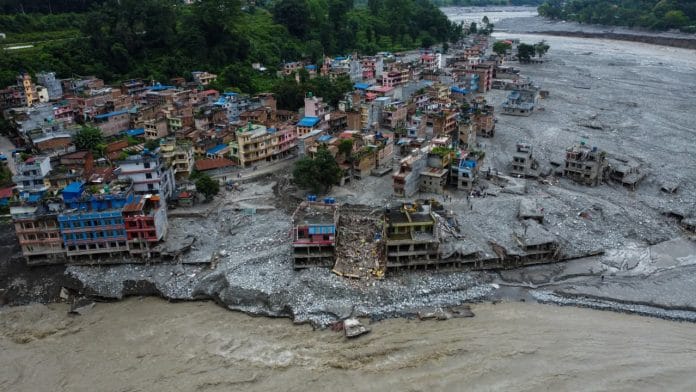
The conversation around climate compensation was recently centred around Nepal after devastating floods caused by an ice-rock avalanche killed over 1,000 people and left several thousands missing. Following the disaster, Nepal reached out to several countries including the UN’s loss and damage fund, saying that the damage from the floods amounted to over $5 billion.
However, Hall recalled hurricane Melissa that struck Jamaica in late October last year and said that its economic losses reached over $12 billion, which is more than half of Jamaica’s GDP.
At the symposium, the message from all parties was clear – the next part of climate diplomacy has to be about delivering the goals that have been set already and easing the burden on vulnerable countries.
“History will not judge our generation by the outcomes of our policy papers, nor our speeches. We will be judged by the state of the planet we pass on,” said Ersoy.
(Edited by Aakriti Handa)