



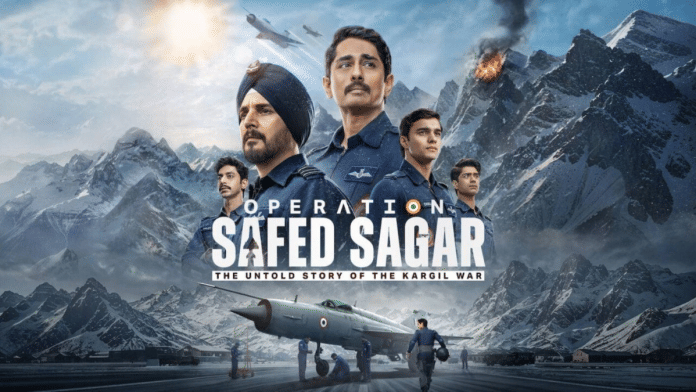
Mumbai: Netflix’s Operation Safed Sagar tells the story of the Indian Air Force officers who fought in the Kargil War. Co-creator and showrunner Abhijeet Singh Parmar and co-producer Mehboob Pal Singh Brar told ThePrint that they didn’t simply hold a special screening for Air Force officials; they were a part of the show from the beginning.
The creators balanced realism and patriotism, consciously avoiding “chest-thumping jingoism” for a grounded, “lived-in” portrayal of the Air Force community.
“All scripts were run by the Air Force officials. We wanted to fix any issues at the writing table. Our consultant on the series, Group Captain Tarun Singha, was a PRO of the Air Force for 20 years. He read all the drafts and would constantly give us feedback,” Parmar said.
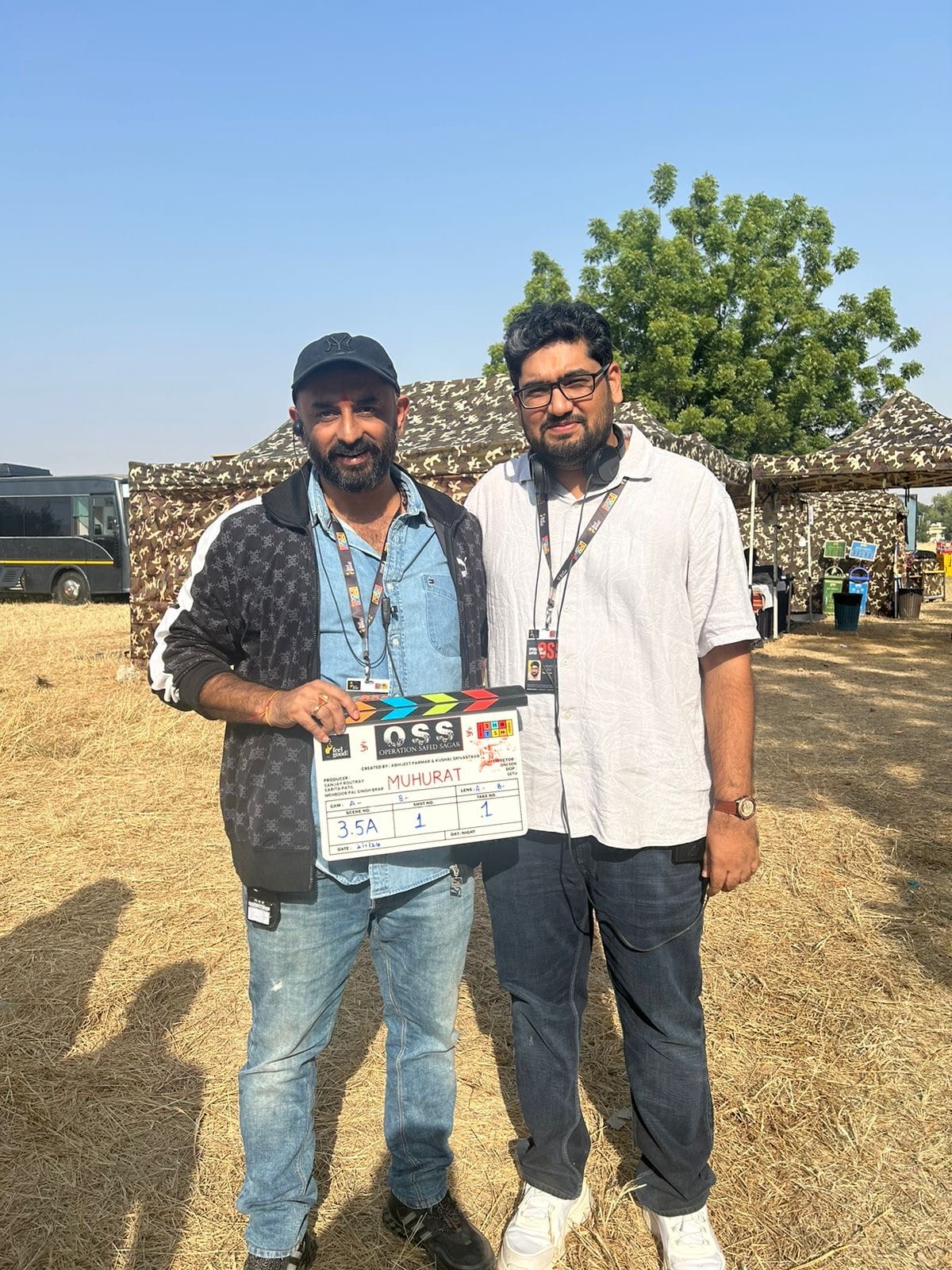
Directed by Oni Sen and co-produced by Matchbox Shots, Operation Safed Sagar is the first project under the banner of Feel Good Films, which Parmar co-founded with Brar in 2021.
Brar admitted that they “secretly banked” on audiences assuming the show would be another typical patriotic film, only to surprise them with how realistic it actually turned out to be.
He had nearly lost faith that a realistic approach could still connect with modern audiences, and found the positive response from the defence community “very heartwarming.”
In fact, Brar revealed that they had a “secret desire” for the series to be seen as a modern successor to the 1982 film Vijeta, which remains, according to him, the only film the Air Force community considers authentic.
Also Read: Netflix’s Operation Safed Sagar is a rare entry in India’s chest-thumping patriotic genre
Fact or fiction?
While handling the sensitive portrayal of international relations and internal politics, particularly regarding Pakistan, the duo set out to “present events as facts rather than filter them through politics.”
“We read extensively and watched multiple interviews; the goal was to write dialogue and interactions, even imagined closed-door meetings, based on factual history. When patriotism is real and not jingoistic, it becomes art,” Parmar said.
Brar also highlighted that they deliberately skipped the genre’s famous “hero walk,” since officers had specifically asked them not to be shown walking away from their jets in slow motion, helmets in hand.
Instead, the show shows them sweaty and physically spent from G-force effects, as Parmar highlighted, “pilots can lose a kilogram of body weight during a single flight.”
Hitting a personal note
The duo’s commitment to a dignified portrayal of the officers earned praise from Alka Ahuja, wife of Squadron Leader Ajay Ahuja, played by Siddharth in the series, who lost his life during the 1999 war. After watching it, Alka thanked Parmar for bringing Ajay’s story to life and for finally giving the Air Force the recognition they deserved.
“She said that previously, when she attended functions, people often did not realise the quintessential role the Air Force played in that conflict,” Parmar said, before describing his first meeting with her.
Ahead of visiting Alka’s home with his team of writers, Parmar had prepared a list of nearly 60 technical questions. But walking in, he felt as though he had stepped into a “museum” dedicated to “Ahuja sir”, with every wall covered in photographs and trophies. The weight of the IAF officer’s memory, even 23 years on, was so strong that Parmar felt it would be “disrespectful” to ask any of his prepared questions. So, he stayed silent for the entire visit.
When Parmar was about to leave her house, Alka held his hand and shared a personal story about her late husband.
“Alka ji said, ‘My father was very fond of Ajay and vice versa. In fact, he once accompanied her father on a 12-hour journey, even though they weren’t married yet.’ That was just the kind of person he he was,” Parmar recalled.
That moment, he added, changed the project from a “cool story” into a “responsibility to portray these lives with dignity.”
In the series, at Ajay’s funeral, Alka tells Air Chief Marshal Birender Singh “Tony” Dhanoa (played by Jimmy Shergill), “I trusted you. Why did you send him there?”
This was a real bit lifted from the actual funeral. Parmar said that Alka was moved to see such a private, painful exchange handled with dignity and emotional care.
One scene, though, had the co-creators nervous. A conversation, which the writers took cinematic liberty, between Alka and Tony, set at a petrol pump.
Luckily, both Alka and Tony were moved by it.
Parmar recalled Tony telling him, “While some liberties were taken with the technical aspects of flying, the emotion is 200 per cent there and the creators should be proud of what they achieved.”
Tony’s son, Jasmaan, a lawyer, later told Parmar that after watching that scene, he hugged his father and broke down.
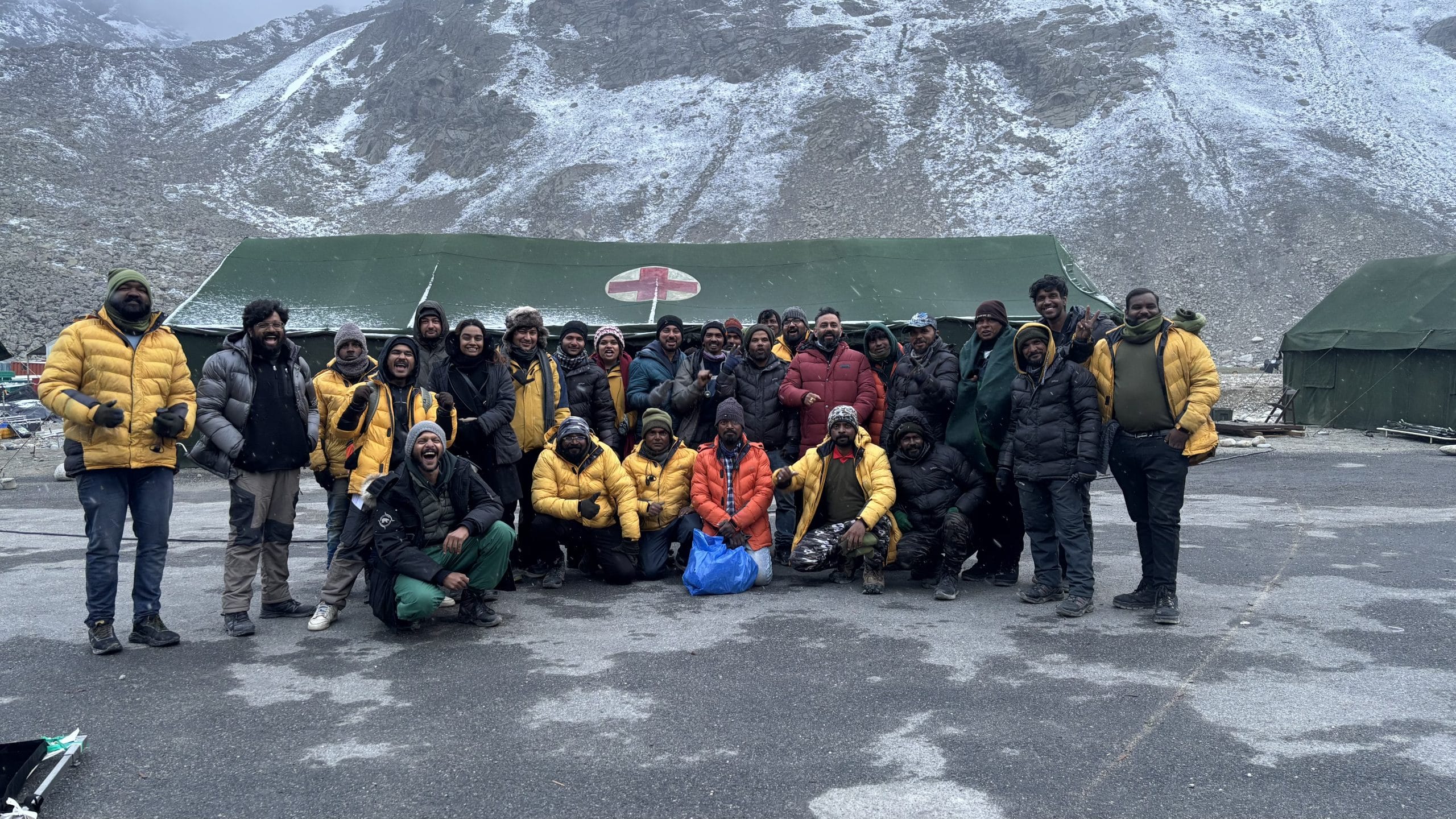
Also Read: Netflix Operation Safed Sagar employed 4,000 people daily
The journey from TVF to Netflix
Before Netflix handed them Rs 215 crore and the IAF handed them fighter jets, Parmar and Brar were just two friends working at TVF, a YouTube streaming platform. Neither of them set out to make a war epic. If anything, they had spent years telling stories from the heartland.
Parmar, an engineer out of BHU/IIT, who landed in Bombay in 2008. He spent years in advertising production before joining the OTT platform as a Creative Producer in 2018. He gravitated toward Gullak (2019-) and Panchayat (2020-), drawn to their relatable, feel-good storytelling over louder content.
On the other hand, Brar spent a year-and-a-half as a script supervisor and assistant under Ram Gopal Varma. He took a brief detour into Punjabi cinema before returning to Mumbai. At TVF, he served as a Supervising Producer on Yeh Meri Family (2018) to Senior Supervising Producer, overseeing hits including Gullak, Panchayat, and Kota Factory (2019-2021).
The duo’s paths crossed on Gullak’s first season, where Parmar was the Creative Producer and Brar was the Supervising Producer. While the shoot was extremely demanding, their energies, as Parmar termed it, “simply gelled.”
By the time they were both back in the trenches for Panchayat’s first season, that camaraderie had hardened into a shared desire to build something of their own.
In January 2021, they founded their own production house. Feel Good Films is a direct extension of the feeling that they hoped to draw from audiences while working on shows like Gullak and Panchayat: “Make work that leaves an audience feeling something warm and true, whatever the genre.”
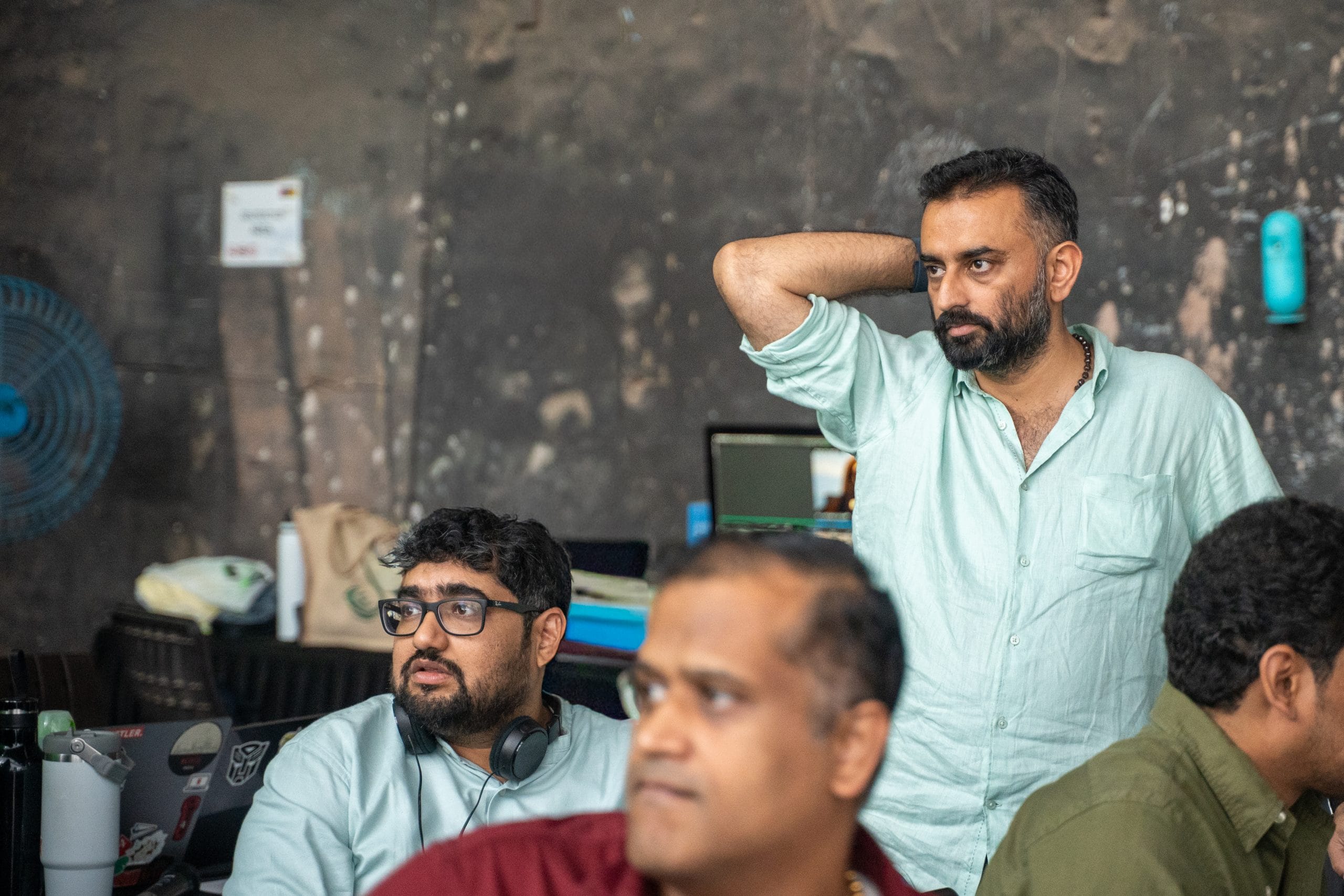
Operation Safed Sagar’s first spark came from Parmar’s co-creator, Kushal Srivastava, an Air Force veteran who had served six years after the Kargil War and was carrying around a script called “Golden Arrows.” Parmar admitted that he wasn’t initially eager to make a defence show. What changed his mind was Srivastava’s storytelling.
“The everyday stories of Air Force life, the kind no amount of research could manufacture on its own. Pilots who could fly fighter jets but had never learned to ride a scooter. Small, human absurdities sitting right next to real sacrifice,” he said.
Parmar then soft-pitched the idea to Netflix in February 2022. They asked for a 15- to 20-page script. He came back with 95. Parmar had zero hope for the project being approved, but Netflix greenlit the project within two weeks.
(Edited by Insha Jalil Waziri)