



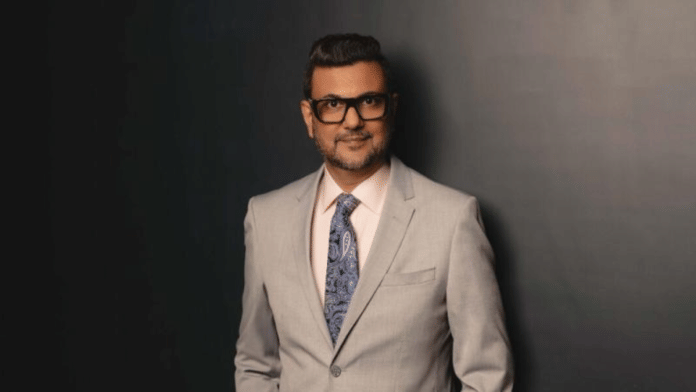
New Delhi: Within a month of its launch, the entertainment investment platform, CineNow, has already received over 3,000 scripts seeking financial help.
“Each filmmaker has submitted eight to ten, sometimes 20 scripts, which tells us that there has been so much pent-up demand for financing. These scripts have just been sitting or circulating, collecting dust. Now our job is easy and difficult. It’s easy because we finally have access to scripts and difficult because we’re trying to find a diamond in the rough,” CineNow founder Rohit Dalmia told ThePrint in an exclusive interview.
CineNow is a film tech platform designed to marry finance capital with technology. It acts more as the financial infrastructure than a regular run-of-the-mill production house. But it’s not just a film fund or a financier; it’s designed to be a complete ecosystem that is sustainable beyond a typical life cycle of a film.
At CineNow, everyone from established producers to independent filmmakers can seek financing. For its first phase, the platform is going ahead with an investment of up to Rs 500 crores. Their initial backers fall into three institutional categories: venture capitalists, hedge funds and family offices.
“If anyone wants to raise funding for films, the first question revolves around how we are going to share the IP or how the revenue is going to be split. We do up to 100 per cent financing at any stage of the filmmaking process, but the IP remains with the filmmaker or the producer,” Dalmia said.
“We are sort of the Uber without the taxis or the financier without actually having the IPs.”
When a filmmaker submits his script/s on CineNow’s portal, it first enters the reading room where only the best of the best scripts are shortlisted, manually. The rejected scripts will be re-scanned through an AI portal to ensure viable, commercially strong projects are not accidentally overlooked during manual reviews.
During this process, the names of filmmakers are not mentioned to avoid biases. It is only at the investment table that the names are pulled out. The decision to fund a script, Dalmia said, depends 60 per cent on the creativity or the quality of the script, 20 per cent on the commercial, and the remaining is the pedigree or filmmaker’s portfolio.
“People say movies are a risky business, but we think that this risk has been exaggerated. Also, if you’re financing a portfolio across different producers, different levels of filmmakers, then you’re sort of de-risking the investment process,” Dalmia added.
‘Regional cinema is the next big thing’
The success of regional films like Premalu (2024), Bethlehem Kudumba Unit (2026) and Hanuman Ansh (2026), which were made on small budgets and went on to break box office records, has further motivated CineNow. Their goal is to particularly give wings to regional stories and non-star-led projects due to shifting audience preferences, stronger commercial returns, and greater narrative creativity.
“I don’t think the next Dhurandhar is sitting in a big studio. It might be collecting dust on a table of a first-time filmmaker who doesn’t have money,” Dalmia said.
He rejects the assumption that movie stars guarantee success, noting that small-budget films without big stars often deliver significantly higher returns on a percentage basis than massive star-driven blockbusters.
This change is because of the generational shift. Gen Z viewers consume films differently as compared to the previous generations. Audiences now prioritise fresh, distinct storytelling over traditional actor-led star power.
“We will be allocating around 60 per cent of our investment budget to regional cinema, covering languages such as Telugu, Tamil, Malayalam, Punjabi, Gujarati, alongside Hindi,” the founder said.
According to him, the future of cinema belongs to two main categories: “deeply rooted regional stories or large-scale sci-fi/high-concept projects.”
“The conventional mid-budget films in between are failing to attract audiences. It will no longer work,” he added.