



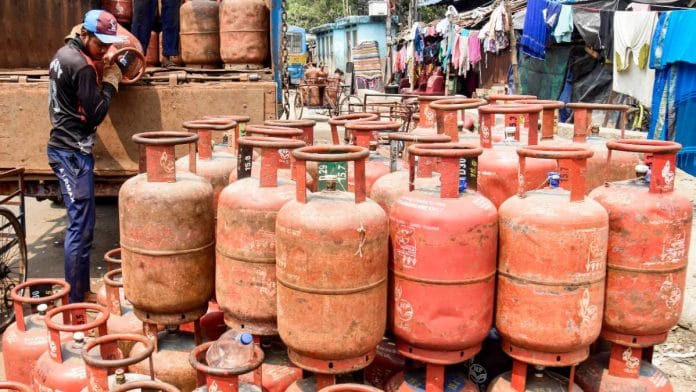
New Delhi: India’s domestic consumption of Liquefied Petroleum Gas (LPG) declined 15.9 percent to 11.3 million tonnes during April-August 2026, down from 13.4 million tonnes in the corresponding period last year, according to the latest data from the Petroleum Planning and Analysis Cell (PPAC).
The decline comes as the government steps up efforts to expand piped natural gas (PNG) connections and encourage households to shift to cleaner cooking fuel.
The fall in LPG consumption also comes against the backdrop of disruptions in LPG supplies from the Gulf region due to the West Asia conflict.
Before the disruptions began in late February, India imported about 60 percent of its total LPG requirement, with roughly 90 percent of supplies from the Gulf coming through the Strait of Hormuz.
During the crisis, India sought to enhance domestic availability by increasing LPG production at its refineries and sourcing additional supplies from countries including the US, Russia and Canada.
Alongside efforts to secure LPG supplies, the government has been pursuing measures to expand the use of PNG for household cooking.
A nationwide campaign includes awareness drives, household outreach, facilitating the surrender of LPG connections and encouraging housing societies using LPG to switch to PNG.
In August, the government approved an incentive scheme to accelerate the expansion of domestic PNG connections and encourage more households to switch to piped gas for cooking.
Under the scheme, which is effective from 1 September, eligible city gas distribution companies will receive additional supplies of lower-priced domestically produced gas for every new billed household PNG connection above a prescribed threshold in their respective areas.
The scheme will be implemented in two six-month tranches, with the additional gas allocation linked to the increase in active domestic PNG connections.
India had around 1.74 crore domestic PNG connections as of August 2026. The government is also encouraging states to reduce VAT on natural gas to 5 percent to make PNG more affordable.
While LPG consumption fell sharply, demand for transport fuels increased during the April-August period.
Petrol consumption grew by 6.4 percent to 18.9 million tonnes from 17.8 million tonnes a year earlier, while diesel demand increased 4.3 percent to 40.5 million tonnes from 38.9 million tonnes, according to the data from the Petroleum Planning and Analysis Cell (PPAC), an administrative body under the Ministry of Petroleum and Natural Gas that tracks petroleum-related data.
The consumption of air turbine fuel (ATF) remained broadly stable, declining 0.57 percent to 3.67 million tonnes from 3.7 million tonnes in the year-ago period.
(Edited by Ajeet Tiwari)
Also read: Problem of plenty: Wartime LPG panic buy leaves India with excess cooking gas