



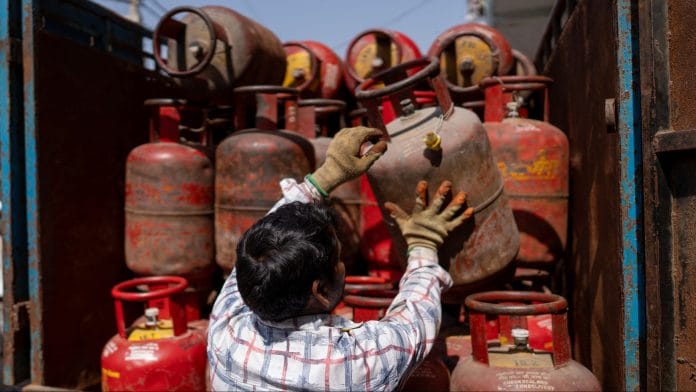
India’s frenzied efforts to counter disruptions in cooking gas supplies over the past months, while cargoes remained trapped in the Persian Gulf, has left state-run fuel retailers with the opposite problem — more than they can sell.
The three refiners run by the government, including India’s biggest processor Indian Oil Corp., had booked liquefied petroleum gas supplies amounting to as much as 40,000 tons a day, according to people familiar with the situation. The daily import requirement now, however, is closer to 30,000 tons to 32,000 tons.
More than 90% of India’s LPG imports typically come from the Middle East, and the country faced acute shortages after the war in Iran choked off supply of the country’s most popular cooking fuel. The shortfall encouraged stop-gap measures including use of more polluting fuels such as biomass and kerosene, even as the government activated emergency rules to fast-track the deployment of natural gas pipelines.
Part of the drop in import requirement is explained by a boost in production from state processors themselves, which lifted output by more than two-thirds to about 54,000 tons a day after the near-total closure of the Strait of Hormuz crimped shipments. Daily production has since been scaled back to about 40,000 tons, the people said, asking not to be named as they aren’t authorized to speak with media.
But demand has also been slow to recover, especially when it comes to large consumers such as restaurants or industrial outfits such as ceramic-tile manufacturers, who switched to alternative fuels like piped gas during the supply crisis. Consumption in June was about 73,000 tons a day, compared with a daily average of 91,000 tons in the year through March, according to oil ministry data.
“The immediate LPG supply outlook appears more manageable than during the peak of the disruption,” said Sumit Ritolia, lead analyst for refining supply and modeling at data intelligence firm Kpler. “However, much depends on how the conflict evolves and whether Gulf LPG export flows remain uninterrupted.”
At the height of the war, refiners bought more than they required, the people said, as they feared some of these cargoes would not be delivered. However, all these volumes are now arriving in the country after an interim peace deal between US and Iran helped restart some flows through the strait for several weeks. Disruptions have since resumed, but are yet to be felt in India.
At least one of the state refiners had to pay penalty charges to a shipowner after discharge of its LPG cargo was delayed because storage tanks were full, they said.
Spokespeople at India’s oil ministry, Indian Oil, Bharat Petroleum Corp., and Hindustan Petroleum Corp. did not immediately reply to emails seeking comments.
Ritolia expects Indian refiners to further reduce LPG production to boost yields of more profitable products, such as gasoline, as supply risks ease.
Disclaimer: This report is auto generated from the Bloomberg news service. ThePrint holds no responsibility for its content.