







New Delhi: Recent attacks on UAE’s state-owned Abu Dhabi National Oil Company (ADNOC) vessels and Saudi energy infrastructure are unlikely to leave India short of crude oil, but they could make the import of each barrel significantly more expensive.
Analysts ThePrint spoke to say India’s diversified crude sourcing has reduced the risk of an immediate supply shock, but a prolonged disruption in the Gulf could increase freight charges, war-risk insurance premiums and thereby the country’s overall import bill.
They also warn that cooking gas (LPG) and liquefied natural gas (LNG), which remain heavily dependent on Middle Eastern supplies, are far more vulnerable than crude oil.
“The immediate risk for India is not necessarily a shortage of crude oil but higher costs, longer voyages and greater pressure on specific fuels,” said Umud Shokri, energy expert and senior visiting fellow at George Mason University.
Natalia Katona, a commodity analyst based in Abu Dhabi, said the latest attacks have put pressure on both of the Gulf’s key oil export routes. “Pressure is developing on both of the main maritime routes through which Middle Eastern oil can reach Asian buyers.”
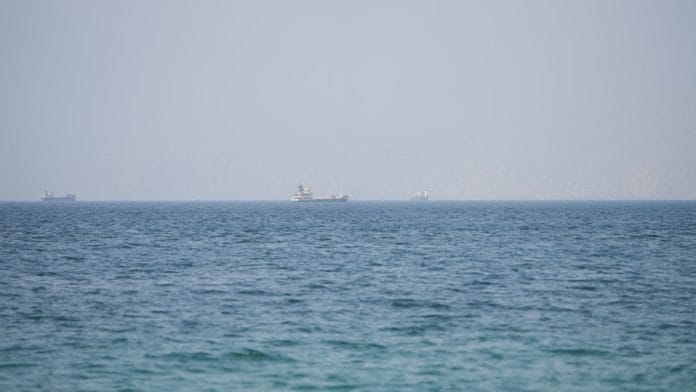
Concerns intensified after ADNOC reported that one of its vessels was hit by a missile while transiting the Strait of Hormuz on 8 August. The company said 15 of its vessels have been attacked by missiles or drones since the conflict began, including three this week. One crew member has been killed and 20 others injured since the start of the conflict.
The attacks are particularly significant for India because the UAE remains a key crude supplier. Kpler data shows the UAE was India’s second-largest supplier after Russia in July, with around 4,70,000 barrels per day, accounting for nearly 10 percent of India’s total oil imports. Saudi Arabia was the third-largest supplier, with around 4,30,000 barrels per day.
ADNOC has continued exports through the port of Fujairah, offshore storage and ship-to-ship transfers, but attacks on its tanker fleet show that even these alternatives are becoming increasingly risky.
Yemen’s Iran-backed Houthi rebels, meanwhile, claimed responsibility for a drone strike on Saudi Aramco’s Jazan refinery, extending the threat beyond the Strait of Hormuz to the Red Sea.
Nikhil Dubey, lead analyst for oil markets at data analytics platform Kpler, said the latest attack comes at a particularly sensitive time. With shipping through Hormuz disrupted, Saudi Arabia and the UAE had emerged as two of the more dependable regional suppliers for India because both could reroute part of their exports outside the Strait.
However, Houthi attacks on Saudi-linked shipping have already increased uncertainty over Red Sea exports. “If UAE crude flows also come under sustained threat, India could find itself with fewer readily accessible Middle East barrels when alternative supply options are already scarce,” Dubey said.
At the start of the conflict, around 40 percent of India’s crude imports passed through the Strait of Hormuz. Since then, the government says India has diversified its oil imports across 41 countries, including Russia, Latin America and Africa, while continuing to source crude from the UAE and Saudi Arabia.
These measures have reduced the risk of an immediate crude supply crunch, but replacement cargoes from farther countries are costlier and take longer to arrive. A prolonged conflict could still raise India’s import bill, put pressure on the rupee and add to inflation.
For India, the bigger concern is LPG and LNG. Before the conflict, the country imported nearly 60 percent of its LPG requirement, with around 90 percent of LPG imports and about 50 percent of LNG imports coming from the Middle East.
Unlike crude oil, these fuels cannot be replaced quickly, leaving households, fertiliser makers, industries and gas-fired power plants more exposed if disruptions continue.
Also Read: Russian crude continues to make up 50% of India’s oil imports in July as Hormuz risks persist
Higher costs are a bigger risk than supplies
Praveen Rai, director for energy markets at consulting and advisory firm Grant Thornton Bharat, said the attacks are less about immediately stopping oil flows and more about raising the risk premium attached to every shipment. “Even if crude flows continue, such incidents tend to increase oil prices through higher geopolitical risk premiums, freight rates and war-risk insurance costs, particularly around the Strait of Hormuz,” Rai told ThePrint.
Any prolonged disruption to UAE exports could also tighten supplies of medium-sour crude grades preferred by several Indian refiners, forcing them to source alternative and potentially more expensive cargoes.
Rai, too, said the greater vulnerability lies in gas rather than crude. While India can replace crude from other suppliers, LNG and LPG do not have similar alternatives or pipeline detours around the Strait of Hormuz.
This could mean higher costs for cooking gas, fertiliser production and power generation, while putting pressure on the government to absorb part of the increase.
Shokri said war-risk insurance premiums have risen from about 0.25 percent of a vessel’s value before the conflict to as high as 7.5-10 percent on some voyages. For large crude tankers, that can add millions of dollars to a single trip, pushing up freight rates and import costs. Even if diplomatic efforts bring down tension, he said freight costs, insurance rates and shipping backlogs are unlikely to return to normal immediately.
The conflict has also created a security challenge.
Katona said Indian authorities had advised shipping companies against deploying Indian crew on voyages through the Strait of Hormuz after Indian seafarers were killed in earlier attacks. India must now balance energy security with the safety of its seafarers.
For now, India has enough supply options to avoid an immediate energy crisis. But with both the Strait of Hormuz and the Red Sea under pressure, the bigger challenge is managing the rising cost of bringing energy supplies home.
(Edited by Sugita Katyal)
Also Read: UAE’s state-owned ADNOC, India’s major supplier, changes crude pricing mechanism