







In Episode 1841 of Cut The Clutter, ThePrint Editor-in-Chief Shekhar Gupta details the criminal fraud charges against the Adani Group dropped by the US Department of Justice this week. He also explains what these bunch of orders mean, and what they don’t.
Here is the complete transcript, edited for clarity.
The Adani Group has got its redemption through the American system in the multiple cases in which it was involved or for which it had been arraigned there. This is very complicated. I’ve got lots of notes and lots of printouts. To explain this and to simplify this, we are following the rule of three.
We keep saying in journalism that there is something called the three-example rule. Which means if you get three facts pointing in the same direction then it makes a straight line. This, however, is a different use of the three-example rule.
So, what are the first three points? The first three points in this process are the three cases. Of these three cases, two are interconnected and one is not. That sort of happened. You can say coincidentally, if coincidences happen or maybe by design but we’ll never know that.
But the three cases are as follows. Number one is the case which was the most serious case of all because that was a criminal case. America has a law called Foreign Corrupt Practices Act (FCPA). What that means is that if an American company, to get business in another country, pays bribes in that country, then that company is liable to be charged criminally in America. That is FCPA.
So, the first charge against Adani was under FCPA and that was brought in by the US Department of Justice (DOJ) and that charge was that the company allegedly “paid bribes” to Indian officials, particularly an official in the state of Andhra Pradesh.
The total amount being Rs 2,089 crore (that amount can keep varying depending on the dollar value) at that point. Out of the Rs 2,089 crore, about Rs 1,750 crore was supposedly paid to one Indian official in the state of Andhra Pradesh.
Who could that official be? It doesn’t mention. I will just mention incidentally that at that point, it was the Jaganmohan Reddy-led YSRCP government that was in power in Andhra Pradesh.
The American case, therefore, was that bribes were paid in India. And why were these bribes allegedly paid? That’s because the Andhra Pradesh government had agreed to buy a bunch of electricity from Adani Green, a company in the Adani Group that—as the name indicates—produces green energy.
In this case, this was supposed to be solar energy and that company was to produce 8,000 Megawatts (MW) or 8 Gigawatts (GW) of energy which the Andhra Pradesh government was to buy.
The little twist in the tale was that usually when such energy is produced in India, it is difficult to sell to state governments because the governments and its utilities which distribute power are mostly bankrupt. They are bankrupt because they must give free power, concessional power. So, they keep on depending on budgetary support. They have very bad credit ratings.
So, nobody wants to deal directly with these companies. For this, the Government of India has set up a centrally owned PSU called Solar Energy Corporation of India (SECI). So, a manufacturer of solar energy can go to SECI and say, ‘I have this much power, I can produce this much power at this price because that will be my price plus profit. That if you can find me a buyer for it.’ SECI then goes out and finds a buyer, which is usually a state government. In this case too, this was a deal that done through SECI for Adani Green and Azure Power. That was the story.
The story then was that because the price of this power was too much. No Indian state would normally have bought it. Somebody again “persuaded” the Jagan government to buy it at that price. In return, as a quid pro quo, the Adani group or Adani Green, in this case, allegedly agreed to pay this bribe to the Andhra government of which Rs 1,750 crore was to go to one official. That was one story.
Now if bribes were paid in India, by an Indian company, to an Indian politician, to sell power produced in India, why are the Americans filing cases against that company? The American justification for filing that case and for claiming jurisdiction was FCPA. It was the fact that while these were Indian companies and promoters, they had also raised bonds in America. The total bonds issued by the Adani Group globally were $750 million (out of this $175 million was bought by American investors).
That’s how the Americans claimed jurisdiction and filed these cases under what is actually quite a tough law in the American system. This investigation was started early in 2024. That is a story that was broken by Bloomberg, also carried by the Print.
Now it’s true that these bonds were raised in America by about September in 2024. These bonds had been redeemed. These bonds were global bonds of which about $175 million had been invested from America. All the bonds had been redeemed with their interest, etc.
It was towards the last days of the Joe Biden government that this case acquired momentum. It was on 22nd of November 2024—remember the American election results came. That’s when Trump won, that the US Department of Justice opened this indictment against Gautam Adani, one of his nephews Sagar Adani, and a bunch of executives including one from Azure. That is when this case became public. That is one side of the story, and that is one case.
Now, how do I simplify for you what’s happened in case two and three, that is the SEC (Securities and Exchange Commission) case and the OFAC (Office of Foreign Assets Control) case, where fines have been paid.
So, maybe one way is to think of it like a traffic offense. You jump a red light. You get something in your mail saying that you jumped a red light at such and such place. The fine is a thousand rupees. That is compounding the offense. You pay the fine and the case is over. If you don’t pay the fine, you can go to court and you can contest it and then a trial starts. But otherwise, you can pay your fine and compound the offense. That’s the kind of process that’s taken place both in the SEC and OFAC cases.
The second case is completely separate under a different agency, but is connected to this and that also in the American system because it’s a capitalist state that takes its markets as well as its regulation and corporate governance very seriously.
The first case was under the Department of Justice, the second under the Securities and Exchange Commission (SEC). What they said was that look if you “allegedly” paid these bribes in India—while floating bonds in the American markets—you made declarations or commitments that you had paid no bribes, that you were compliant with FCPA—then you lied or you misrepresented your case. For that, you face an inquiry under the SEC Act. So that was the second case but, as I told you, connected to the first case. If the first had not happened, then the second would not come into place.
Then the third is a completely unconnected case and that is something that played out over about three to four years that was the import of LPG from Iran.
A lot of shadow tankers float in those seas and many of these shadow tankers kept on changing their flags often. They brought in a bunch of LPG into Adani ports. That LPG the US investigations concluded had come from Iran, which was under American sanctions. More importantly, any financial transactions with Iran using the American banking systems were particularly under sanctions.
So, this was a purchase of nearly (prices keep varying over time) $392 million worth of LPG and about $192 million of this was transacted through the American financial institutions. So, this was another American agency. The third agency which is called OFAC (Office of Foreign Assets Control) and that falls under the Department of the Treasury (Scott Bessent’s department). So, this was a completely parallel thing not connected to the above two (DOJ and SEC).
In the OFAC case too, a settlement has taken place. Since we are following the rule of three, I have explained the three separate cases—two interconnected and one separate.
Now, we know that a bunch of orders have come in. I will first tell you the three things that these orders mean and then the three things that they don’t. So, three things have happened. Number one that US Department of Justice has asked a federal judge in New York to permanently dismiss all criminal charges against the Adanis and all the others charged in this case. They’ve asked for this dismissal with prejudice.
What does it mean? With prejudice means that this case can never be reopened. I will read relevant lines from this DOJ note as we go ahead right now. Briefly the three points which have happened.
So, all these cases have been withdrawn and they’ve been withdrawn permanently. A judge has to rule on it. But as the DOJ note says that usually judges almost never overrule this. They accept DOJ’s filings.
Number two, the SEC case that was the disclosure case on the bonds. The SEC settlement has now cleared the Adani Group’s name, which has involved a financial settlement. I will give you details as we go along.
What this means is that Adani Group’s name is now cleared with the US financial regulators and they can raise investments there or American investors can invest in their group, if they so wish.
Number three, after paying the US Treasury, a settlement amount over the Iran LPG import dispute (by using American banking channels), the Adani companies are no longer blacklisted or facing trade bans and they can again do global business.
Remember when these DOJ cases were on, it was quite a dire situation because these are criminal cases. India may not have extradited Adani to America. In fact, the government had not even served summons on the Adanis. It was much later when it looked like the court will rule on the issues of the Adanis not accepting summons.
Earlier this year, 30th of January, the Adanis made a filing in the court saying that they were willing to accept summons by email. What this meant, however, was that for any of these accused, traveling abroad became dangerous. You could travel maybe to China or Russia, but the Americans have extradition treaties with more than 100 countries. So anywhere in the western world, you were exposed to arrest and extradition to America.
Remember what happened to Nikhil Gupta in the Gurpawant Singh Pannun case? He had gone to Czech Republic, got picked up and taken to America after extradition proceedings. For the Adanis that risk was quite debilitating. That risk is now over because these cases are over.
These are the three things, therefore, that happened. The Department of Justice criminal case is gone. The SEC disclosure or non-disclosure issue has been settled and number three, the sanctions case with the US Treasury over Iranian LPG has settled. So these are the three things that these orders mean briefly.
Here are the three things it does not mean. Number one, just because the charges have been dropped against Adani Group, it does not mean that they’ve been proven innocent because the case has stopped early.
Prosecutors have said we don’t think it’s worth our while to pursue the case. So, it’s not as if the judge ruled on the merits of the case and said they are innocent. The case did not reach the judge on merit. The case was not set aside on merit. The prosecutor said it wasn’t worth their while.
Point number two pertains to the SEC case. In this case, the Adanis did not admit to any guilt, neither were they proven innocent. The case was resolved and fines were paid without the Adanis ever admitting to doing anything wrong or breaking any laws nor there having been either accused or cleared. The issue was settled with a payment of money. That’s a normal process in America. In this case, the settlement was not of a very large amount. I will later give you a list of some of the most landmark cases of such settlements in the US which go into billions of dollars.
In this case, Gautam Adani paid $6 million that’s about Rs 60 crore at today’s value and his nephew Sagar Adani paid $12 million which is about Rs 110-115 crore. Once again for clarity, the Adanis chose to settle the case and pay fines simply to close the matter without accepting any guilt or getting any order of innocence. That’s how the American system works.
The third pertains to the Iranian LPG import or violation of sanctions charge. That order also neither awards any charge of guilt or innocence. It’s a settlement for money. The money is sizable in this case. It’s $275 million which is almost Rs 2,700 crore but that case is also closed.
Now how did this dramatic change come about?
First of course, is that the government changed in the US President Donald Trump himself has ideologically and principally opposed FCPA because he’s always believed and he’s said it often in the past that FCPA makes it difficult for American companies to compete overseas.
For example, several European countries would not only scoff at their companies bribing overseas, but they will also exempt tax on it. So bribes become expenses of those companies which they can claim against their costs of doing business in other countries.
Trump’s view is if I have to compete with Europeans, if Boeing has to compete with Airbus for example, then FCPA puts Boeing or any company in that position at a disadvantage. So, he’s not been wanting to push these cases. That is one thing that happened.
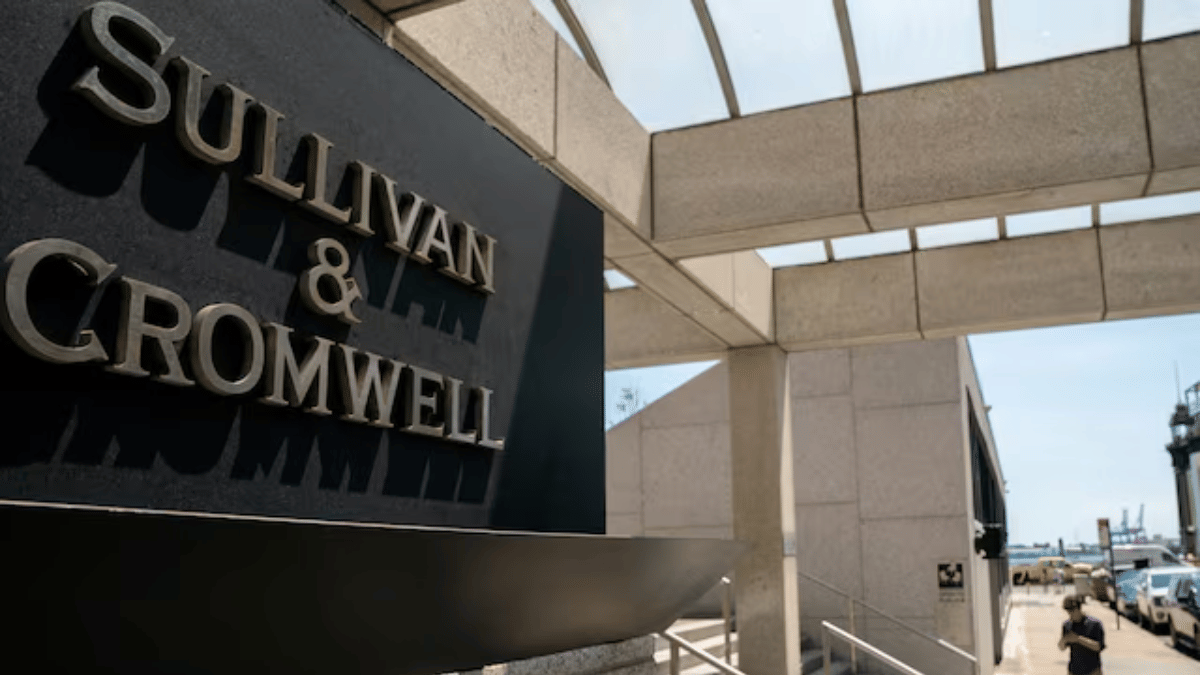
Second, Adani hired a new legal team. This is a very formidable New York law firm called Sullivan and Cromwell. The lawyer he chose was Robert Giuffra Jr.
So, besides a $10 billion investment promise which the DOJ said had played no role finally in what they went to the court with, they went to the judge saying that they did not want to pursue the case. They said that ($10 billion investment promise) played no role.
However, Robert Giuffra’s main arguments were as follows; number one, that there was no proper US jurisdiction. Whatever happened or did not happen was in India between Indians and Indian company, Indian politician, Indian officials, etc. So, Americans had no jurisdiction. Number two, there was no evidence available. There was, number three, no strong US link to the alleged misconduct. The bond issue was centred outside the US, and nobody suffered any damage. All bond holders were paid back and the FCPA applies only with a real US connection which Giuffra said was missing.
Also, the SEC civil case, non-disclosure civil case and the DOJ criminal case were to be treated separately. Adani lawyers, in their defence, also used an interesting expression for the charges. They said DOJ’s charges are a case of vague puffery. ‘Puffery’, you see puff you say it’s a puff story, exaggerated, fictional. So that’s what they meant, that these charges are just a case of puffery. These means nothing. I have not seen that expression used in a legal proceeding earlier. That’s why I found it interesting and I’m sharing it with you.
It’s also important to read the original charges that the DOJ had brought on. That was the indictment that was unsealed on 20th of November 2024. In summary, we had given you these in great detail in an earlier episode of Cut the Clutter.
Number one, that there was alleged bribery to secure solar contracts in India. Number two, alleged false statements to investors and lenders about anti-bribery compliance, saying that we haven’t paid any bribes when you had allegedly paid. Alleged obstruction of US investigations by hiding or destroying evidence that is called wire fraud (that is a very serious offense in America). The DOJ case centred on a large SECI-linked solar project and related power agreements, all in India.
Then finally after these charges, defence and arguments that had gone on between the DOJ and the Adani Group’s lawyers and their presentation, the Department of Justice came in front of a judge in a New York court, (eastern district of New York), Judge Nicholas Gores, and made a very small presentation. They said the government respectfully submits this motion pursuant to federal rule, requesting that the court dismiss the indictment in this case with prejudice.
What does it mean? With prejudice means it can never be brought back now under any form or in any form or under any circumstances. The Department of Justice has reviewed this case and has decided in its prosecutorial discretion not to devote further resources to these criminal charges against individual defendants and there’s a list of defendants.
Then they’ve quoted from an earlier judicial precedent at a high level. It’s a quote from that earlier precedent that “the government may elect to eschew or discontinue prosecutions for any of a number of reasons. Rarely will the judiciary overrule the executive branch’s exercise of these prosecutorial decisions”. “No defendant has appeared. Counsel for all defendants consent to this relief”.
What they mean to say is that there is precedence in American law that when the government—the executive—wants to withdraw a case ordinarily, no judge will turn down that request and sure enough the judge has accepted that request and that case is over.
The SEC findings, on the other hand, has not gone into merits. It says that the Adanis accept the SEC’s findings and thereby agree to pay the fine that the SEC has laid. The SEC settlement is a little bit different from the DOJ situation because in DOJ’s case, DOJ has completely withdrawn everything. In SEC’s case, the SEC has not done so. On the other hand, the SEC has said that some things happened. You pay a fine of this much and we are done with it.
I will summarise it for you because the relevant paras have too many legalities and too much legal sections mentioned there. In summary, the SEC document states that the Adanis consented to the SEC’s final judgment and agreed to pay civil penalty of $6 million and $12 million respectively ($6 million for Gautam Adani, 12 million for Sagar Adani), without admitting or denying the allegations. So that is what ends the SEC case as well.
The OFAC case, as I’ve told you about earlier. Now anything to do with a big corporate group in India becomes political and that applies, in particular, to the Adani Group. In this case, it’s been pointed out or it’s been insinuated that Adani made this deal with Trump because he offered to invest $10 billion.
So, I will give a sequence of some tweets and then you can draw your conclusions and then some data on promised Indian investments in the US. On 6th of November 2024, as the American election results came out, Gautam Adani tweeted himself praising Donald Trump, congratulating him, but using the kind of language that Trump would really appreciate.
If there is one person on Earth who stands as the embodiment of unbreakable tenacity, unshakeable grit, relentless determination and the courage to stay true to his beliefs, it is Donald Trump. Fascinating to see America’s democracy empower its people and uphold the nation's… pic.twitter.com/oCztiexw4b
— Gautam Adani (@gautam_adani) November 6, 2024
Tweeting Donald Trump is a model of “unbreakable tenacity” and “relentless determination” and much more. That was a pure congratulatory message. On 13th of November, Adani again congratulated Trump and said the Adani Group plans to invest $10 billion in US energy and infrastructure projects which could create up to 15,000 jobs.
It is 10 days after that, on November 22, 2024, that the DOJ indictment has been de-sealed. We must understand this sequence of events. Then as I said you can draw your own conclusions. Then investments. The fact is that Indian companies have been investing in America for a long time.
Just last month, Sun Pharma has acquired US-based Organon for $11.75 billion. That’s a lot of money. That’s an asset purchase. Other companies have committed to more investments.
Jindal Group had already set up a steel business in America, a steel factory and they are expanding it. Other pharma companies are investing in America. Sergio Gor, the American ambassador to India, has already said that more than $20 billion have been committed in America.
Trump himself tweeted on 11 March that Reliance had committed to setting up a huge refinery in Texas. In fact, he said $300 billion of investment. He said that Reliance is setting up this big refinery in America. So, he’s been trying to draw investments into America. We have to look at the big picture therefore and then arrive at whatever conclusions suit us.
(Edited by Tony Rai)
Also read: Cypher leak: Imran Khan, Pakistan Army & US role that changed everything in Islamabad & beyond | CTC