



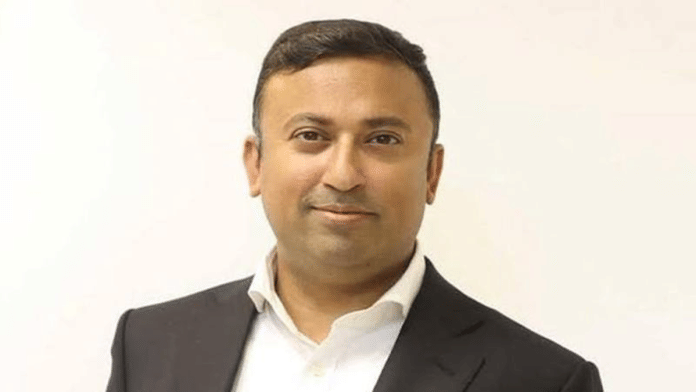
Dhaka: Restraining Sheikh Hasina and other “criminal groups” in India should be considered the “norm”, Bangladesh’s Minister of State for Foreign Affairs Humaiun Kobir said Monday, adding that the overall conversation between New Delhi and Dhaka remains “positive”.
Speaking to the press on the margins of the Bay of Bengal Conversation in Bangladesh’s national capital, Kobir underlined that Dhaka would not allow any terrorists to sit in the country and make statements against the Indian government.
“The principal challenge [to the relationship], and it’s not too much to ask for, is restraining a terrorist [living] in Delhi…Sheikh Hasina, she’s a terrorist. She’s been trying to destabilise a foreign territory sitting in Delhi. There are other criminal groups who are out in India…They are a hindrance to both countries,” said Kobir.
He added: “India does not need to facilitate them. Restrain them. That is it. We want some reciprocation. We are not going to let a terrorist from India sit here and speak against the government of India. It sets a bad precedent…The government [of India] is looking at ways to restrain them, which is positive.”
Kobir’s message comes as the fate of Hasina remains a major irritant in ties between both countries. The relationship between India and Bangladesh cratered in August 2024, following Hasina’s ouster from power in Dhaka and her fleeing to New Delhi. The former Bangladeshi PM has continued to hold press conferences in New Delhi, which created a furore in Dhaka.
Hasina’s last major press conference in New Delhi, on 5 August this year, led to strong pushback from Dhaka, with the Bangladeshi Ministry of Foreign Affairs issuing a statement underlining that until a “conducive environment” is created, any future visit by Prime Minister Tarique Rahman is unlikely.
Kobir was more circumspect, highlighting that both countries are “talking” and that India’s High Commissioner to Bangladesh Dinesh Trivedi is “doing a good job” and is “trying to understand” the ground realities in Dhaka.
“Hopefully Delhi will be receptive to him, and the opinions he gives on the context in Bangladesh. If they give him a hearing, I am very hopeful [of the relationship going forward],” he added.
The Bangladeshi Minister of State emphasised that Dhaka will “engage across the board” with New Delhi and that India remains an “important partner” for Bangladesh especially in the region. Asked about why Prime Minister Tarique Rahman did not travel to New Delhi for the BRICS Summit, Kobir said that the relationship between the two countries will remain “bilateral”.
“On the [future bilateral] visit, I am hopeful, very hopeful that it will happen. If you turn the situation around, if a terrorist from India, who killed 2,000 people in India comes to Bangladesh, he will sit here, he will abuse [India], do you think Prime Minister Modi would come here in this situation?”
Nevertheless, Kobir emphasised that dialogue is ongoing and it will resolve the challenges, which could allow for a Prime Minister Rahman to travel to New Delhi.
Earlier Saturday, High Commissioner Trivedi, speaking at the Bay of Bengal Conversation, had highlighted that India had little choice in accepting Hasina’s request to land in New Delhi, pointing out that she had been the Prime Minister of Bangladesh when she fled. Trivedi was clear that the Indian Armed Forces had no role in bringing Hasina to India, and that New Delhi was “unprepared” to receive her.
Kobir pitches single market for South Asia
Kobir, in his own speech at the conference organised by the Centre for Governance Studies Monday highlighted that the new foreign policy for Bangladesh will be one based on “strategic autonomy” and focused on protecting the country’s “national interest”.
“We seek engagement with all based on mutual respect, mutual benefit and national interest. We want strong partnerships, but we also want strategic autonomy. We want cooperation but not dependency,” Kobir said in his address to the conference.
He added: “South Asia remains one of the least integrated regions in the world. Bangladesh supports stronger regional inter-connectivity, be it trade, energy cooperation and people to people contacts. We must look at some form of closer economic integration. A potential single market access point. This is ambitious, but we need to put ourselves in that vision. We must take more regional positions.”
While underlining that the Bay of Bengal is “central” to the vision, Kobir pointed out that the water body connects South Asia with Southeast Asia and must remain peaceful. Through his official address, the Minister of State did not mention India or any regional organisations. Dhaka has in the past couple of years been pushing for the revival of SAARC (South Asian Association for Regional Cooperation), while has shown little progress in the other regional forum, the Bay of Bengal Initiative for Multisectoral Technical and Economic Cooperation (BIMSTEC).
Bangladesh is the current BIMSTEC chair. The organisation is headquartered in Dhaka, and for India remains a key forum for regional cooperation. SAARC has been dormant for the better part of the last decade. India has consistently maintained that the issue for SAARC remains the actions of Pakistan.
BIMSTEC on the other hand focuses on South Asia and Southeast Asia, with Myanmar and Thailand members, apart from India, Bhutan, Nepal, Bangladesh and Sri Lanka.
PM Rahman in his inaugural address at the Bay of Bengal Conversation made the pitch for closer integration between the countries sharing the Bay of Bengal.
The reporter was invited as a speaker to the Bay of Bengal Conversation, organised by the Centre for Governance Studies, Dhaka.