



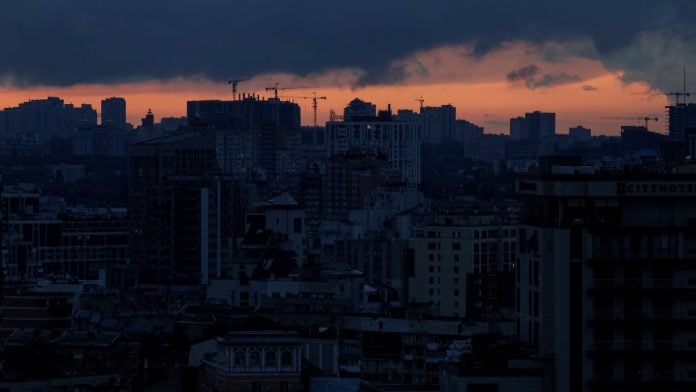
New Delhi: A United Nations probe has found that Russia’s repeated attacks on Ukraine’s energy infrastructure were intended to “deprive the civilian population from essential energy supplies and cause suffering,” which the UN body said amounted to “war crimes”.
The report by the UN Independent International Commission of Inquiry on Ukraine, submitted to the UN General Assembly Tuesday, also found evidence of Russian authorities working with recruitment agents in multiple countries to ‘traffick’ men from 29 nations, including India.
These men were then enlisted to fight for the Russian armed forces through “deception or coercion”, the report said. It added that many were promised civilian jobs before being compelled to sign military contracts and deployed on the frontlines in Ukraine.
The Independent International Commission of Inquiry on Ukraine is an independent body established by the UN Human Rights Council in 2022 to investigate alleged human rights abuses, violations of international humanitarian law and related crimes arising from the Russia- Ukraine war. The Commission is chaired by Erik Møse, with Pablo de Greiff and Indian senior advocate Vrinda Grover serving as members.
Its latest report focuses on the impact on civilians of continued strikes on energy infrastructure through the winter of 2025-2026, and on their accumulated impact on the civilian population after four years of attacks.
The commission interviewed 255 people across nine Ukrainian regions, including Kyiv, Kharkiv, Dnipro, Kherson and Odesa and found that repeated attacks on power plants, heating facilities, substations and gas infrastructure had damaged the country’s energy system and made repairs increasingly difficult.
In areas most affected, Ukrainian authorities reported that thermal power generation capacity had fallen by as much as 70 percent and thousands of households lost heating, while millions experienced electricity outages lasting hours or days. Water supplies were also interrupted when electric pumps stopped working.
The report said these attacks impacted all spheres of life, with the elderly choosing not to move to safer places and children not having access to proper education.
Fearing they could become trapped in elevators during sudden power cuts, some older people and those with limited mobility remained inside their apartments even during air-raid alerts. Others struggled to obtain medicine, food and basic assistance, the report found.
Medical personnel described treating patients for hypothermia, frostbite and respiratory illnesses linked to long exposure to cold.
Power failures also disrupted hospital procedures and impacted the safe storage of medicines, vaccines and blood supplies. Some families with children faced repeated school closures, while the lack of heating at home contributed to illness and disrupted education, the report added.
Also Read: Witkoff calls Putin a ‘humanitarian’ after Russia releases US citizen Stephen Hubbard
Russian commanders ordering attacks knew
Russia has argued that its strikes target energy facilities serving military purposes or having both civilian and military uses.
However, the commission said its investigation found that the attacks also struck civilian objects that were not legitimate military objectives.
It added that Russian commanders ordering the attacks knew that heating facilities in major population centres were indispensable to civilians, particularly during winter. The report pointed to the repeated nature of the strikes, their widening geographic reach and public statements by Russian officials about further attacks.
It identified former Russian Defence Minister Sergei Shoigu, who is currently Secretary of the Security Council of Russia, his successor Andrei Belousov and Valery Gerasimov, chief of the Russian General Staff, among the officials responsible for planning and overseeing the campaign.
The findings are those of an independent inquiry, not criminal convictions issued by a court.
The commission also examined Ukrainian attacks on energy infrastructure in Russia and Russian-occupied parts of Ukraine. It said it could not investigate their civilian impact further because Russian authorities did not provide access or respond to its requests for information.
Indians ‘trafficked’ to fight for Russia
The report by the UN Independent International Commission of Inquiry on Ukraine further examined how foreign nationals were recruited into the Russian military.
Investigators documented deceptive or coercive recruitment involving men from 29 countries, including India, Bangladesh, Sri Lanka, several African nations and countries in Latin America. The men, aged 18 to 60, often came from economically vulnerable backgrounds and most had responded to social media advertisements offering jobs as drivers, mechanics, electricians, security guards or construction workers.
Recruiters promised salaries, accommodation and other benefits, and in some cases arranged visas, flights and official-looking employment documents as well.
Upon arrival in Russia, these men were transferred to military authorities and pressured into signing contracts written in Russian, which they could not understand. Investigators said phones and passports were often confiscated, leaving recruits with little freedom to contact relatives or leave. Many recruits were also killed, injured or went missing.
Some recruits told the commission that they were threatened with violence when they resisted. Others were detained in Russia or were serving prison sentences when authorities allegedly pressured them to enlist. Many had no military experience and received only brief training before deployment to the frontlines.
“The evidence collected leads the commission to conclude that the Russian authorities, in cooperation with recruiting agents, have trafficked persons from various geographic regions, in order to enlist them in the Russian armed forces in the context of the Russian Federation’s full-scale invasion of Ukraine, in violation of international human rights law,” the report said.
Adding, “The situation in which the recruits were placed violates their fundamental human rights, including the rights to life, freedom, health, and to be treated humanely.”
(Edited by Amrtansh Arora)
Also Read: India seeks safe Black Sea shipping, grain exports & non-attack understandings in Ukraine-Russia war