



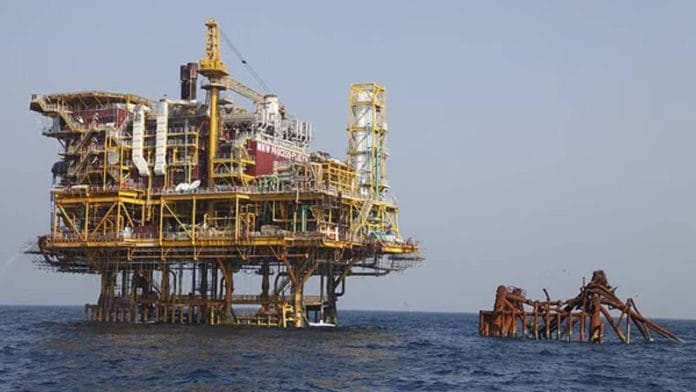
New Delhi: Indonesia has revived a contentious sea project in the strategically sensitive North Natuna Sea, a move that might test its balance with China and Russia.
Last month, Jakarta moved to restart the long-delayed offshore Tuna gas project in the Natuna Sea after securing a renewed commitment from Russia’s state-controlled energy company Zarubezhneft to continue developing the project.
The project’s revival comes at a sensitive moment for Indonesia. The government of President Prabowo Subianto is under pressure to strengthen domestic energy security and defend the country’s resource rights while avoiding an open confrontation with China, one of Indonesia’s most important economic partners.
Prime Group—a major privately owned Indonesian energy company established in 1992, which owns 50 percent stake in the gas project—told South China Morning Post Wednesday that “activities associated with the Tuna PSC have resumed in accordance with applicable regulatory requirements”.
The PSC (production-sharing contract) is the agreement governing the development of the gas field, with Tuna being the name of the designated offshore area in the North Natuna Sea.
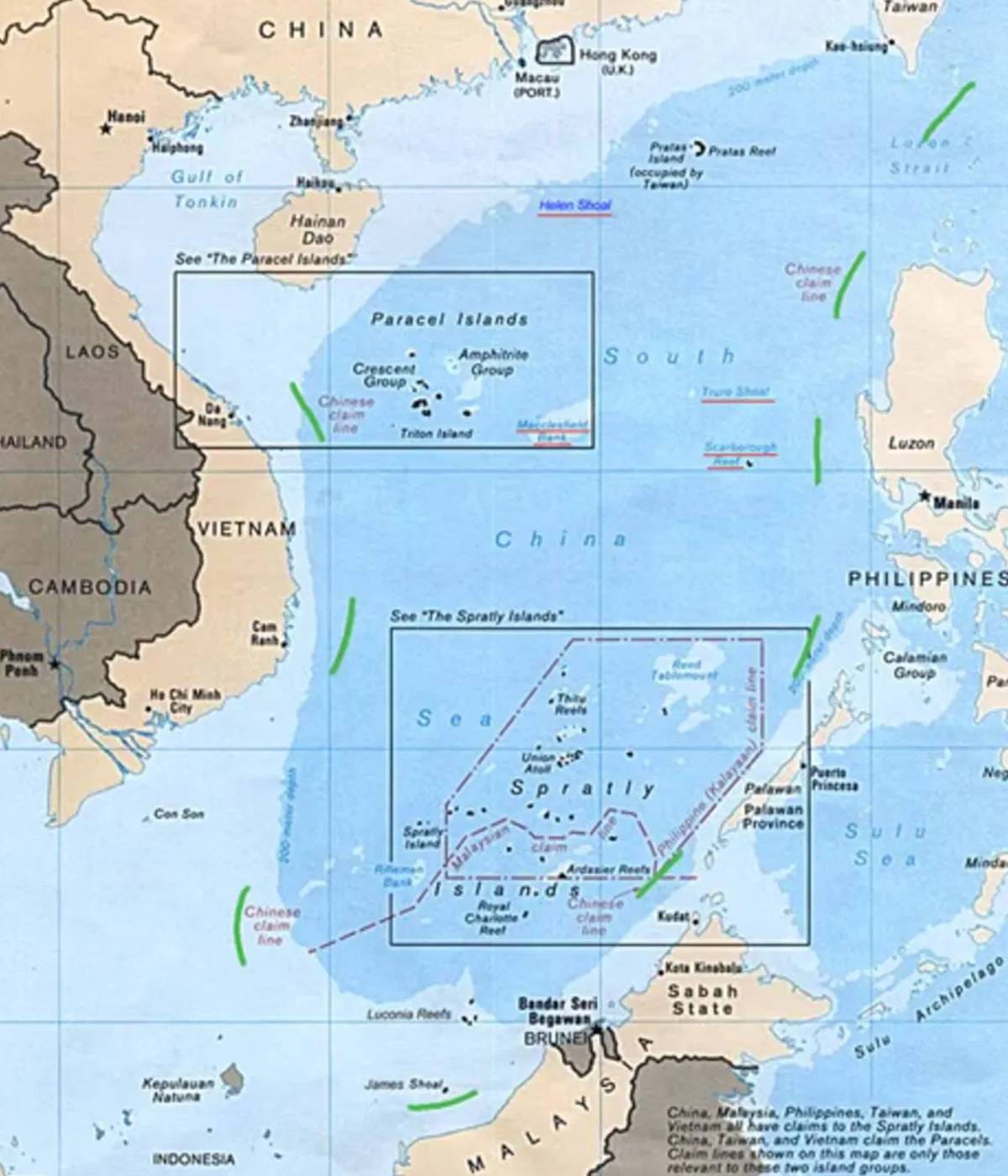
The Tuna block comes under the ambit of Jakarta’s exclusive economic zone (EEZ) and has been a geopolitical trigger between China and Indonesia. It lies to the north east of the Natuna Islands.
China’s territorial claim in the South China Sea, illustrated by the nine-dash line, projects into Jakarta’s EEZ around the Natuna Islands.
Indonesia renamed the northern reaches of its EEZ in the South China Sea as the North Natuna Sea in 2017. It was seen as a move to assert sovereignty in the area.
In 2021, a months-long stand-off took place in the region with Chinese and Indonesian ships shadowing one another. The trigger was Jakarta’s drilling of two appraisal wells at the Tuna block. China demanded the halting of the drilling, while Indonesia maintained that it was its sovereign right.
In October 2024, shortly after Subianto took office, Jakarta claimed it had repeatedly chased away a Chinese coastguard vessel that was impeding a seismic survey being conducted by a state-owned company in the North Natuna Sea. Beijing countered by claiming that the vessel was operating in China’s waters.
During Subianto’s first official visit to Beijing in November 2024, he and Chinese President Xi Jinping issued a joint statement referring to “overlapping claims” and expressing support for joint development.
However, it was unclear whether joint development included oil and gas exploration.
An analysis published by The University of Melbourne argues that this unprecedented step by an Indonesian president to recognise an overlapping claim with China will affect oil and gas explorations in the North Natuna Sea—and especially whether there will be another project with China.
According to the analysis, Jakarta’s decision to grant a concession and partnership right to a Russian state-owned company for the project, rather than a Chinese company, suggests the 2024 joint development proposal between Indonesia and China has not yet materialised.
This May, Indonesia’s deputy energy minister announced that Zarubezhneft, which holds a 50 percent stake in the Tuna block through its subsidiary ZN Asia, was willing to continue the delayed project with government support.
Earlier, the Tuna block’s exploration and exploitation was being conducted by Zarubezhneft in partnership with British Harbour Energy (formerly Premier Oil). Intensive US sanctions on Russia following the Russia-Ukraine war precipitated the latter’s exit.
Considering the close ties between Russia and China, Beijing’s response vis a vis the Tuna block project remains to be seen.
A 2016 international arbitral tribunal found no legal basis for China’s nine-dash line claim beyond what the UN Convention on the Law of the Sea (UNCLOS) permits.
Beijing has consistently rejected the ruling and claims its sovereignty and maritime rights in the South China Sea are grounded in history and law.
Indonesia had approved the $3.07 billion development plan for the Tuna field in late 2022, with regulators then projecting peak output of 115 million standard cubic feet of gas per day in 2027.
Delays and changes in potential operators have marred the planned timelines of the project.
Indonesia has also been going through a long phase of decline in domestic oil and gas production.
(Edited by Nida Fatima Siddiqui)
Also Read: Russia’s role is now to feed China. The Xi–Putin bond is like a loveless marriage