





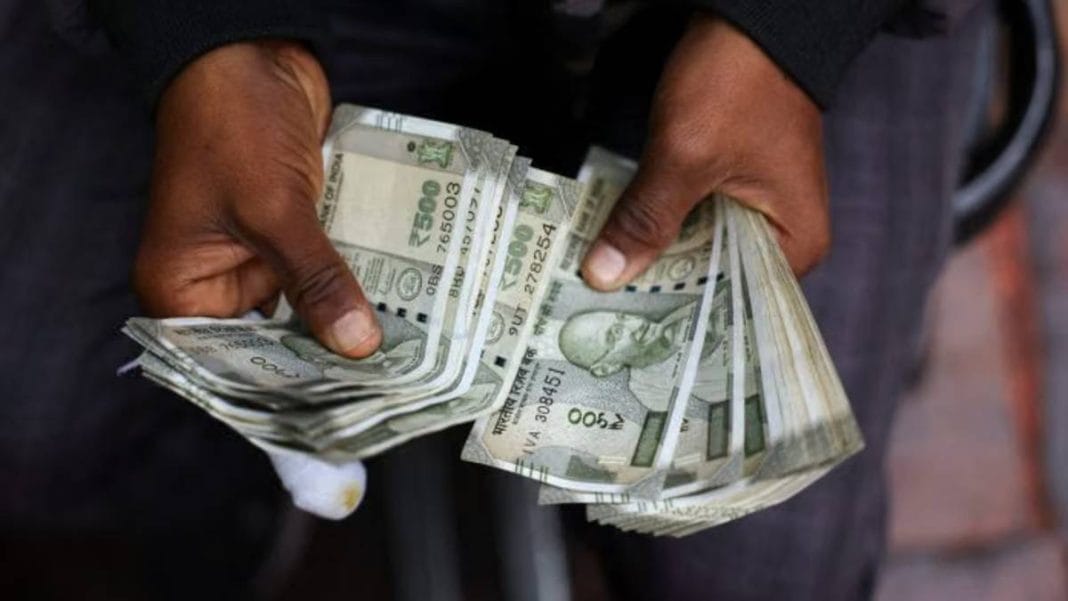


Every state-finance in India eventually collapses into one word: freebies. Cash transfers, free power and bus fares. During elections, the Election Commission of India (ECI) acts like a strict headmaster, seizing illicit cash to ensure a level playing field. While these pursuits are often mathematically disastrous, the revdi argument itself is incomplete.
Yes, blasting political parties for bypassing expenditure limits makes for great television, but it misses where the money actually goes. Take Tamil Nadu’s June 2026 White Paper, revealing a staggering Rs 13.18 lakh crore in actual outstanding debt.
Where did it all go? Fun fact: Of every rupee a state spends, roughly 61 paise is already committed before a single new scheme is announced, locked into salaries, pensions, interest, subsidies and grants. Our state governments have commitment issues, really. The ECI is fighting the wrong war. Let’s break down the math.
Salaries
Government wages are the minimum cost of running a state, climbing 111 percent in a decade to Rs 7.7 lakh crore—about 15% of all state spending.
But the burden is wildly uneven. Hill and north-eastern states top the table: Nagaland spends 37% of its budget on salaries, while Himachal and Manipur spend nearly 29 percent. The industrial economies show the stark opposite, Gujarat (6.3 percent) and Karnataka (6.6 percent) spend the smallest share. A low salary share leaves far more room to actually build infrastructure. When your budget is consumed by payroll, capital expenditure eventually dies.
Pensions
The sole reason why India’s youth love government jobs: the pensions. The guarantee that upon retirement, money will hit your account each month regardless.
Over the years, nationally, the pension bill has grown 160 percent to Rs 5.2 lakh crore. States with older workforce and pre-reform commitments are most exposed: Himachal Pradesh (19.6 percent), Kerala (16 percent) and Punjab (15.2 percent) spend the most. Every paisa is spoken for decades in advance. The recent political drift back toward the Old Pension Scheme ensures this line will only grow, not shrink.
Subsidies, the most disrupting
The outrage peaks when people are misled to believe election freebies are the sole cause of our fiscal earthquake. Blaming freebies for state bankruptcy is like blaming a single MSME for Delhi’s annual pollution fest—it’s just the easiest, most visible target.
The math simply does not support the panic. Nationally, subsidies account for barely 8-9% of total state expenditure, while completely ignoring the 30% being swallowed by the government payroll and pensions. Even if a state eliminated every single cash transfer tomorrow, its treasury would still be under.
However, the real danger of revdi lies in its sheer quantity, not its volume. This is the fastest-growing spend, up 214% over a decade to Rs 4.4 lakh crore. It is heavily concentrated in states addicted to this electoral populism: Karnataka (14%), Madhya Pradesh (13.7%), Tamil Nadu (13.6%) and Punjab (13.5%).
Interest payments
State governments are not very different from credit card defaulters; most of their interest payments are not even creating assets. The interest payments have grown 160% in a decade to Rs 5.5 lakh crore, about 11% of all spending.
This is the real danger behind Tamil Nadu’s Rs 13.18 lakh crore debt. To fund freebies without violating federal limits, states use “off-budget borrowing”, forcing state-owned discoms to take massive commercial loans backed by state guarantees.
Punjab spends 18.5% of its budget servicing debt, trailed by Haryana (17.1%) and Kerala (16.8%). They are taking out new loans just to pay interest on the old ones.
Grants-in-aid
By the time this spending concludes, some states will have already spent 80% of their budget. But the largest object head is the one almost nobody names. Grants-in-aid run to Rs 11.7 lakh crore; roughly 23% of all state spending.
These are handed to local bodies, universities, and government aided institutions, and a massive portion pays off their staff. In short, this is just expenditure by another name, directed off the state’s books. Why do debt-ridden state governments still run tourism corporations or sponsor universities with zero employment prospects? A debate for another day.
At the end, the Election Commission can seize all the cash it wants from party campaigns, but it cannot fix this broken state balance. In reality, this accountability won’t come from stricter mandates. It will only come when the central government wakes up and refuses to finance a state’s commitment issues.
Shaurya Nikhil Bhartia is a student of Chinmaya International Residential School, Coimbatore. Views are personal.
Also Read: The futility of linguistic chauvinism