





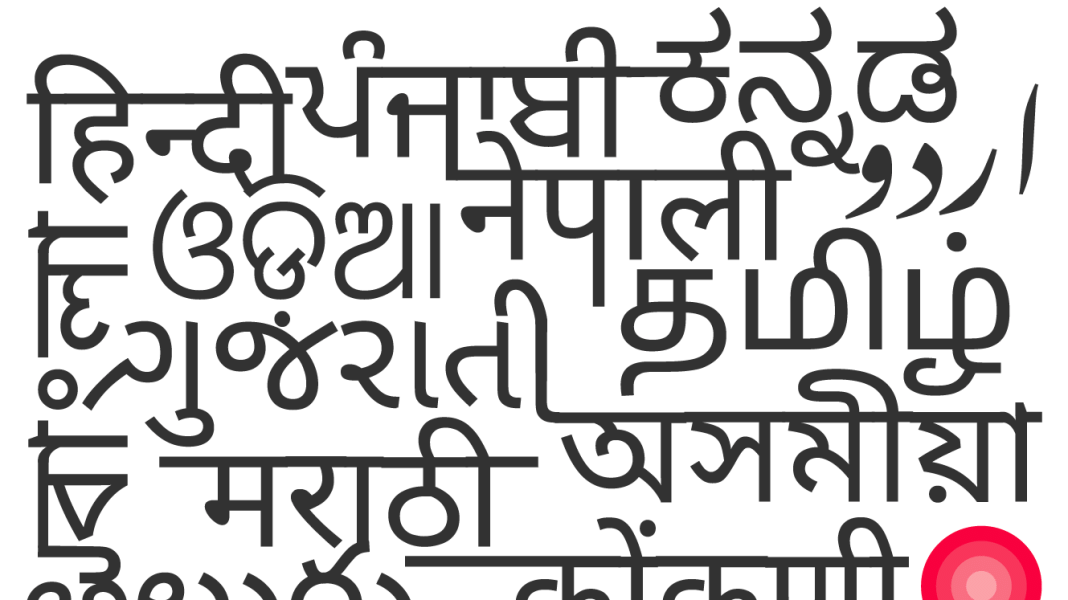


Not too long ago, Mumbai had its municipal elections. With it came the ‘once-in-five-years’ attempts by political parties to remind voters how their language was under threat from an increasing influx of outsiders. The central point of debate around who would become mayor was whether they would be a Maharashtrian or not.
Some people were “slapped” for not speaking in Marathi. Every party has gone out of its way in recent elections to remind voters that they ought to vote for them because they are the so-called protectors of the language, and therefore, the people of the state. This is not only the case in Maharashtra, but in many other states where language has become a source of polarisation on par with caste and religion.
As a polyglot, this phenomenon is rather strange. I am a native Maharashtrian who learned to speak fluent English and Hindi through education and interaction. I began learning Spanish in high school and now possess a B2 (professional fluency) level certification. I have also learned some French (A1) and Mandarin (HSK 1-speaking). I can say with certainty that no language needs any political party’s protection. Each language is beautiful in its own way and some expressions in one language cannot be translated into another language.
Let us take the example of age. In English, you ‘are’ of a certain age, but in Spanish you ‘have’ so many years. In Hindi and Marathi, a person ‘is’ of a certain age, but in French, a person ‘has’ a certain age. Something as simple as age is expressed so differently in different languages.
Knowing more than one language gives a person the chance to acquire diverse conceptual maps of the world. If someone spoke a different language, I would want to learn theirs and speak theirs as well as I can speak mine. However, some people seem to be having a rather flabbergasting approach to this. They would rather hate someone who speaks another tongue.
No great city in the world is great because only one kind of language is spoken there. Most international level cities harbour diverse crowds. Geneva is in the French speaking part of Switzerland but you don’t just hear French there. You also hear a lot of Spanish, English, German, Mandarin, other European languages and, sometimes, also Hindi. It is the ability of cities to assimilate diverse crowds that determines a city’s ability to tap into a wide pool of talent in its workforce. In India, cities like Bangalore and Mumbai have become hubs because of their ability to utilise blue and white collar labour from other states. Linguistically monoclonal cities will never reach those heights.
It is sad to see language used as a political weapon. It is not necessary for a person to hate Hindi in order to love Marathi or vice versa. In fact, both are similar languages and can easily be learned by speakers of the other. Learning languages increases the plasticity of one’s mind and is never a minus in life. If this is not enough, let us remember that the leaders who divide voters on the lines of language often send their kids to English-medium international schools. I am sure that their kids learn German and French alongside English. However, they want their voters to be narrow minded because that suits their politics.
In a country of diverse languages, urban centres must strive to become as linguistically diverse as possible so as to attract talent from all over the country.
Pratik Bapat is a student of Geneva Graduate Institute. Views are personal.
Also read: Khan Sir: Teacher, reformer or a figure of controversy?