







What does the modern architecture of India look like? What we mainly see is the use of concrete slabs, marble floors, and crisp white walls. But along with these comes the ongoing complaint during the peak summer months, “It’s too hot.”
Leaving aside the fact that cement manufacturing produces a huge amount of CO2, concrete also has a high thermal capacity, meaning it absorbs and retains large amounts of heat during the gruelling months from May to July.
India’s cities are increasingly built from materials that trap heat, demand energy, and disconnect buildings from their climate. Although global warming has become a pressing issue in this day and age, not many people discuss how to adapt India’s buildings to it.
This is where, instead of looking at futuristic solutions and spending time trying to innovate, we should take a peek into the past, because sometimes the solution may be lying in the house in your hometown.
Traditional south Indian homes were designed more around functionality, whereas aesthetics just followed. In many south Indian states, including Tamil Nadu, Kerala, Karnataka, Andhra Pradesh and Telangana, certain core characteristics of the houses remain integral to their culture.
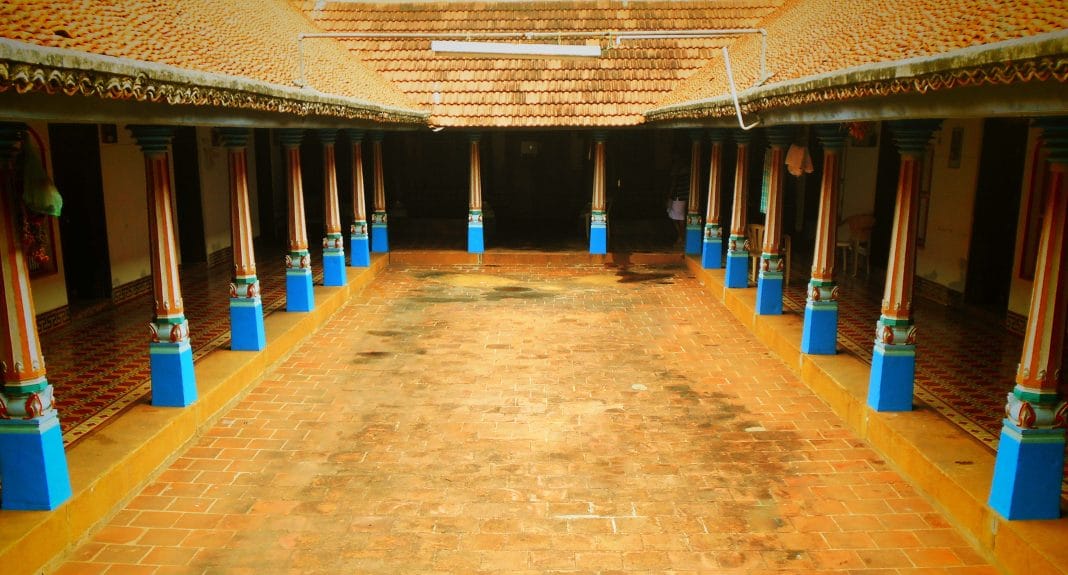
The courtyard, the heart of the home, was initially introduced to allow for cross ventilation, natural light, and hosted many family gatherings—though it may now seem unimaginable in modern houses because of concerns of letting in too much heat. This part of the home holds memories from the joys of the children watching the intense rains and the quality time shared between a family.
The thatched and sloped roofs, especially in Kerala and coastal regions, were made of either coconut thatch or clay tiles, which provided insulation against the intense heat and helped the house remain cool. The materials used in the house were locally sourced, sustainable materials such as wood, bamboo, clay, mud, and especially the now scarce, athangudi tiles—the pride of south Indian homes. Athangudi tiles—one of the main materials used, which cooled down many houses a few decades ago—are now barely used and barely found.
What better time to learn how to combat the heat with sustainable design than when we’re experiencing it? Famous architects such as B.V Doshi and Anupama Kundoo use their expertise in their field of architecture to adapt their designs to accommodate the harsh rays from the sun. Doshi, in many of his projects, used thermal mass and natural ventilation to stabilize indoor temperatures. He included ferrocement domes to reflect solar radiation rather than absorb it.
Kundoo’s approach focused on material innovation, low-impact construction, and spatial strategies to enhance airflow and reduce heat absorption.
One of her most famous projects, The Wall House in Auroville, was designed using careful orientation and shading, including a huge 4-metre overhang on the southwest façade that shields the interior from the afternoon sun.
She also replaced concrete slabs with vaulted roofs and hollow clay tubes, which not only reduced the weight of the roof but also provided excellent insulation against the heat.
Even though there are endless solutions for constructing thermally efficient houses that reduce reliance on air conditioning, where does India stand when it comes to providing buildings that can adapt to their environment?
While it consists of one of the world’s richest traditions of vernacular passive cooling, the Indian construction industry is dominated by energy-intensive, glass-heavy, international styles that often ignore the local climate.
With 2024 recording some of the highest temperatures on record, and 2026 close behind with temperatures reaching 45.5 degrees Celsius, we must begin exploring ways to make our homes more efficient while we still can. Perhaps the answer to surviving the heat has been sitting quietly in our grandparents’ homes all along.
V. Shloka Reddy is a Class 10 student at Chidambaram Chettyar International School, Chennai. Views are personal.
Also Read: Why are South Indian temples larger than ones in North? Answer isn’t ‘Islamic invasions’