





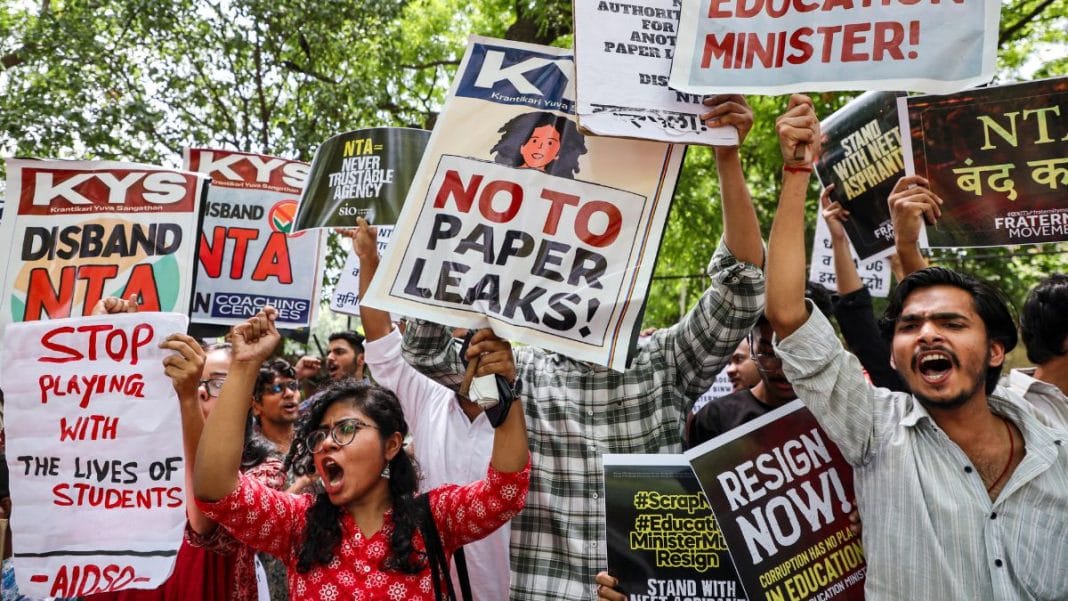


On 3 April 2026, over 22 lakh aspirants sat down and wrote the NEET UG exam, the most important one yet in their academic life. The gateway to medicine in India. Years of 4 am alarms, sacrificed nights, skipped social events, and relentless pressure. The students walked out of the exam relieved.
But on 12 May, the National Testing Agency (NTA) pulled the rug, cancelling the exam with an official notice. The paper was leaked. A CBI probe was initiated. A re-exam was announced. New admit cards would be issued and fresh dates announced soon, they said.
And just like that, the future of 22 lakh youngsters was put on hold.
To understand why this cancellation is not a mere administrative inconvenience but an actual national crisis is because NEET UG, the National Eligibility Cum Entrance Test, is the single, unified entrance examination based on which the young aspirants’ admissions into MBBS, BDS, and other undergraduate medical and dental programmes across India are decided.
Every year, roughly 20 to 25 lakh students appear for the entrance exam, competing for approximately 1 lakh MBBS seats across the country. The competition is unlike any other examination. Students literally begin preparing for the exam from Class 9th onwards, and they orient almost their entire academic lives towards this single examination.
By class 11th, many move to coaching hubs away from their families, studying for 12 to 14 hours a day for this exam. Moreover, the financial costs a middle-class family undergoes to put a child through NEET preparations can run into lakhs of rupees. The emotional cost is immeasurable.
And for all this to work out, the NTA is an autonomous body responsible for conducting not just NEET UG, but other high-stakes national exams like JEE (main). In essence, it is the guardian of meritocracy for millions of Indian aspirants. Its core responsibility is maintaining the integrity of the exam. This is the mandate and the reason NTA exists. What happened on 3rd May is a direct failure.
What makes it even worse is that, by the time the 22 lakh students sat down to write the exam, there were already signals of a compromise. Questions from the paper had reportedly matched the circulating ‘Guess papers’. Rajasthan Police had already begun investigating. The red flags already existed.
And yet, the exam was conducted. Every student who wrote the exam, every invigilator sat at every centre, and the entire machinery of the national examination ran its course. Only after it was all over, after the students had gone home, after the relief of completing the exam had set in, only then did the NTA issue a cancellation notice.
The question is simple—if you knew, or had reason to believe, that the paper was compromised, why did you make 22 lakh students write it, only to cancel it after? The silence from the government on this question is the loudest and gravest part in the entire issue.
And this is not the first time. The 2026 crisis is not a one-off. It’s a continuous institutional failure that several students and parents have been raising alarms about for years.
In 2024, the NEET UG paper was leaked in Patna the night before the exam. And when the results surfaced, an extraordinary number of 67 students had secured a perfect All India Rank 1, many of them from the same exam centers. The Supreme Court of India had stated then that “the sanctity of NEET UG 2024 has been affected”, after hearing petitions from students across the country.
The 2026 crisis arrived despite all the protests and investigations. Despite the formation of a high-level committee to reform NTA. It arrived even though the government passed the Public Examinations (Prevention of Unfair Means) Act, 2024, specifically to give legal teeth against paper leaks and malpractice.
When the NTA cancels an exam and announces a re-exam, the official communication is clean and procedural. What it does not account for is the psychological devastation of being told that your best effort, your most prepared performance, has been declared void through no fault of your own. The hard work of the 22 lakh students was discarded because the system that was supposed to protect them abandoned them.
The re-exam announced is unapologetic comfort. It is not the solution. What guarantee exists that there won’t be a leak this time? Without structural reform, a re-exam conducted by the same agency, in the same format, through the same process, carries the same vulnerabilities.
India aspires to be a global leader in healthcare and medicine. That aspiration begins with how this country treats the young men and women who dare to pursue that path. And right now, it is treating them as collateral damage.
Ume Ayman is a student of Alliance University, Hosur, Tamil Nadu. Views are personal.
Also read: The modest blouse: A colonial relic that still dictates Indian womanhood