





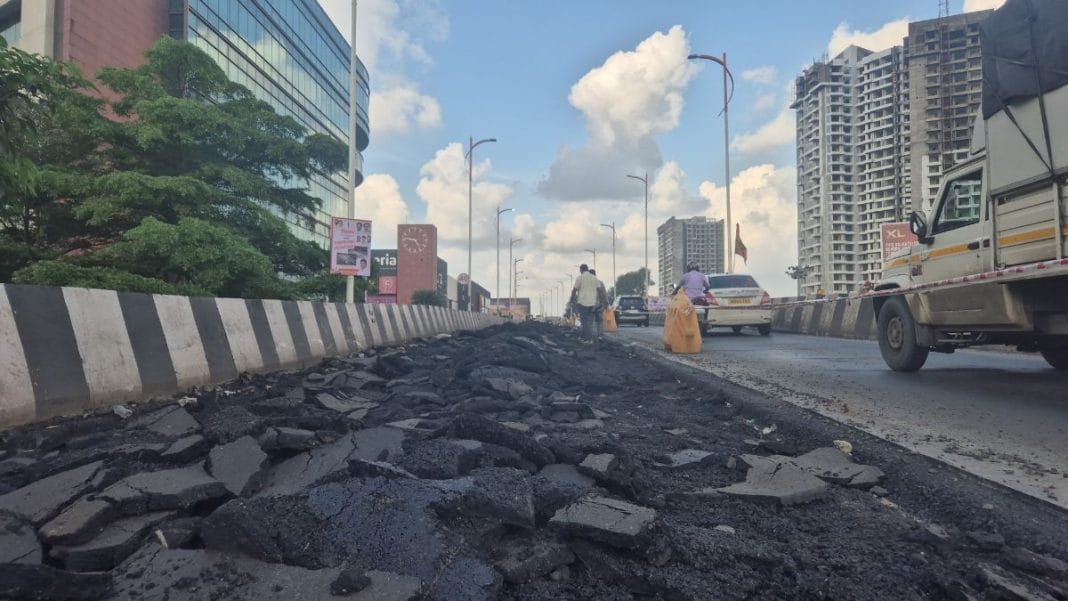


As a student who rides a two-wheeler to college every day through heavy city traffic, I used to think potholes were my biggest enemy. We have all grown up dodging those deep, dangerous holes in the road. But lately, I have noticed a massive shift. The holes are finally being filled, but the danger has not gone away, it has just changed shape. Potholes are no longer the main issue we face on our daily commute. Today, the real nightmare on Indian roads is the “pothill”.
What exactly is a pothill? It is exactly what it sounds like. When workers come to fix a broken section of the road, instead of making it smooth and flat, they just dump a huge pile of extra concrete or thick tar right on top of the hole. They do not smooth it out. They do not level it with the rest of the street. They leave behind a hard, ugly bump that acts like an unexpected, jagged speedbreaker.
To make matters worse, these pothills are basically invisible. Unlike real speedbreakers, they are not painted with white stripes, and no street signs are warning you about them. At night, when the streetlights are dim, or during the rainy season when the roads are wet and dark, you cannot see them until you are already flying over them.
Hitting a pothill is a terrible and shocking experience. When you are driving a bike, hitting a deep hole is bad, but hitting a solid block of uneven concrete can actually be worse. It acts like a ramp. It throws your bike up in the air and gives a sharp shock straight to your spine. You can lose your balance in a split second.
Many times, I have seen riders slip, drop their bikes, or get pushed into the next lane where cars and heavy trucks are rushing by. These bumps cause serious accidents. On top of that, it completely ruins our vehicles. For a student on a tight budget, constantly fixing bent wheel rims and broken shock absorbers is a huge headache.
The damage does not stop at individual accidents. Pothills actually create massive traffic jams. When a driver suddenly sees a rocky hill in the middle of a fast-moving lane, they slam on their brakes. The car behind them has to brake even harder, and suddenly, a completely clear road turns into a mile-long traffic jam just because of one badly patched hole.
Even worse, think about emergency vehicles. An ambulance rushing a patient to the hospital has to slowly bounce and rock over these urban mountains, wasting precious minutes and causing pain to the sick person inside.
How did our roads turn into this uneven mess? A lot of the blame falls on the extreme carelessness of the road repair teams and the greed of contractors. The people hired to fix our roads are mostly untrained workers. Their approach to the job is simply careless and rushed: they fill the hole, put a little extra material on top just in case it sinks, and then they leave. Furthermore, contractors often want to save money. Instead of renting heavy road-rollers to press the fresh tar flat, they just expect the heavy tyres of passing buses and cars to press the concrete down over time. But instead, the material just dries into a permanent, dangerous hill in the middle of the street.
However, if we are going to be completely honest, we also need to look at our own behaviour. When you look at how other countries fix their roads, the difference is huge. In many places abroad, if a road needs fixing, they block the entire street. They put up clear signs, force traffic to take a different route, and use heavy machines to flatten and perfect the road. They let the material dry completely before letting a single car touch it.
In India, if the authorities tried to block a whole road for a few days to do a good job, the public would lose their minds. We simply do not let the workers do their jobs peacefully. If a lane is closed, we start honking wildly. People will step out of their cars to yell at the poor workers. Angry drivers will actually push the barricades away and drive their heavy cars right over the wet, fresh concrete just to save a few minutes on their trip. We expect world-class, buttery smooth roads, but we have zero patience to let the system work. We expect the workers to do magic while heavy traffic is flowing right over their toes.
At the end of the day, our roads are a dangerous mess because of failures on both sides. Yes, the workers need proper training and contractors need to stop cutting corners. The road teams need to stop being lazy and do their jobs correctly so we do not end up with these deadly pothills. But as citizens, we also need to change. We need to accept that building good things takes a little time. If we really want smooth roads, we have to follow the rules, take the longer detours without fighting, and give the workers the space they need. Until both sides fix their behaviour, we will just keep bouncing around on these dangerous urban mountains, waiting for the next accident to happen.
Varad Vinay Chutake is a student of Brihan Maharashtra College of Commerce. Views are personal.
Also read: The new ‘dog ate my homework’: AI is a tool to assist learning. It’s being misused as a substitute