







The ethanol blending programme is often advertised as one of India’s biggest development success stories and seen as a step towards cleaner mobility, reducing reliance on imported crude oil and bolstering climate action. It is frequently cited as a policy that seeks to balance economic growth with environmental responsibility. By many measures, it has been a success.
But like all success stories, this one too has a side that barely makes it into the headlines. Beyond blending targets and emission reduction figures, lies a fundamental question; who is this development for?
One of the answers is definitely not Byrnihat.
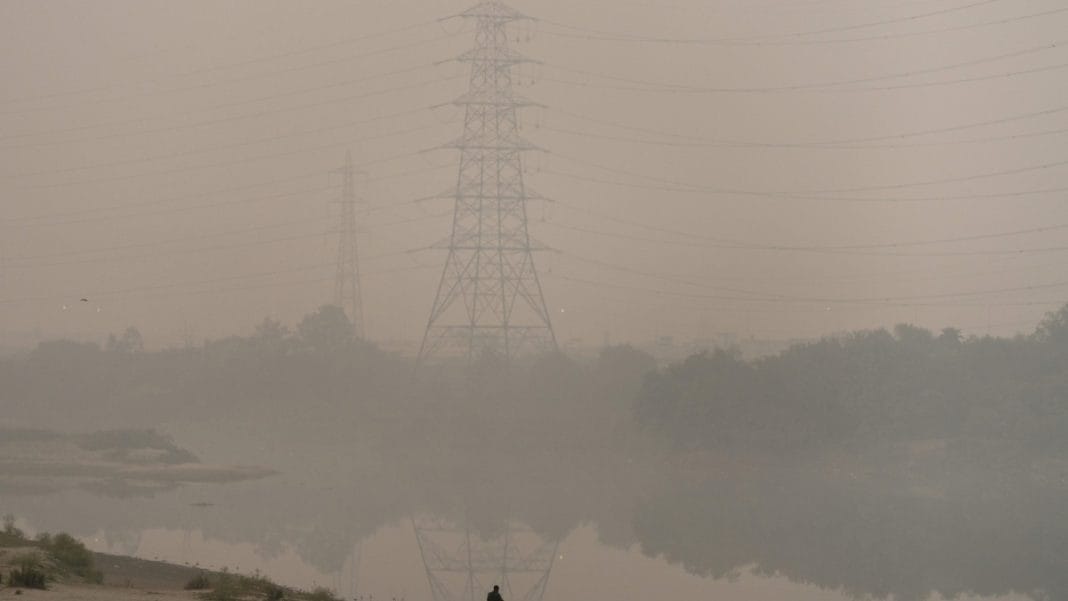
When we imagine Meghalaya, we think of rain soaked hills, lush green forests and some of the cleanest air in the country. But Byrnihat, a small town on Meghalaya Assam border is far from this imagery. It is consistently in the top ten most polluted cities of the world.
Home to a dense clutter of cement plants, ferro alloy units, distilleries and the ethanol factories supplementing India’s clean drive.
It’s become an industrial powerhouse whose products drive growth beyond its borders. Ethanol is of course not the only reason for Byrnihat to choke, but it certainly forms a part of the bigger industrial ecosystem that is driving India towards a cleaner future.
For the residents of Byrnihat, pollution is not an annual report or air quality index flashing red on their screens.
It is the quiet dust settling on their rooftops, the soot that is now covering almost all of their trees and crops, it is the repeated washing of fruits and vegetables three to four times to make them fit for consumption.
Their rivers, that once sustained them now carry industrial discharge, and dead fish floating in the river is now common.
The damage is evident off the landscape also. A recent Frontline photo essay reports a 77 per cent rise in acute respiratory illnesses, alongside increasing cases of skin diseases, fungal infections and tuberculosis.
But more chilling than the figures in the report is the apparent lack of dismay among residents about these figures. Pollution is no longer considered a crisis. It has become a part of everyday life.
Byrnihat’s geography makes the matter even more complex, sitting directly on the Assam Meghalaya border, this town falls between two state administration where responsibility is shared but accountability is not. Pollution ignores borders; governance, unfortunately, does not. There is periodic action taking, but no long-term solutions, and residents are left to suffer the ramifications of the situation they did not create.
Byrnihat is not a sole case either. Nearly 1,200 kilometers away town of Ula in West Bengal with a population of merely 40,000 was ranked as the 10th most polluted city in the world in IQAir’s 2025 World Air Quality Report. Down To Earth also reported that air quality has deteriorated in nearly all the monitored cities of West Bengal and another study declared that Bihar and West Bengal form the hub of an emerging pollution hotspot. Different towns, different industries, but the same outcome.
These towns together reveal a much greater issue than an environmental problem.
They make us wonder, how can development that benefits millions be made at the expense of the health, environment and fundamental rights of the people who just happen to live beside the factories that makes this development possible quietly? Right to life under article 21 was never meant, nor should it be based on a person’s pincode.
Now having come this far, seeing the unfortunate tale of these towns, you may or may not have noticed something.
Throughout this article, I have repeatedly spoken about development, its acheivement, ambitions and costs. I have commended it, condemned it and challenged, “who does it serve?” But one word was deliberately left out, that should almost instinctively belongs beside it.
Sustainability.
Most of us probably didn’t notice its absence because somewhere along the way, we have stopped expecting these words to come together. But that, perhaps, is the issue.
We are comfortable in celebrating development without thinking whether it’s sustainable; we’re comfortable in applauding cleaner fuels and not thinking about the communities suffocating from the cost; we’re comfortable in counting lower emissions but not the people absorbing the cost.
Therefore, the day the word “development” begins to feel incomplete without “sustainability” is the day we will begin asking more of our policymakers. Until then, Byrnihat and Ula will serve as a reminder that pollution has not disappeared.
It has simply been given a different address.
Bhargvi Singh is a student of National University of Study and Research in Law, Ranchi. Views are personal.
Also Read: TMC crisis: How a seemingly invincible political powerhouse imploded