



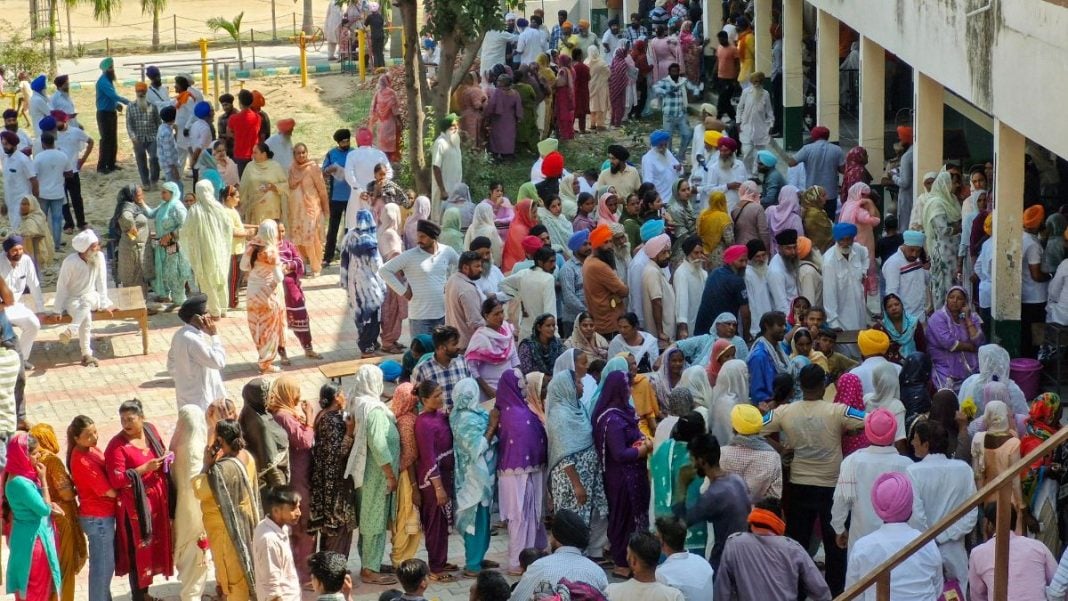


For the past three decades, Punjab has been governed by the Congress, the Akali-BJP alliance, and, since the 2022 assembly elections, the Aam Aadmi Party. Before AAP came to power, politics in the state revolved around the Akali Dal and the Congress, with power shifting between them.
But the Bargari ‘beadbi’ (sacrilege) controversy of 2015 changed the dynamics. The incident led to severe resentment among people against the Akali dal-led government, which grew further when ‘Behbal Goli Kand’ took place, in which police opened fire on peaceful protestors and left two people dead. These incidents led to the fall of the Akali Dal and created a vacuum for new political forces. AAP emerged as a major political force soon after.
In the 2017 assembly polls, AAP could not capitalise on the opportunity, and the Congress party formed the government in Punjab. However, it promised to deliver justice for Bargari and Behbal, but failed to deliver and eliminate drugs. By the 2022 election, people were exhausted with both Congress and Akali Dal; they wanted change. AAP was given a clear mandate in the hope of change.
AAP has been in power for nearly five years now, but it has failed to deliver the change that people had voted for. Although progress has been made in school education and significant work has been done in canal irrigation, resentment among people remains high. AAP government has failed to address the issue of drugs with sincerity. Furthermore, the issue of debt remains critical; debt has increased from Rs 2.83 lakh crore in 2022 to Rs 4.17 lakh crore in mid 2026.
2027 election: Chaos, resentment, political vacuum, or rise of right-wing forces?
It is a chaotic period for Punjab. There is high political resentment among the masses because the centrist has failed to address the grievances of the people, and this is the reason that some right-wing forces are being seen as alternatives.
Akali Dal (Waris Punjab De), initially a far-right pressure group in Punjab, is now seen as a political force in Punjab. It emerged out of the vacuum created by the fall of the Akali, and the issues of Sikhs that the Akali Dal had failed to address. It advocates the key issues of the sikhs and sikh panth: the issue of ‘beadbi’, Behbal Kalan Goli Kand, and Bandi Singh. However, it does not have any cadre as such, but it has been successful in
penetrating the young minds so far, especially in the Majha region.
This is the first time the BJP is contesting all 117 seats in Punjab alone. BJP, being a Hindu-centric party, holds most of its vote share among the Hindu population in urban cities. But it is not only relying on the Hindu vote bank; BJP is also trying to penetrate the SCs, STs, and backward castes too, because all these sections combined make up a big chunk of the population of Punjab.
Congress so far seems like a leaderless front. Internal rivalry to push each other down is bringing the Congress down in Punjab.
Although the Aam Aadmi Party has failed to deliver what the masses hoped for, it still is the most significant party in Punjab right now. The improved irrigation system and canaals has benifited the farmers. Rs 1,000 per month for general category adult women and Rs 1,500 per month for SC women will impact the women’s vote share for AAP positively.
The Vidhan Sabha election of 2027 in Punjab won’t be an easy ride; it will be hard for the parties to contest and for analysts to analyse. Will it address the resentment and grievances of the masses?
Mehakpreet Sharma is a B.A. second year student of D.A.V. College, Chandigarh. Views are personal.
Also Read: Indian universities and the death of political discourse