





In this age of constant scrolling, career stress, comparisons, burnout and immediate satisfaction, traditional Indian festivals might seem alien to the modern Gen Z experience.
However, there are two festivals that seem to be more than relevant in our current situation—Ayudha Pooja and Vijayadashami.
These two have everything a modern young person needs: lessons on being patient, skilful, respectful, disciplined, and triumphant in all senses of the word.
The core of both these festivals comes down to a single question: Who am I becoming in this process?
Festival of tools and talent
Ayudha Pooja, celebrated on the occasion of Navaratri, is the worship of ayudha—tools, weapons, instruments, and implements. In earlier times, warriors used to worship their weapons, farmers would worship their ploughs, and craftsmen revered their tools of trade.
Nowadays, the concept has wonderfully evolved in students worshipping their books and laptops, doctors revering their instruments, driver decorating their vehicles, artists venerating their cameras or instruments of music, and journalists worshipping their pens, notepads, and computers.
This has great significance with respect to the Gen-Z population. Individuals of younger age tend to have the notion that they are valued on the basis of how many likes, followers, rankings, and salaries they have.
The significance of Ayudha Pooja comes from the realization that one’s tools are holy because these tools denote the capability of creation, service, and development. The laptop that you use is not just something to do your assignments or play games on; it can be used to learn, write, design, code, write news stories, or bring about change.
Ayudha Pooja teaches about the sanctity of one’s work. In an age where most young people face immense pressure to select a “perfect” profession, this festival tells us that any honorable trade, however humble, is worth its weight in gold. From coders and farmers to chefs and mechanics, from teachers and nurses to designers and content creators—we all work with the implements of society’s sustenance.
Victory with purpose—Vijayadashami
Vijayadashami translates to “victory on the tenth day”, and it is the final day of Navaratri, carrying two important cultural stories with it. In the story of Goddess Durga, she wins against the demon Mahishasura after a fight that lasts nine nights, depicting the triumph of divinity over arrogance and destructive energy. The other story is about Rama defeating the evil Ravana, and it depicts the defeat of egoism and greed.
For the present generation of youngsters, there is no necessity to see these tales purely from the perspective of ancient mythology. The tales can be viewed as struggles within oneself.
Mahishasura can stand for one’s ego, obsession, addiction, fear, and anger. Ravana can stand for his ambitions that lead him to win at all costs. Durga’s victory warns them that power without compassion is perilous, whereas Rama’s victory shows them righteousness brings victory.
Gen Z is born in an environment that comprises competitive examinations, internships, placements, branding oneself, and making one’s presence felt on social media.
Vijayadashami asks a pertinent question—are we pursuing success or building our character. Victory gained through deceit, violence, and manipulation is not really a vijaya. Victory is victory when talent is tempered with values.
Shami tree lessons
The most important symbol of Vijayadashami is the shami tree, also known as banni in Karnataka. The Mahabharata story reveals that the Pandavas concealed their weapons in the shami tree while they were away in disguise for a year. Later, when the proper time arrived, Arjuna took out his weapons and prepared for the battle.
It’s a tale that rings loud and clear to the youth. We experience times when we may be feeling overlooked, jobless, rejected, or even made to wait. Our skills go unutilized, our aspirations go on hold. However, through the shami tree, one learns that preparing oneself is never wasted effort. It’s like the unseen arsenal that Arjuna possessed.
In Karnataka, exchanging leaves of banni on Vijayadashami signifies wealth, good will, and collective victory. In today’s age, where even friendships can be superficial, it becomes important for us to remember to appreciate each other’s success instead of hating each other’s success.
Mysuru Dasara: Culture as living heritage
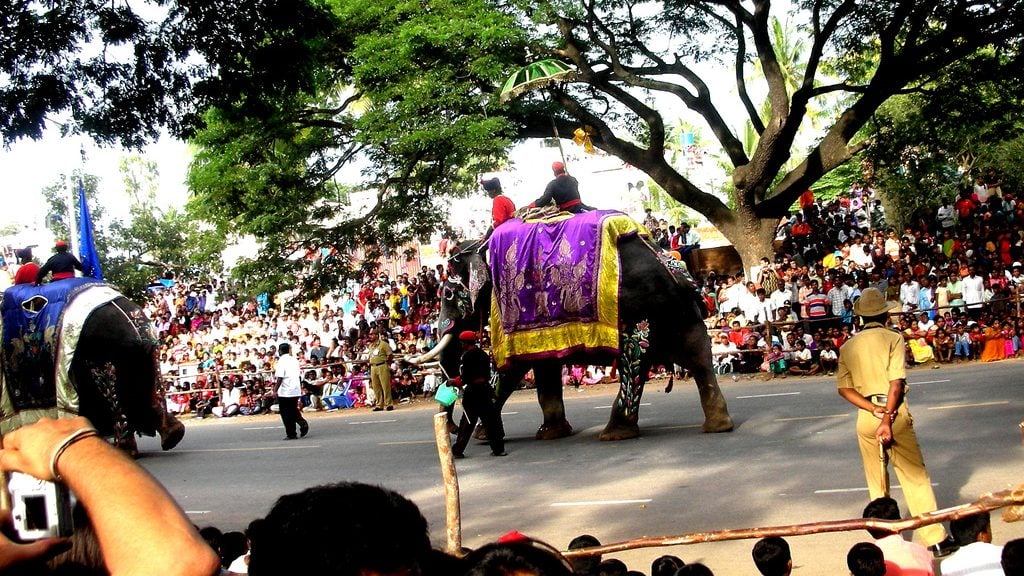
There is no better showcase for the majesty of Vijayadashami than the Mysuru Dasara festival in Karnataka, celebrated as the Naada Habba of the state. The public practice of the event is linked with the Vijayanagara Empire and re-introduced by Raja Wadiyar I in 1610. The festival is an amalgamation of faith in Goddess Chamundeshwari and parades, performances, illumination, and folk artistry.
For Gen Z Kannadigas, the Mysuru Dasara is much more than a tourist attraction. It is a reminder that culture is living through practice, performance, and transmission. From the decorated elephants, traditional dolls of Gombe Habba, Banni Pooja, and palace illumination, each is a story of memory, identity, and community.
Gen Z can embrace this heritage not only by participating in the event but also by documenting the event in a responsible manner via photography, podcast, reel, article, translation, and digital documentation. Culture lives when the youth tells its story.
Guide to the bewildered generation
Ayudha Pooja and Vijayadashami impart some valuable lessons for modern living:
Respect your tools: Take care of your laptop, books, instruments, and work space because they show your dedication to your chosen field.
Prioritise skill over status: A career worth its salt depends on your skill, discipline, and dedication rather than your titles.
Do your groundwork in silence: Like Pandavas’ weapons in the shami tree, your hard work will remain unnoticed now, but will pay off later.
Fighting your demons: The distractions, comparisons, procrastinations, and self-doubts of the modern era can be likened to the demon Mahishasura, and your discipline as Goddess Durga.
Starting again: Vijayadashami is regarded as an auspicious day to celebrate the commencement of education or Vidyarambham, which sends a message to youth that it is never too late to start anew.
Vijaydashami teaches victory through ethics.
Ancient heritage, contemporary significance
Historically, these festivals developed from Vedic respect for arms, epic stories like the Mahabharata and Ramayana, and eventually devotional literature like the Devi Mahatmya. The Indus Valley Civilisation could be seen as an early part of South Asian religion, but there is no concrete proof of the presence of Ayudha Pooja and Vijayadashami in that civilization; rather, their cultural legacy comes later, from Vedic, epic, Puranic, and other regional traditions.
It is their honest representation that lends them more significance rather than any loss of credibility. Their significance does not come from any false sense of their ancient heritage. It comes from what they still have to teach today: work is worship, knowledge is power, patience is preparation, and victory is righteousness.
For an entire generation trying to find itself, Ayudha Pooja tells you to respect your talent. Vijayadashami reminds you to put your talent to good use. Combined, they convert an age-old tradition into a blueprint where a youngster is not only successful, but worthy of being so.
Chaithanya Vishwamithra DA is a student of SDM PG Center, Ujire. Views are personal.
Also read: Mumbai will now track its debris. But where will it go?