



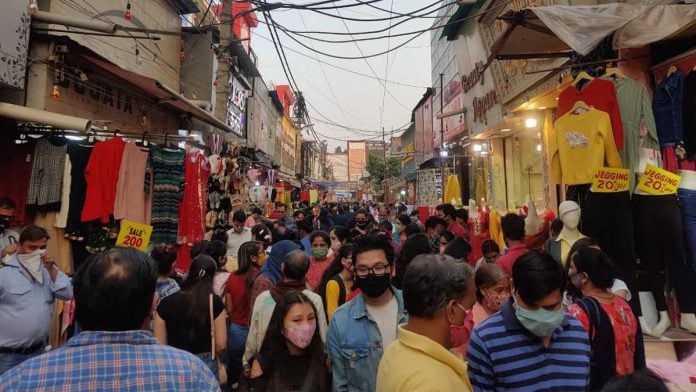
A week before Diwali is perhaps the craziest time to visit a market. There are gifts to buy, homes to decorate, clothes to shop for and endless to-do lists. Markets are crowded, shopkeepers are busy, and shoppers are constantly moving from one store to another. It is also the time when I’m reminded how little has changed when it comes to something as basic as finding a toilet.
I grew up visiting Delhi’s markets with my parents. Two decades ago, shopping meant spending hours walking through Chandni Chowk, Sarojini Nagar, Sadar Bazaar, Gaffar Market, Gandhi Nagar and Kamla Market. The markets have changed since then. The ordinary shops have turned into showrooms with glass exteriors, roads have improved, and eateries have taken over the footpaths. Shopping has become a very different experience.
But one thing remains painfully familiar — the absence of decent, clean, easily available public toilets.
Two decades ago, I remember my mother used to tell us not to drink too much water before going shopping. She would say so because there was no toilet in the markets back then. As children, we learnt to adjust. We would avoid drinking water and wait until we got home.
Twenty years later, I find myself doing the same thing.
Whenever I know I will be spending several hours shopping, I consciously avoid liquids. It has become almost instinctive. Sometimes, I realise how cruel it is that a habit formed during childhood has followed me into adulthood.
Also read: Kashmiri Pandits, Muslims rally behind Bigg Boss 20’s Qazi Touqeer
No hygienic toilets in sight
Delhi’s major shopping destinations are not small neighbourhood markets. They attract lakhs of people every day, including women, children, elderly people and visitors from outside the city. Yet, accessible and hygienic public toilets remain difficult to find. Some markets do have toilets, but their condition is often so poor that people would rather avoid using them.
Last week, I went to Sarojini Nagar for Diwali shopping. It was awfully crowded. I spent three hours and didn’t drink a drop of water. To use the toilet, I had to come outside the market and I found it in a horrible condition — the floor was wet, there was no handwash, and the damp room stank.
The problem is not limited to Delhi. Jaipur, a heritage city that attracts tourists from across India and the world, also has markets where shoppers struggle to find basic toilet facilities. A city that takes pride in its heritage, architecture and shopping destinations cannot overlook something as fundamental as sanitation.
We often measure the transformation of our cities through wider roads, new buildings, better lighting, organised markets and fancy storefronts. But urban development should also be measured by how comfortably people, particularly women, can use public spaces.
A woman should not have to risk being dehydrated just to spend an afternoon shopping. An elderly person should not have to cut a visit short because there is no accessible toilet. Parents should not have to plan an entire shopping trip around their children’s basic needs.
Markets have changed their appearance, their businesses and their infrastructure, but the search for a toilet still transports you into the past.
Perhaps, before the next Diwali shopping rush, our cities could finally address this basic requirement. After all, a market is hardly shopper-friendly if people cannot even find a place to relieve themselves.
(Edited by Janaki Pande)