



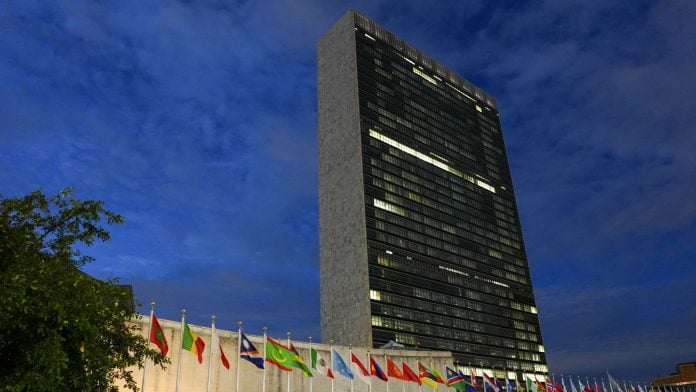
The United Nations failed to renew the mandate of its peacekeeping mission to the disputed Western Sahara for the first time in 35 years, threatening to escalate tensions between Morocco and Sahrawi rebels fighting for an independent state in the territory.
The UN Security Council on Friday could not agree on different resolutions to extend the mission’s mandate. One backed by the US, proposed altering the mission so it didn’t have to commit to an eventual referendum on Western Sahara’s status, but it was vetoed by Russia.
The second resolution which was backed by Russia only got three votes and was vetoed by the US.
The mandate of the mission, which has 534 personnel deployed across the vast territory, is set to expire on Saturday, and the lack of an agreement threatens to unravel its work.
The mission was established in 1991 after a roughly 15-year conflict between Morocco and the Algeria-backed Polisario Front that claimed at least 9,000 lives. The plan was to organize a referendum over the fate of the territory, but the vote never took place amid disagreements over who would be eligible to participate.
“This is a mission that unfortunately became a permanent monument to something that could not work,” said Michael Waltz, the US ambassador to the United Nations.
Russia’s UN envoy, Vasily Nebenzya, called the vote against his country’s proposed resolution a “political murder of the mission” and said the US proposal would have “reversed entirely” the resolution process for the dispute.
A swathe of Atlantic coastline and desert bigger than the UK, the fate of Western Sahara has been bitterly disputed since Morocco moved to annex it after Spanish colonial forces withdrew in 1975. Morocco, which controls about 80% of the territory, refers to it as its Southern Provinces, considering the region part of the kingdom’s historic realm before European expansion in the 19th-century. Sahrawis are an ensemble of nomadic tribes indigenous to the territory.
The UN designates it a non-self-governing territory. Algeria, which styles itself a supporter of international anti-colonial movements, is also locked in a broader struggle for influence with Morocco in West Africa.
The cabinet of Morocco’s King Mohammed VI called for a prompt end to the presence of the UN mission’s “personnel, vehicles, equipment and symbols” and expressed satisfaction with the non-renewal of its mandate as “a significant step towards the definitive closure of the Moroccan Sahara issue at the United Nations”.
Before the UN vote, Polisario vowed to “escalate the fight to expel the occupation and achieve full sovereignty.” Denying the right to a referendum on self-determination can’t be the basis for a peace deal, the group said in an Oct. 23 statement.
During President Donald Trump’s first term, the US became the first permanent member of the UN Security Council to back Morocco’s claim under a 2020 pact that led to the kingdom re-establishing ties with Israel via the the Abraham Accords.
France, the UK and Spain later joined a growing chorus backing the plan. Foreign endorsements have helped spur an investment boom in areas under Moroccan control, with billions of dollars being spent on facilities such as a deep water port and the southern section of a 660-mile (1,062-kilometer) highway named after Trump.
This report is auto generated from the Bloomberg news service. ThePrint holds no responsibility for its content.