






By Sarah Young and Alexander Cornwell
LONDON/TEL AVIV, Sept 8 (Reuters) – Britain will announce a trade ban on goods made in Israeli settlements in the occupied West Bank later on Tuesday, a senior minister said, framed as a step up in UK support for a two-state solution.
The U.S. is likely to strongly oppose Britain’s intervention, and some in Israel have already reacted angrily with Finance Minister Bezalel Smotrich calling for the UK ambassador to be expelled.
Britain’s foreign minister Ed Miliband, six weeks into the job, flagged last week that he wanted to reset policy on Israel and he will announce the trading restrictions later.
The impact on the £6 billion ($8.12 billion) of annual bilateral trade is likely to be minimal, with details unclear of how the UK will differentiate between goods originating in West Bank settlements from products made in Israel.
British Prime Minister Andy Burnham, in office since July, discussed the Middle East in a call with U.S. President Donald Trump on Monday, when he stressed “the importance of the two-state solution”, according to his office.
UK OPPOSES E1 SETTLEMENT PLANS
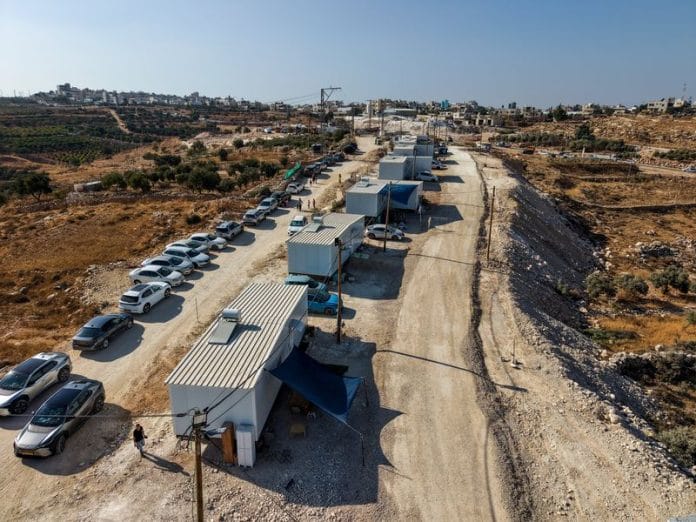
At issue is Israel’s E1 settlement project in the West Bank, which Miliband and other western politicians have said would cut across land the Palestinians seek for their own state.
U.N. bodies and most governments, including Britain, consider Israeli settlements in the West Bank illegal and regard the West Bank as territory under military occupation.
Israel says the territory is disputed rather than occupied, and asserts that Jews have a historical claim to the land.
Britain and other European nations criticised Israel’s E1 settlement plans in August, and work and pensions minister Pat McFadden said these developments were behind the sanctions.
“The reason that danger has become more urgent is because of expanded settlement activity in recent weeks and months,” he said on Times Radio on Tuesday.
The Israeli prime minister’s office and foreign ministry did not immediately respond to requests for comment.
Israeli Prime Minister Benjamin Netanyahu is facing an election on October 27, with polls showing his ruling coalition is likely to lose several seats and fall short of a majority.
Israel-UK relations have become increasingly strained in recent years with London criticising Israel’s conduct in Gaza, the expansion of settlements in the West Bank and rising settler attacks on Palestinians.
Spain, Ireland and the Netherlands have each moved to ban imports of goods originating in Israeli settlements in the West Bank, though not all the bans have come into effect.
McFadden said on Sky News that Israel would remain an important trading partner for the UK and there would not be a boycott of all Israeli goods.
Goods originating from settlements are mainly agricultural, including fresh produce and wine, and make up only a tiny fraction of Israel’s total trade flows.
Foreign diplomats say an import ban could be difficult to enforce as some goods from Israel may use products from settlements without identifying their origin.
($1 = 0.7393 pounds)
(Reporting by Sarah Young in London and Alexander Cornwell in Tel Aviv, Editing by Paul Sandle and Andrew Cawthorne)
Disclaimer: This report is auto generated from the Reuters news service. ThePrint holds no responsibility for its content.