



ATHENS, Oct 27 (Reuters) – Egypt, Bahrain and the United Arab Emirates aligned with Greece to denounce a Turkey-Libya maritime accord as a threat to regional security and international legal order in a long-standing dispute over sea borders in the eastern Mediterranean Sea.
Libya’s eastern parliament last week approved a maritime boundaries deal with Turkey, originally agreed in 2019, drawing swift condemnation from Greece and Cyprus, which say it infringes on their own maritime claims.
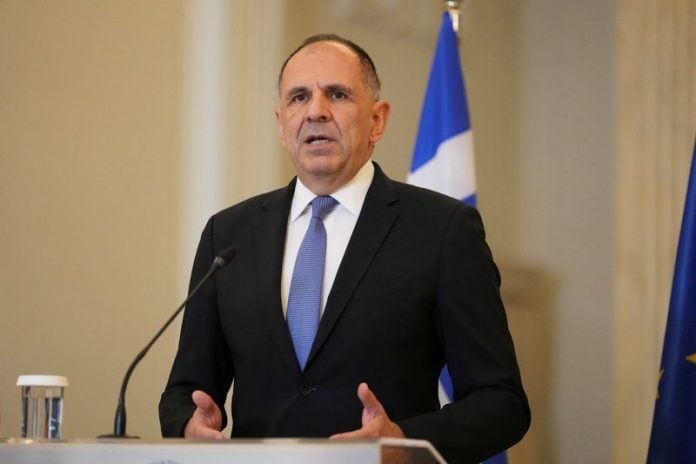
In a joint statement delivered by Greek Foreign Minister George Gerapetritis at the United Nations in New York on Monday, Greece and the three Arab countries said the maritime accord raised “serious concerns for regional security and stability” and could set a bad precedent by allowing “arbitrary bilateral arrangements” to undermine established rules of international law.
Turkish President Tayyip Erdogan said on Monday that reactions from the European Union and others to the approval of the agreement had no legitimate basis, defending Ankara’s policy in the eastern Mediterranean.
The Arab support to Greece signals efforts to turn a bilateral dispute into a broader regional push for respect of maritime rules, increasing diplomatic pressure on Turkey and Libya over maritime zones and future energy projects in the Mediterranean Sea.
Since the 2019 Libya-Turkey deal, Greece has awarded a Chevron -led consortium a licence to look for gas off the island of Crete and has sought a separate agreement with Libya on demarcating their maritime zones.
Gerapetritis said on Monday that Athens stood ready to continue the effort and called on Libya to foster good relations with neighbours in line with maritime rules as part of a political transition.
Libya broke apart into rival eastern and western administrations more than a decade ago during a civil war after a NATO-backed uprising toppled longtime Libyan leader Muammar Gaddafi.
The Libya-Turkey accord was agreed by Libya’s internationally recognised government in Tripoli in the west, but the rival eastern administration under military commander Khalifa Haftar had withheld its approval for years.
Turkish support was crucial to repelling an assault by Haftar’s forces on Tripoli in 2019-2020.
But relations have steadily improved in recent years, with Turkish officials paying regular visits to Haftar’s de facto capital, Benghazi, and investing heavily in construction and other sectors.
(Reporting by Angeliki Koutantou: Editing by Sharon Singleton)
Disclaimer: This report is auto generated from the Reuters news service. ThePrint holds no responsibility for its content.