



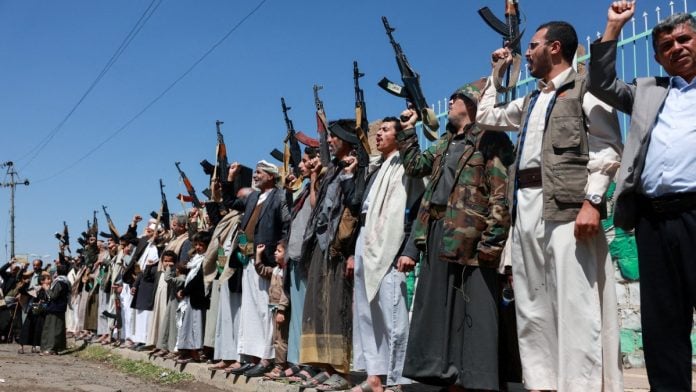
New Delhi: Seizure of Yemen’s Red Sea coast by Iran-backed Houthis wasn’t a surprise. The advance had been building up for weeks.
A deep dive by The New York Times has reconstructed how the Houthis managed to take control of territory around the Bab al-Mandab Strait in a single night of chaos. Vivian Nereim from Riyadh, Saudi Arabia, Saeed Al-Batati from al-Mukalla, Yemen and Shuaib Almosawa from Sanaa, Yemen contributed to the report.
The report is based on interviews with at least 15 people who took part in the fighting or were briefed on what happened. Among them were soldiers, Yemeni military officers, officials with Yemen’s internationally recognised government in Aden, US officials and Houthi officials. Almost all spoke anonymously, either because they feared retribution or were not authorised to discuss what happened.
Weeks before the Houthis seized Yemen’s Red Sea coast, Lt-Gen Tareq Saleh, a Yemeni government commander, tried to raise alarm that the Iran-allied militia was heading towards the Bab al-Mandab Strait, according to the NYT report.
Lt-Gen Saleh sought Saudi air support, besides technical support from the US to electronically jam Houthi communications. But the response was limited.
US officials offered intelligence about Houthi troop movement, while making it clear that they wouldn’t get directly involved with airstrikes, according to current and former US officials cited by NYT. Saudi Arabia, too, did not intervene more forcefully.
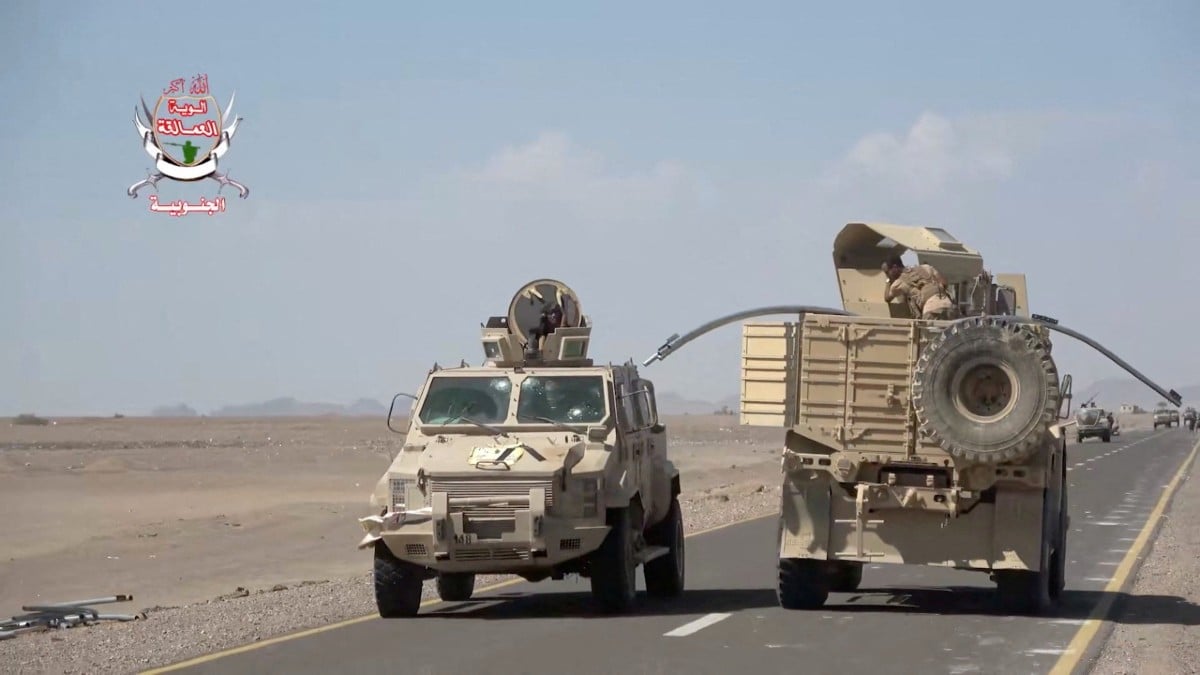
On the evening of 9 September, and into the next morning, Yemeni government forces were left exposed on the coastal plain after the Houthis seized a major military camp in the foothills east of Mokha. Yemeni soldiers, instead of reorganising, withdrew all the way to the southern city of Aden. As a result, Houthis took control of the entire Red Sea coast, including the Perim island in the Bab al-Mandab Strait. The strait is a key maritime chokepoint. About 10 percent of global trade passes through this waterway.
Saudi Arabia has launched an aerial bombing campaign to help the Yemeni government retake the territory, but the Houthi victory has exposed a deeper problem. The 2022 truce with the Saudis gave the Houthis time to strengthen their forces and expand their arsenal, while the internationally recognised government, with its interim seat in Aden, remained divided among rival factions backed at different times by Saudi Arabia and the UAE.
The lightning Houthi advance that culminated in seizure of the Red Sea coast followed months of rising tensions. Yemen’s fragile truce reached a stalemate, while talks aimed at a long-term peace deal had stalled. The Houthis also accused Saudi Arabia of restricting Yemeni airspace and, in July, of bombing Sanaa’s airport. The Houthis then declared a blockade on Saudi shipping in the Red Sea and launched missile and drone attacks on Saudi Arabia, prompting retaliatory Saudi airstrikes in Yemen, the NYT report highlights.
It was against this backdrop that the Houthis marched on the Red Sea coast in August.
Also Read: Month after Houthi offensive, Pakistan, Turkey & Saudi Arabia talk ‘deterrence’ under Mecca pact
How Houthis broke through
On 9 August, the Houthis began firing missiles and drones at Mokha, damaging the port in attempts to cut the city’s supply line from the sea, according to two Yemeni military officers cited by The New York Times.
The bigger ground attack came almost a month later, on 3 September. The Iran-backed militia claimed to have sent nearly 80,000 fighters into battle, backed by Iranian advisers. While NYT could not independently verify those claims, Mohammed al-Bukhaiti, a Houthi official, dismissed the allegation of Iranian support.
For the Houthis, the main breakthrough happened in Kadaha, a mountainous area split between Lt-Gen Saleh’s forces and another faction. Houthi fighters exploited the lack of trust between the Yemeni commanders to seize Kadaha, paving the way for their westward advance toward the coast, four Yemeni government and military sources told NYT.
For more than five days, Yemeni government forces fought from the mountains above Mokha. But the Houthis eventually pushed forward with missiles, drones and shelling. Saudi Arabia carried out limited airstrikes during this time in support of its Yemeni allies, at least two Yemeni military officers told NYT.
Then, the defensive line broke. One Yemeni soldier recalled hearing fellow fighters shouting: “Retreat! Retreat! Retreat! The Houthis are already here!”
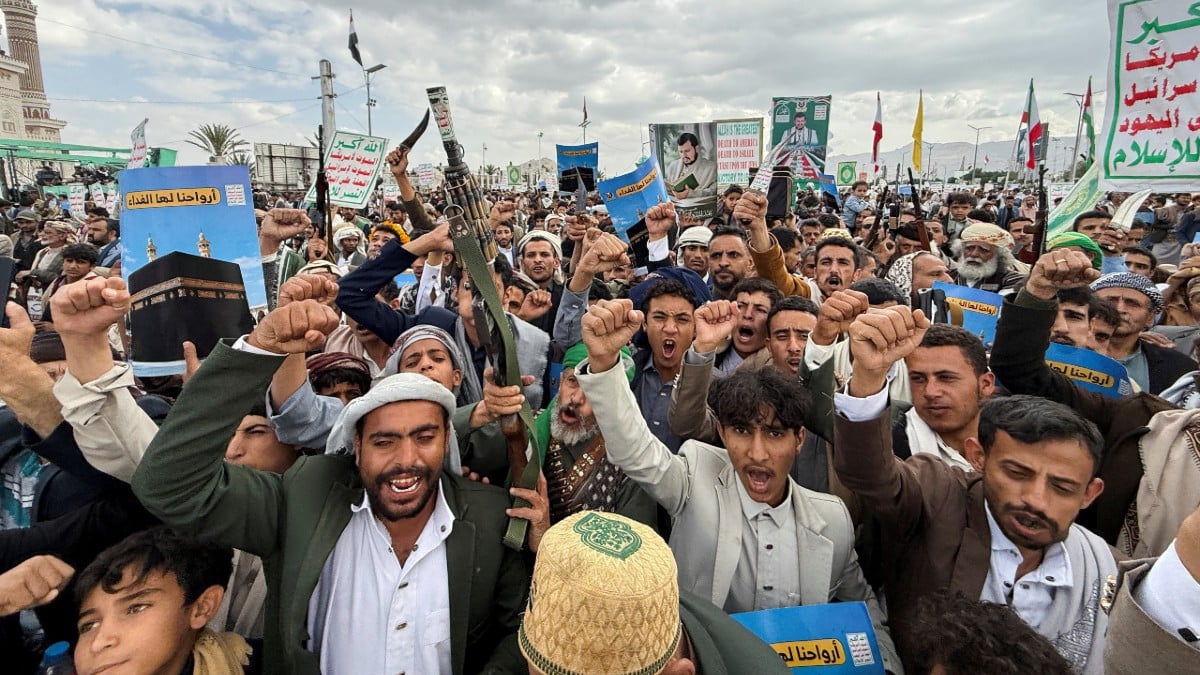
The Houthis captured a major military camp in the foothills east of Mokha. That left Yemeni government forces on the coastal plain exposed. Instead of regrouping, they withdrew all the way to Aden.
As a result, Yemen’s internationally recognised government ceded roughly 1,800 square miles of territory overnight. At least 500 of Lt-Gen Saleh’s fighters were killed and more than 1,500 wounded, while the Houthi death toll is not known.
One government fighter told NYT that he threw his rifle into a valley after being told to withdraw. By his account, he went home next and told his family that they had 15 minutes to flee.
A divided government
A nephew of Yemen’s former president Ali Abdullah Saleh, Tareq Saleh had at one point sided with the Houthis before joining the internationally recognised government. In Mokha, with Emirati backing, he built a force of his own that served as a barrier against the Houthis’ advance towards the Bab al-Mandab.
Lt-Gen Saleh had to turn to Riyadh for support after the UAE’s withdrawal from Yemen in January amid a dispute with Saudi Arabia.
After the fall of Mokha, Lt-Gen Saleh and several associates travelled to Riyadh. There, they “decamped to a five-star hotel, where easy-listening music echoed through a cavernous lobby and waitresses served tea with madeleines,” said the NYT report.
Back in Aden, Lt-Gen Saleh’s forces were left scattered, with some fighters reportedly from entering the city.
The Houthis, meanwhile, presented their victory as part of a broader campaign to “liberate” Yemen. The group said it did not intend to threaten maritime security and portrayed its campaign as being directed against Saudi Arabia.
Saudi Arabia returns
Rashad al-Alimi, chairman of Yemen’s Presidential Leadership Council, has declared a full-scale war against the Houthis, vowing to recover all territory lost to the Iran-backed militia over the previous 12 years.
But whether the government’s advance can be sustained remains uncertain.
For Yemen’s civilians, the renewed fighting has already brought another wave of displacement. More than 180,000 people have fled their homes in recent weeks.
“The moment felt like doomsday, with everyone looking out for themselves,” Hassan Sughair, a civilian who fled a town near Mokha, told The New York Times.
(Edited by Amrtansh Arora)