







New Delhi: A central element of President Donald Trump’s emerging Iran deal is a step-by-step approach that would see the Strait of Hormuz reopened followed by Tehran getting economic rewards each time it meets US demands.
That sequencing, described to reporters by a senior US official on Friday, formalizes a cautious approach designed to prevent the White House from getting caught out as it tries to end its months-old conflict with Iran and eradicate its nuclear program for good. But it also means there will be many opportunities for the deal to fall apart.
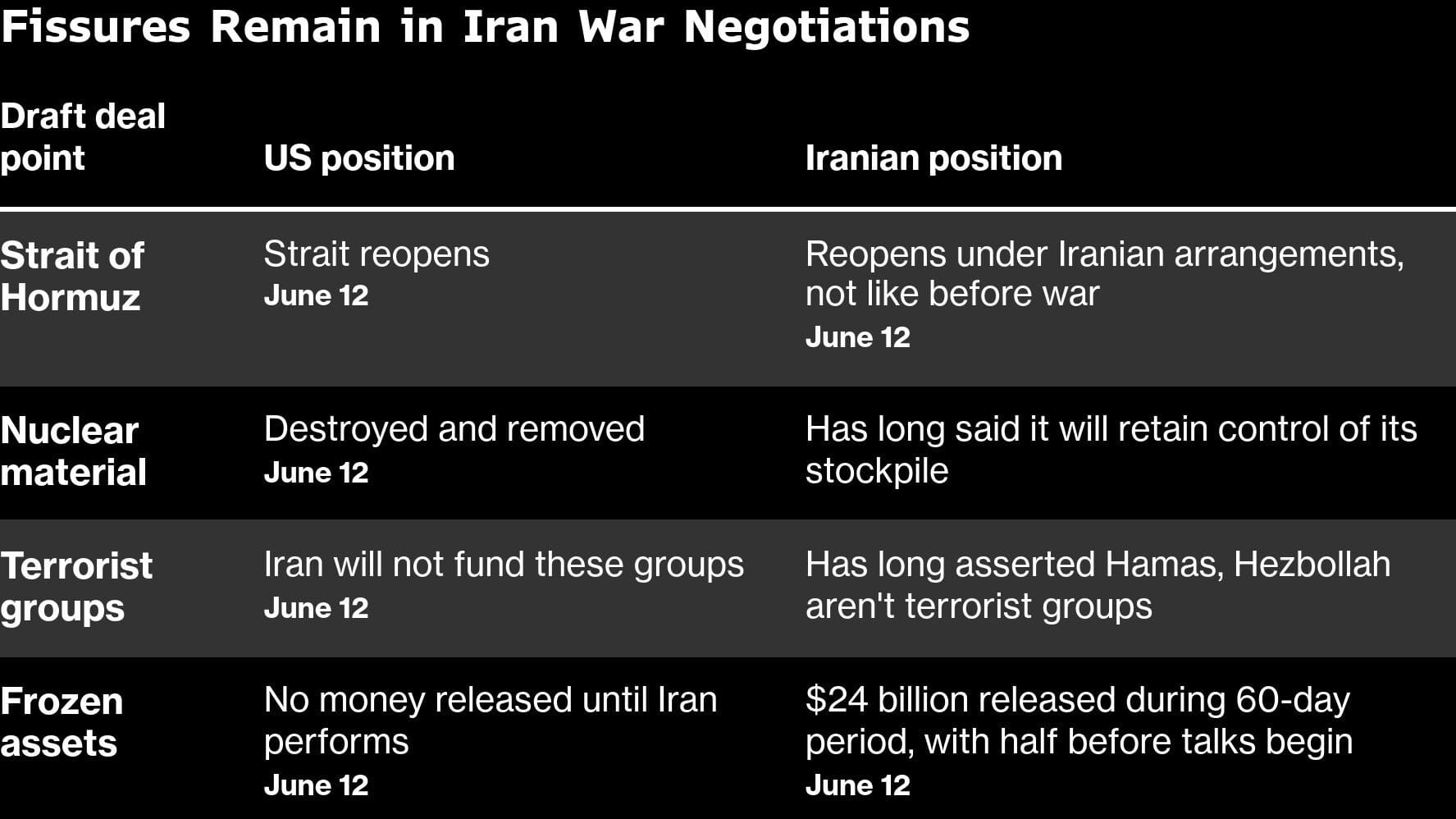
Neither the US nor Iran has given a comprehensive picture of the agreement that Trump and other top officials have said could be signed as early as this weekend. But the details that have emerged so far suggest each side is proceeding with extreme caution, reluctant to make any real concessions before the other does.
And at its heart, the agreement wouldn’t meaningfully deal with Iran’s nuclear program. Instead, it would leave an issue that’s been central to Trump’s justification for the war to a future 60-day negotiating process.
“Any deal that kicks the can down the road on the most critical issues and is conditions-based would put the US and Iran exactly where they’ve been: a fragile ceasefire in name only that is routinely tested and prone to violence,” said Becca Wasser, defense lead for Bloomberg Economics.
On the positive side for the US, the agreement could help loosen Iran’s grip on the Strait of Hormuz. The key waterway for oil and gas flows from the Persian Gulf was open before the war and is meant to open gradually, though there have been disagreements about whether and how it would be managed.
In the best-case scenario for both sides, that could also officially start winding down an unpopular war that has spiked global energy prices and fueled inflation around the world.
On a call with reporters before the Group of Seven meeting next week, a senior administration official said that if the strait is opened, and the US lifts its blockade, Washington would work with European allies to remove mines that it says Iran has placed in the key waterway.
The official said that the UK and France have volunteered to put together a coalition to conduct the de-mining with assistance from the US.
The deal’s contours remain hazy. US officials have offered only some details and have condemned as “fake news” Iranian media reports that have carried a full 14-point draft. One Iranian report in the semi-official Mehr news agency noted nuclear issues were to be negotiated in 60 days, a detail later confirmed by the senior White House official.
The outlines of the deal were greeted with caution by those who have openly advocated military action against Iran. Mark Dubowitz, chief executive officer of the Foundation for Defense of Democracies, said Trump must be careful not to squander the leverage he’s accumulated after successive attacks on Iran.
“The danger is they’ll agree to A, get money, agree to B, get money, agree to C, get sanctions relief, and then they’ll just string out the process,” Dubowitz said. He added it would be “fatal” if that “then leads into a protracted process, once we’re trapped in negotiations and we’re not going to be prepared to return to major military operations, and the zeal for the deal becomes unstoppable.”
The deal would result in the partial lifting of US sanctions on Iran and possibly see Tehran’s new hardline leadership gain access to tens of billions of dollars in frozen funds. Iran could be reintegrated into the global economy if it adheres to the deal, the senior Trump administration official said on Friday.
If that fails, Trump may consider restarting the US bombing campaign against Iran. That would be a tough choice given the US and Israeli military operation has already killed thousands and caused the worst oil supply crisis in history, while leaving the country’s leadership intact.
“Blowing up bridges and taking power away from Iranians does not bring the regime down, just like the US Air Force didn’t bring the regime down,” said Alex Vatanka, a senior fellow specializing in Iran at the Washington-based Middle East Institute.
–With assistance from Michelle Jamrisko and Adrienne Tong.
This report is auto generated from the Bloomberg news service. ThePrint holds no responsibility for its content.
Also Read: Third tanker hit off the coast of Oman, at least 20 Indian sailors believed to be on board