







By Fatos Bytyci
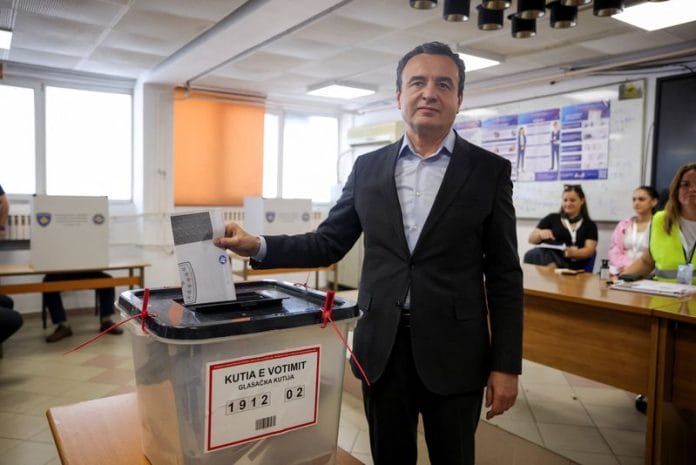
PRISTINA, June 7 (Reuters) – Kosovo headed to the polls in a parliamentary election on Sunday, the third in just 18 months, as no one party has been able to gain a strong enough majority to pull the Balkan country out of a political crisis.
Europe’s youngest and one of the poorest nations has aspirations to join the European Union but has had no functioning government for much of the last year as its fractured parliaments failed to elect first a speaker and then a new head of state.
Polls opened at 7 a.m. and an exit poll was expected soon after voting ends at 7 p.m. (1700 GMT).
No opinion polls have been conducted recently but analysts predict victory again for Prime Minister Albin Kurti’s Vetevendosje party. However, he will still need to reach a compromise with opposition parties to secure the two-thirds majority required to elect a new president, they say.
The Vetevendosje party won 51.1% of the vote in the last election in December, up from 42% in February 2025, but could not agree with other parties on a candidate for the largely ceremonial presidency, triggering the dissolution of parliament in April and another snap election.
The repeated elections have delayed reforms and the flowing of much-needed EU funding.
Speaking outside a polling station in the capital Pristina, Kurti called for strong participation in the vote.
“I hope that the people of Kosovo again will show their maturity, as always, with a very high turnout. And on the other hand, we as politicians, I hope that we will serve ever better, ever more to all of them,” he said.
VOTERS WANT END TO POLITICAL CRISIS, HIGHER LIVING STANDARDS
By 11 a.m., 8.3% of eligible voters had cast their ballot, according to Kosovo’s central election commission.
Kosovars are keen to see the end of the political deadlock as they seek higher salaries and more affordable goods to benefit from a growing economy.
“The political elite needs to be ready to reach an agreement. There has been a very deep division caused over recent years, and this must come to an end,” said Fatos Selimi after casting his ballot in Pristina.
The EU has urged politicians in Kosovo – which declared independence from Serbia in 2008 – to create strong institutions that can deliver the reforms needed to join the bloc.
Kurti’s party first came to power in 2021 with a more nationalist, welfare-focused agenda. Like all parties in Kosovo, it has a pro-Western orientation. It also opposes further concessions to Serbia, with which relations remain strained.
Kosovo’s election commission has said more than 900 candidates from 17 parties and three coalition groups are competing for seats in the 120-seat parliament.
About 2.1 million voters are registered – more than Kosovo’s 1.6 million resident population due to a large diaspora, which is based mostly in western Europe and tends to favour Kurti’s party.
(Reporting by Fatos Bytyci; Writing by Edward McAllister and Angeliki Koutantou; Editing by Aidan Lewis and Kirsten Donovan)
Disclaimer: This report is auto generated from the Reuters news service. ThePrint holds no responsibility for its content.