






New Delhi: Even as Pakistan continues to position itself as a peacebroker amid the Iran-US conflict, proxy groups fundamentally opposed to the Iranian state along its eastern border continue to complicate that role.
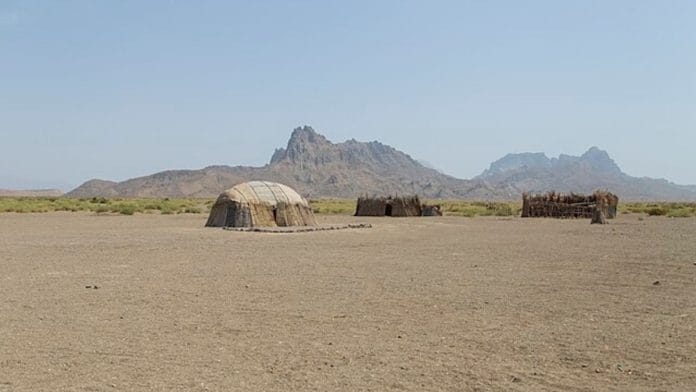
Iranian security forces Wednesday said they destroyed an operational cell of the terrorist group Jaish al-Adl after its members infiltrated from across the Pakistani border into the Rask region of Sistan and Baluchestan Province in southeastern Iran.
According to Iran’s semi-official Tasnim News Agency, several terrorists were killed in the operation. Iranian officials have long accused the group of carrying out attacks inside Iran and maintaining links with Pakistan’s intelligence services, an allegation Islamabad denies.
Jaish al-Zulm is how Iranians refer to Jaish al-Adl, or the “Army of Justice”, a Sunni militant group founded in 2012 that operates along the porous Iran-Pakistan border. It has been designated a terrorist organisation by both Iran and the United States, and has claimed responsibility for multiple attacks on Iranian security forces.
Indian officials have also allegedly linked the group to the 2016 abduction of Kulbhushan Jadhav, a former Indian Navy officer seized near Bandar Abbas. According to those claims, he was allegedly handed over to Pakistan’s Inter-Services Intelligence agency in exchange for money.
The latest confrontation comes at a delicate moment in regional diplomacy. Earlier this month, Pakistan hosted the first direct engagement between Washington and Tehran since the Islamic revolution of 1979. The talks aimed to secure a peace accord to end the weeks-long conflict that began with US-Israeli aggression on Iran on 28 February.
However, since last week, particularly after Pakistan’s Field Marshal Asim Munir visited Tehran to convey American demands to Iranian leaders, there is little clarity on the chances of negotiations leading to a peace deal.
Munir’s push to bring the opposing sides back to the negotiating table stalled Tuesday as Iran resisted pressure to return to Islamabad for talks with the United States. US President Donald Trump agreed to extend the ceasefire, citing a request from Munir and Pakistan’s Prime Minister Shehbaz Sharif. However, little progress has been made on central issues, including Iran’s enrichment programme and its stockpile of highly enriched uranium.
There is a growing sense that the Iranian leadership views the negotiation process less as a genuine effort at resolution, and more as a strategic manoeuvre directed against them.
“In Tehran, there have been growing fears that the US is using the talks as a ruse to resume the war, as Trump maintained the naval blockade and boasted this week that Iran had agreed to most of his demands,” according to an article in Financial Times on how Pakistan became the mediator.
According to Farzana Shaikh, associate fellow at Chatham House in London who is quoted in the article, “Pakistan is not truly a neutral party in this. It has a patron-client relationship with the US and Gulf states, and a vested interest in foreclosing Iran’s path to a nuclear weapon.”
Also Read: Baloch leaders thank Salman Khan for ‘recognising’ their identity. Pakistanis aren’t happy
The Baloch question
Iranian fears are not unfounded. On the day Iran was attacked, US President Donald Trump called on Iran’s ethnic minorities to rise against the regime. Among Iran’s minorities are also the Iranian Baloch along the Sistan-Baluchestan province in the region.
The Baloch are an Iranian-speaking ethnic group native to the Balochistan region, spanning Pakistan, Iran, and Afghanistan, with a population of approximately 15 million.
In Iran, Jaish al-Adl, a Sunni organisation, has been carrying out attacks against the regime.
In July 2025, it had launched an attack on a courthouse in Zahedan in the Sistan province that had killed six civilians. In December 2025, it had announced the formation of the new “Popular Fighters Front”, described as a merger of several Baloch political groups and movements. Since the Iranian Revolution, Baluch militant groups have largely been driven by a mix of ethnic and religious grievances against Iran’s Shia-led state, which they view as politically and socially marginalising.
On the same day it announced its formation, the group claimed responsibility for a deadly attack on an Islamic Revolutionary Guard Corps border patrol in Iran’s southeastern Sistan-Baluchestan province, killing three members of its ground forces. In a growing sectarian proxy war, Jaish al-Adl appears to have moved beyond its original separatist goals, increasingly framing itself as part of a broader opposition to the Iranian state, indicating a notable shift in its declared objectives.
Another important related flashpoint is that Iran has repeatedly accused the United States, Israel and Saudi Arabia of supplying weapons and support to Jaish al-Adl, though it has not publicly presented evidence to substantiate these claims. Saudi Arabia is Iran’s principal regional rival and Pakistan’s primary Gulf ally. For Pakistan, Iran is important but so is Saudi Arabia with which it signed a mutual defence pact last year.
Moreover, Iran has repeatedly accused Pakistan of failing to stop the outfit’s activities, alleging that militants are sheltered in Pakistan’s Balochistan Province. Pakistani officials, in turn, have denied that the group operates in any organised manner on their soil.
In January 2024, Iran launched missile strikes into Pakistan’s Balochistan Province targeting what it said were Jaish al-Adl bases. Pakistan responded with strikes on alleged militant hideouts inside Iran, marking one of the most serious military exchanges between the two countries in decades.
Pakistan has countered these allegations, accusing Iran of harbouring Baloch separatist groups, such as the Balochistan Liberation Army and the Balochistan Liberation Front, which have carried out attacks against Pakistani security forces.
(Edited by Nardeep Singh Dahiya)
Also Read: India needs a clear Balochistan strategy. ‘Enemy of my enemy’ approach won’t work