





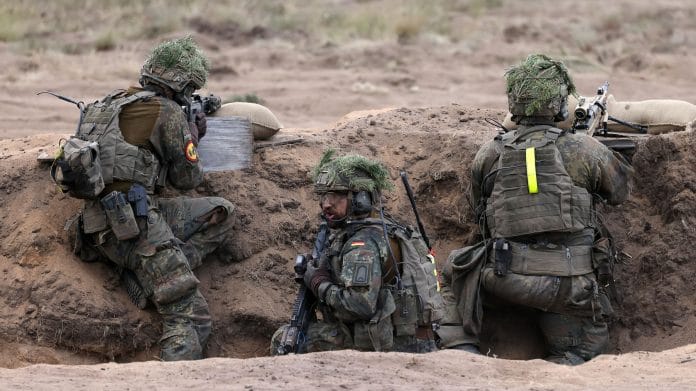



Washington: France is watching with both awe and unease as Germany pours resources into a historic rearmament, upending longstanding balances on the continent.
Berlin is doing exactly what the North Atlantic Treaty Organization defense and security alliance agreed: It has committed to spending more than €500 billion ($586 billion) on defense by 2029, hitting NATO’s new goal of investing 3.5% of GDP in the military six years earlier than the alliance demanded.
Yet even as NATO praises Berlin’s growing military muscle, officials in some European capitals are having second thoughts about the Bundeswehr reemerging as a dominant power — especially as a far-right, nationalist party is reaching record-high approval ratings in Germany, bringing back fears that a pro-European government there can’t be taken for granted.
In France, which has one of Europe’s most powerful militaries and its only domestically developed nuclear capability, the mood is schizophrenic. On the one hand, there is relief that Germany is doing more on defense. But there is also anxiety about German industry superseding the French defense sector, as Paris realizes just how big Berlin can spend. Four French officials, who asked not to be named discussing private conversations, said there is a general sense of unease about Germany’s increasing military power and the political capital that comes with it.
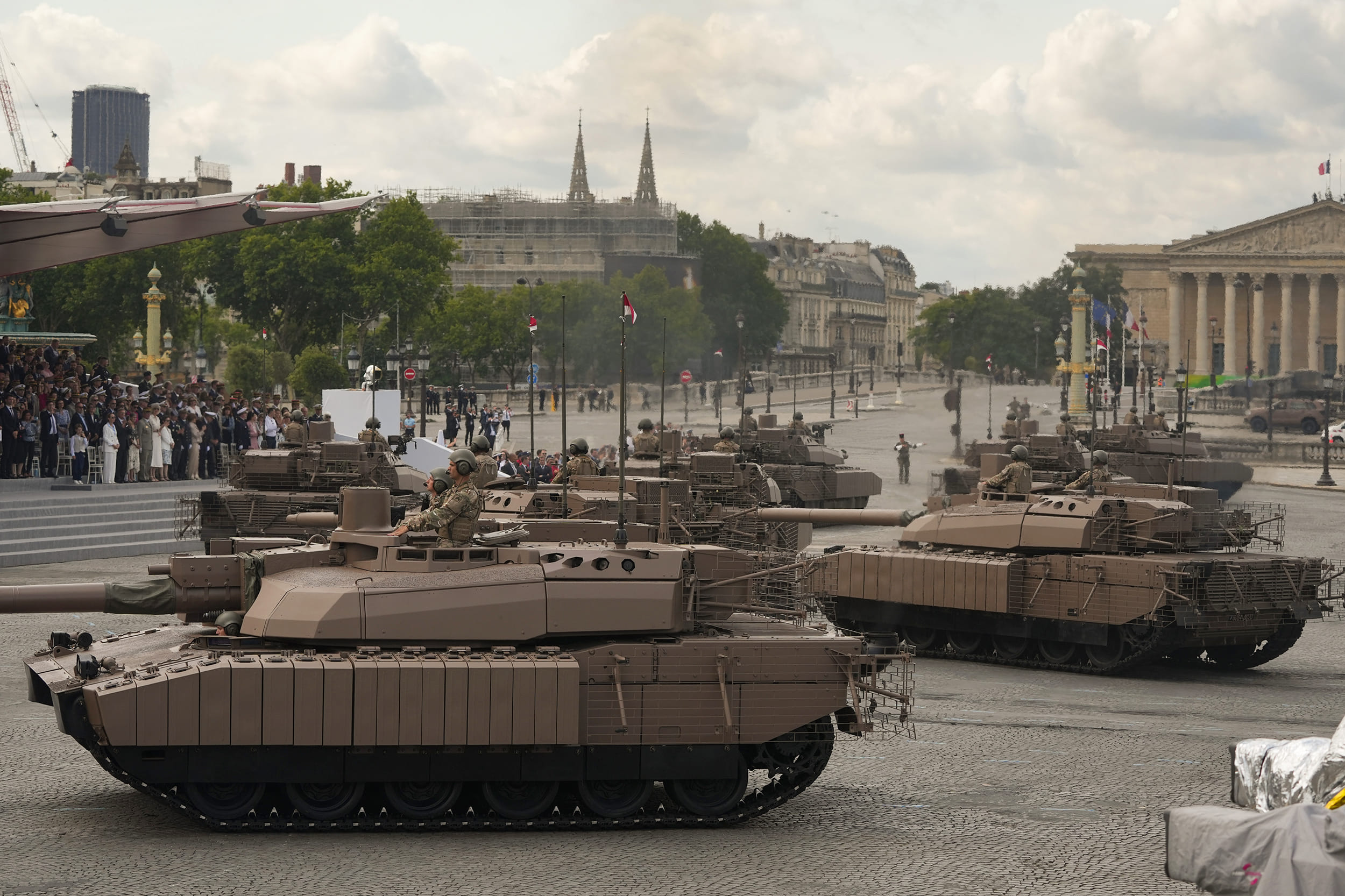
“France is in a fragile situation, and the fact that Germany is committing with such determination will of course create a dynamic that could leave us on the side of the road,” said French European Parliament member François-Xavier Bellamy. “The domestic fragility is weakening France’s geopolitical heft.”
A member of the center-right EPP group, he has carried a strong “Buy European” voice on key EU defense issues. He advocates for France, one of the world’s leading arms exporters, to focus on exporting to its European neighbors and not faraway customers. Although his country is concerned about the growing German defense industry, “we have to be coherent,” he said. “France has long complained about doing the job alone.”
Given Germany’s role in previous European conflicts, it was content to take a back seat in politics, even as its economy gathered momentum, said Claudia Major, senior vice president of the German Marshall Fund. As its rearming inches the continent’s center of gravity ever closer to Berlin, nerves in France are fraying, she said.
“There was a widely agreed balance in Europe that France would be the geopolitical power while Germany would be the economic power,” Major said. “Germany didn’t want to be a political giant. Now Germany is doing both, as well as making an effort to embed its new power within Europe. This puts France in a difficult position. Their anxiety says more about France itself than about Germany.”
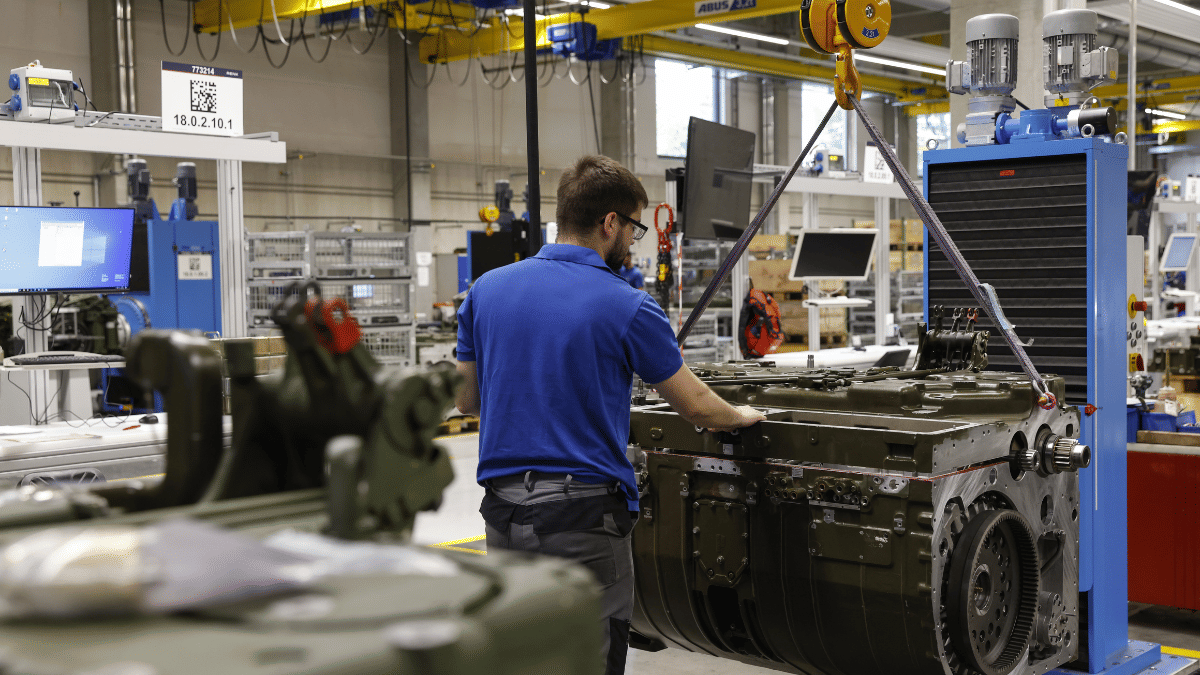
Under Chancellor Friedrich Merz, Germany de facto abolished strict borrowing limits for defense spending to unleash an unprecedented flow of funding to rearm and to deter an increasingly hostile Russia.
The Nordics, Baltics and Poland are also making massive defense investments. But few countries can match Germany’s speed and volume. Europe’s historical defense powerhouses France, Italy and Spain have little or no fiscal space to increase spending.
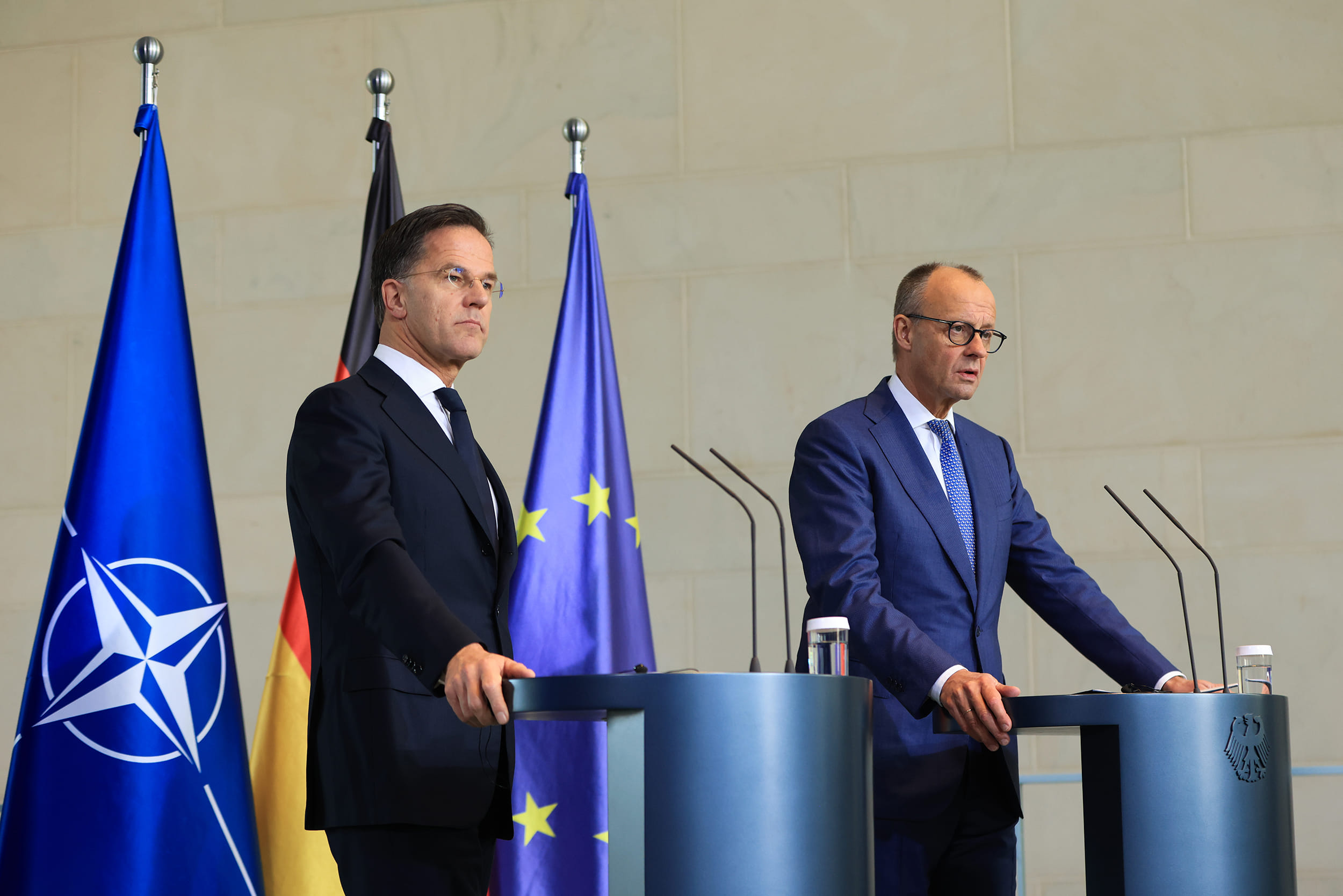
To be sure, the country’s military ramp-up is closely coordinated with allies and embedded in an international framework of cooperation. On a visit to Berlin in December, NATO Secretary General Mark Rutte couldn’t stop lauding Germany: “This is exactly the kind of resolve we need to ensure our security. Germany is leading by example.”
Yet when former German Chancellor Olaf Scholz presented one of his signature defense projects, the European Sky Shield Initiative, designed to close a major European capability gap by purchasing missile-defense systems, France felt excluded. The frustration grew when Scholz separately announced the €10 billion purchase of 35 US-made F-35 fighter jets instead of European aircraft.
Under Merz, US weapons purchases have slowed, partly because of Germany’s political realization that the transatlantic bond is strained under Trump. But defense cooperation with France remains tricky.
Europe’s most ambitious defense project is about to fall apart after years of negotiations in which industry partners Dassault Aviation SA of France and Airbus SE — the de-facto German side — have been unable to agree on a balanced production share for the sixth-generation fighter program called Future Combat Air System, or FCAS.
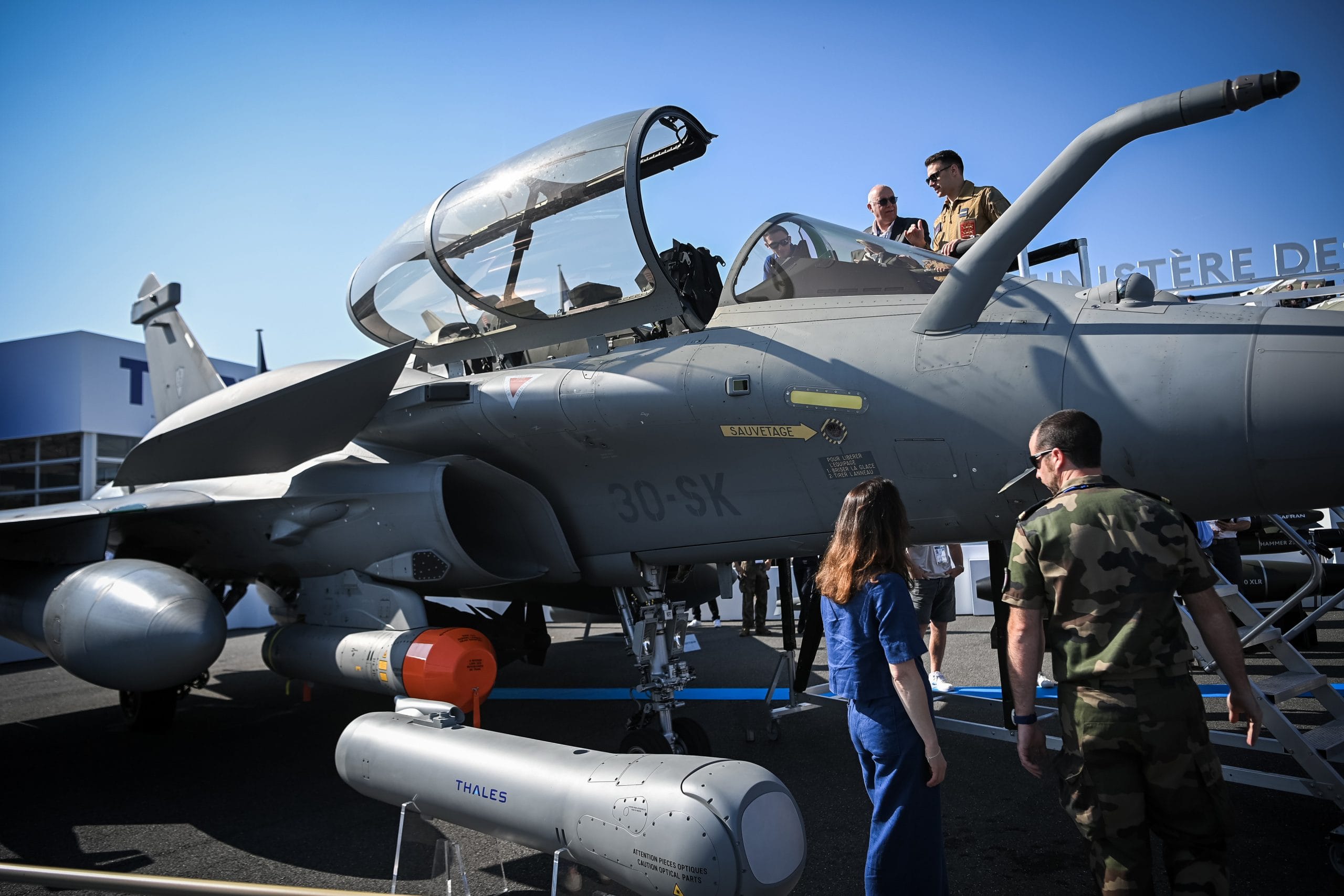
Within the EU and NATO, the new German military muscles give it more clout. Berlin has proposed a greater role for the European Defense Agency, currently led by a German general. Within NATO, there have been recurring jokes by US officials that the alliance’s Supreme Allied Commander Europe, the key military position in the alliance that has always been American, may one day be German.Neighbor Poland is closely watching Germany’s ascent, but as Deputy Prime Minister Radoslaw Sikorski put it, “as long as Germany is a member of the EU and NATO, I am more afraid of a German aversion to armament than I am of the German army.”
Germany is also best positioned, industrially and economically, to provide so-called strategic enablers such as air and missile defense, space intelligence and logistics. At the moment, Europe is almost entirely reliant on the US for those capabilities, and on edge about Washington’s intentions amid talk of attacking or seizing Greenland from its ally Denmark.
“We hope Germany will further develop strategic enablers for the alliance,” said General Markus Laubenthal, one of the highest ranking German generals in NATO. “From a NATO perspective, and in terms of the know-how and industrial capacity, it makes sense to work with key European allies. Together we are stronger. We should be able to agree on requirements and deliver things faster because, as a user, I need them.”
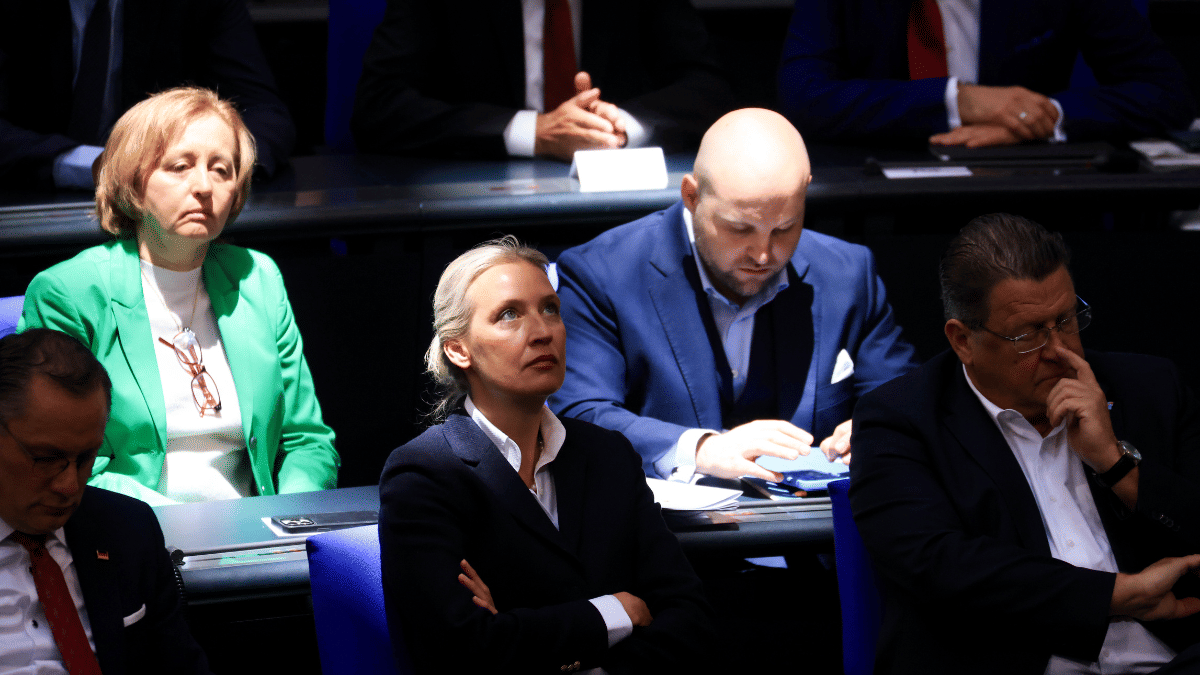
Despite those sentiments, Germany’s domestic politics are jangling nerves in Europe. The far-right Alternative for Germany, or AfD, is in first place in some polls. It could score major victories in upcoming local elections in eastern Germany this year, though Major noted that populist politicians had risen elsewhere in Europe as well.
“There is a growing worry about what could happen to this extremely strong German fighting power if the AfD were to take over political leadership,” said Jana Puglierin of the European Council on Foreign Relations.
–With assistance from Ania Nussbaum and Samy Adghirni.
Disclaimer: This report is auto generated from the Bloomberg news service. ThePrint holds no responsibility for its content.
Also read: India’s defence sky gets a solar boost: Army orders iDEX solar-electric drone