



NAIROBI, Oct 23 (Reuters) – For Awad Usham Al-Amin and thousands of others, Abyei provides shelter and an opportunity to eke out a living as war rages back home. This week, Sudan’s conflict caught up with them there too.
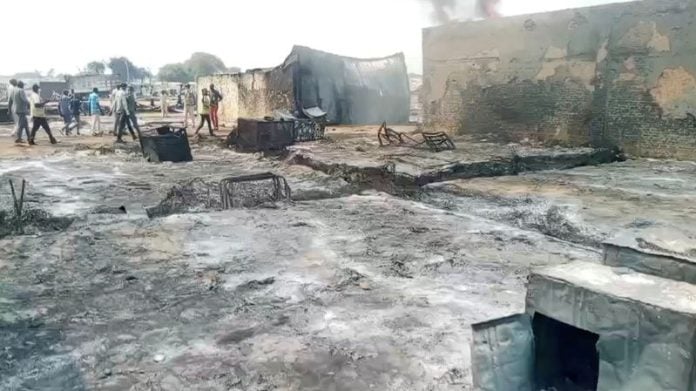
A drone strike believed to be targeting a fuel depot used by the paramilitary Rapid Support Forces (RSF) hit the Amiet market, killing over 150 people in the town, which sits in a territory contested by Sudan and South Sudan.
“I came as a refugee, running from Sudan … but still faced with another conflict here,” Al-Amin told Reuters, nursing shrapnel injuries on his right hand and left leg.
The attack flattened shops and stalls in the market where Al-Amin offloads fuel and pushes wheelbarrows to earn a living.
It highlighted how far the tentacles of supply lines linked to the war between the RSF and the Sudanese Armed Forces stretch across the region, sucking neighbours into a conflict involving proxy powers from across the Horn of Africa and broader region.
Five diplomats and analysts following the conflict said the market was an established part of a fuel network serving the RSF fighting across Sudan.
A large volume of the fuel imported into South Sudan is transported through Abyei, where it is collected by RSF networks then transported through Sudan in smaller shipments, the sources said.
“It’s clear that the attack in Amiet market targeted fuel storage facilities as well as a truck suspected of carrying fuel,” a diplomat said. “The RSF is still present in Abyei… it’s difficult to identify them because they are embedded in the community here.”
Officials in South Sudan have facilitated the import and transit of fuel to RSF networks, the diplomats and experts said. A spokesperson for the foreign ministry did not immediately respond to requests for comment on that.
ABYEI MUST NOT BECOME A THEATRE FOR CONFLICT IN SUDAN
In its first official comments on the incident, Sudan’s government said late on Thursday it had “no connection whatsoever to this tragic incident”. The RSF-led parallel government has called for a UN investigation without commenting on its presence in Abyei.
Earlier in the week, Yohana Akol Ngor, the caretaker minister of information in Abyei, said Sudan’s army was responsible for the attack and Juba summoned Sudan’s ambassador.
On Friday, Apuk Ayuel Mayen, spokesperson for South Sudan’s foreign ministry, said the circumstances of the attack, including any connection to the reported presence of the RSF in Abyei, had not yet been established.
“Abyei must not become a theatre for conflict in Sudan,” South Sudanese President Salva Kiir said in a statement.
UN aid workers estimate some 25,000 people have fled to Abyei since Sudan’s war began in 2023.
UN PEACEKEEPERS HAVE WARNED OF RSF CHECKPOINTS
Al-Amin said no RSF fighters were present when the air strike took place but that they did come from time to time.
The United Nations Interim Security Force for Abyei (UNISFA) has warned in the past that the RSF have mounted checkpoints in Abyei and their presence there had increased insecurity.
Chol Deng Chol, chairperson of the chamber of commerce in Abyei, said the RSF does use the market as a place to stock up on fuel for operations in Sudan’s Kordofan and Darfur regions but none were there on Monday and Khartoum had no right to carry out a strike there.
“If they want to stop this, they must do it in their territory,” he said, adding that 10 tankers were destroyed in the attack.
(Reporting by Nairobi Newsroom; Writing by David Lewis; Editing by Andrew Cawthorne)
Disclaimer: This report is auto generated from the Reuters news service. ThePrint holds no responsibility for its content.