







New Delhi: The United Arab Emirates (UAE) carried out strikes on Iranian territory, including a hit on an oil refinery on the Lavan island, last month, The Wall Street Journal (WSJ) reported Monday. The report comes hours after US President Donald Trump said that the Iran ceasefire is on “life support” and rejected Tehran’s latest proposal, calling it totally unacceptable, since it didn’t include any concession on nuclear issues.
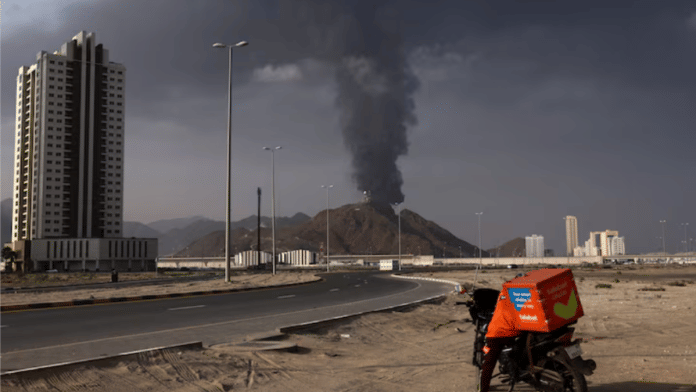
According to the report, the strikes were carried out in early April, around the time when Trump was working on a ceasefire deal with Tehran, after five weeks of intense war campaign. One strike hit an oil refinery in Iran’s Lavan island, in the Persian Gulf, sparking a large fire and knocking off much of its capability offline.
The strike signalled a significant shift in regional dynamics with a Gulf Arab country becoming a party to the war, by hitting Iran directly. At the time, Iran said that the refinery was hit in an enemy attack and then launched drone strikes against the UAE and Kuwait.
Both the Pentagon and the UAE’s Ministry of Foreign Affairs declined to comment on the WSJ report, but one source was quoted as saying that Washington wasn’t upset by the attack as the ceasefire hadn’t settled in place by then and quietly welcomed Abu Dhabi’s participation.
Speculation around the UAE’s participation in the war had begun to gain ground around mid-March when researchers, looking at publicly available images, pointed to photos of French Mirage fighter jets and Chinese Wing Loong drones—both used by the UAE—in action in Iran.
The UAE may not have a large military but has a highly trained air force with Mirages and a fleet of advanced F-16 jet fighters supported by refuelling planes, command and control aircraft and surveillance drones.
“They are very strong in terms of precision strike, air defence, airborne surveillance, refuelling, and logistics,” retired US Air Force Lt. Gen. Dave Deptula was quoted as saying by the WSJ. “If you have that capable of an air force, why would you sit back and absorb attacks from Iran without responding?”
According to a report by Axios last month, the UAE also received the Iron Dome air defence system from Israel, along with troops to operate it. This development underlined the growing military cooperation between the two countries almost six years after the UAE officially recognised Israel under the Abraham Accords in 2020.
Ahead of the war that began February end, the Gulf countries said that they wouldn’t allow their airspace or bases to be used for attacks against Iran. However, Iran’s strikes on Gulf’s population centres, energy infrastructure, and airports have changed the equation since then.
Earlier, WSJ reported that Saudi Arabia might have allowed the US forces to use the King Fahd Air Base, located near the Red Sea, to launch attacks on Iran.
By last Sunday, Iran had launched more than 550 ballistic missiles, 29 cruise missiles and more than 2200 drones against the Emirates, according to the latest figures by the UAE’s Ministry of Defence.
The attacks have adversely affected the UAE’s air traffic, tourism and property markets, triggering many layoffs within the emerging financial hub. All of this has changed Abu Dhabi’s strategic outlook, which now sees Iran as a rogue actor undermining the reputation of the Emirates as an oasis of stability within a volatile region.
Along with Bahrain, the UAE also worked on a draft resolution at the UN to authorise use of force to open the Strait of Hormuz from Iran’s chokehold. Russia and China, however, vetoed the move.
The rising tensions between Abu Dhabi and Tehran have spilled over to other multilateral forums like the BRICS which will be hosted by India this year and a consensus is moving far from sight. Iran’s Foreign Minister Abbas Araghchi may meet Prime Minister Narendra Modi this week in Delhi, where he’ll lead a delegation to the BRICS foreign ministers meeting.
Jaydeep Gadhavi is an alum of ThePrint School of Journalism, currently interning with ThePrint.
(Edited by Tony Rai)
Also Read: As Trump heads to China this week to meet Xi, trade, Iran and Taiwan are all on the table