



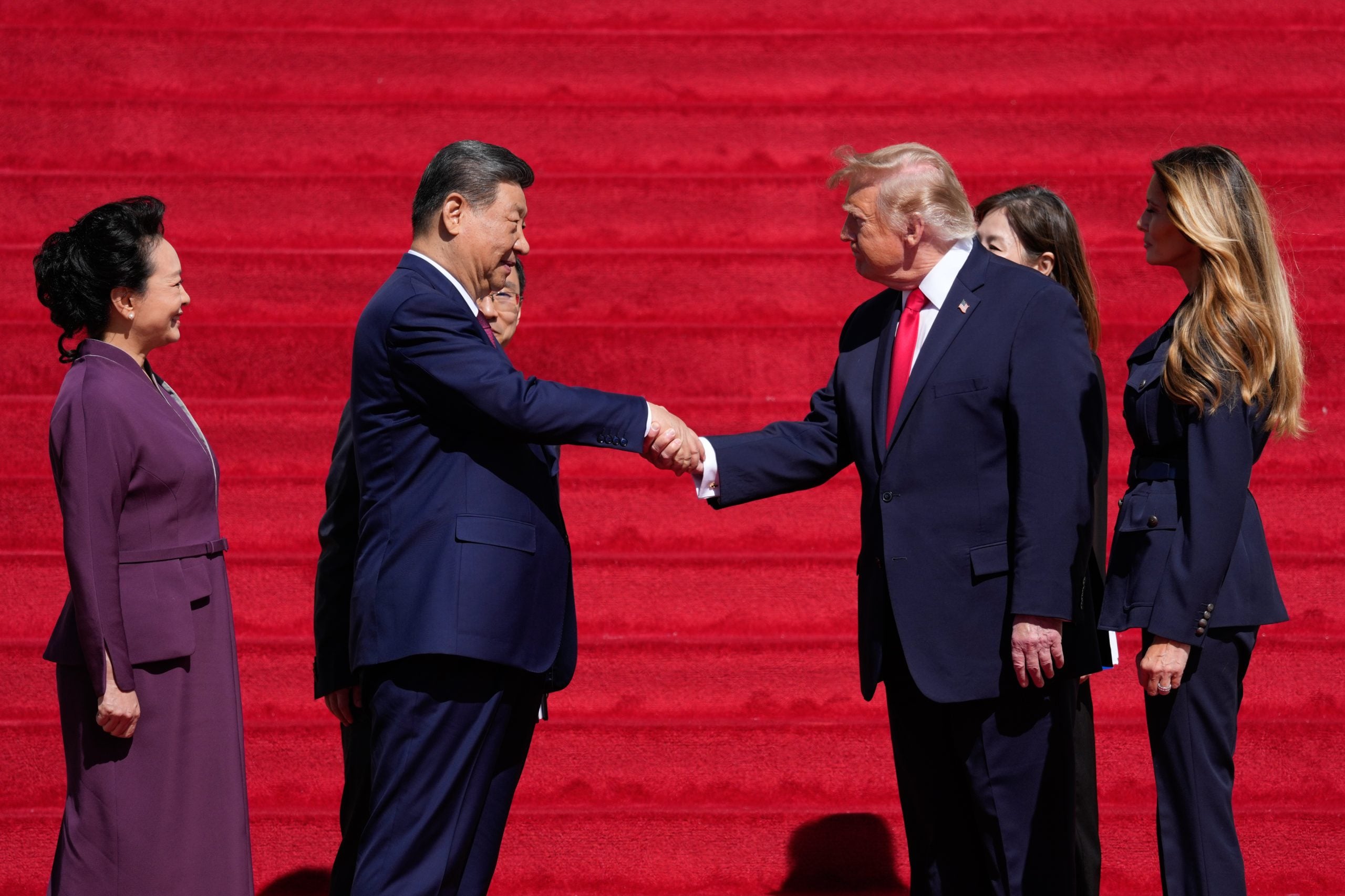
The US and China detailed a plan to cut tariffs on about $30 billion of imports from each country, taking a step toward fulfilling a key outcome of last week’s summit between Donald Trump and Xi Jinping.
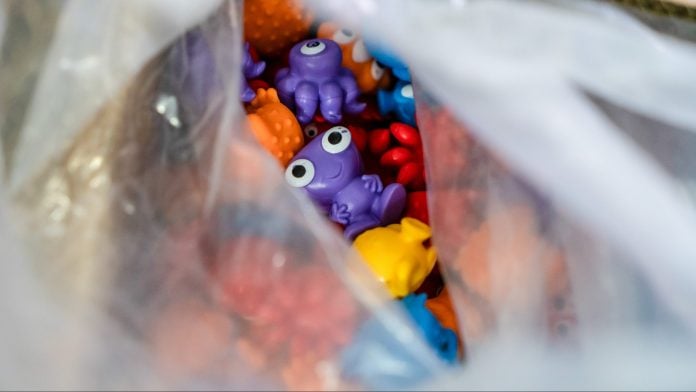
The proposed relief spans Chinese toys, kitchenware and other household goods, as well as US agricultural products, coal and medical equipment. Most would be freed from the additional tariffs imposed during years of trade tensions as the superpower rivals seek to steady ties.
About 90% of the covered products would instead receive most-favored-nation treatment, China’s Commerce Ministry said in a Monday statement. The reductions will take effect once both sides complete procedures required under their domestic laws.
“This arrangement will help to further stabilize China-US economic and trade relations and create favorable conditions for China’s exports of relevant products to the US,” the ministry said.
The expected relief for $60 billion in two-way trade was one of the most tangible outcomes of Xi’s state visit to Washington, even though the amount is a fraction of the $415 billion in total goods exchanged between the world’s largest economies last year.
For US consumers, lower import duties on toys, holiday decorations and other products could help contain prices heading into the year-end shopping season. For China, lower US charges could support exports at a time when weak domestic demand and industrial overcapacity have driven manufacturers to seek more sales abroad.
Shares of some Chinese appliance makers rose after details of the tariff cuts emerged, with Joyoung Co. jumping by the 10% limit in Shenzhen and Bear Electric Appliance up as much as 9.5%.
The two sides extended their trade truce until January as they pursue a broader agreement ahead of two more expected meetings between Trump and Xi this year. With major disputes over export controls and Taiwan unresolved, non-sensitive trade has emerged as one area where agreements remain possible.
The tariff plan was negotiated under the Board of Trade, a government-to-government mechanism initially announced after Trump’s visit to Beijing in May. The framework was officially put into operation following Xi’s visit to Washington.
The US proposal covers 77 product entries, including fireworks, household goods, sporting equipment. China’s side is broader, spanning 1,619 items including meat, seafood, dairy products, grains, coal, timber and medical equipment, according to documents published by both governments.
The agreement to carve out $30 billion worth of non-sensitive goods on each side illustrates both the utility and the limitations of the new framework, said Chang Shu, chief Asia economist at Bloomberg Economics.
“While these goods will receive favorable tariff treatment — a clear signal of diplomatic goodwill — the macroeconomic scale is negligible,” Shu said. “The composition of ‘non-sensitive’ goods is heavily ring-fenced, confined to mostly agricultural products and medical devices for US exports, and low-end consumer goods for Chinese exports.”
The $30 billion target is based on 2024 trade. The Chinese products covered by the US plan accounted for $32.3 billion of imports that year before falling to $23.2 billion in 2025 amid a renewed tariff war.
US products covered by China’s plan dropped from $29.7 billion to $19.3 billion over the same period as Beijing retaliated with reciprocal measures.
Soybeans are notably absent from the proposed tariff relief, even though Beijing has separately committed to buying 25 million metric tons from the US annually through 2028.
Placing soybean purchases on a separate track outside the Board of Trade gives Beijing leverage to restrain US actions, especially ahead of the midterm elections in November, said Feng Chucheng, founding partner of Beijing-based Hutong Research.
“Beijing is well aware that soybean purchase will have a direct impact on agricultural states in the US, which are Trump’s voter base,” Fend said.
US Trade Representative Jamieson Greer described the selected products as non-sensitive goods that could qualify for more favorable tariff treatment. He said the recommendations would improve access for US agricultural products and medical devices while lowering barriers on Chinese household goods and toys.
“President Trump is unlocking improved market access for about 30 percent of US exports to China, while benefiting consumers with imports from China of household goods, toys, and other products that the United States generally does not import from other countries,” Greer said.
Coal imported from the US will be included in the agreement, which Beijing said would support Chinese purchases in 2027 and 2028. The White House previously said China agreed to import at least 10 million metric tons of coal from the US next year and again in 2028.
Key grains including wheat, corn and sorghum are among the agricultural exports destined for a tariff cut.
That could help China make progress toward a goal to buy at least $17 billion in US agricultural products annually through 2028, in addition to the soybean purchase commitment. Progress toward the $17 billion goal has been slow since it was announced by the Trump administration after the last leaders’ summit in May, with traders looking to potential tariff cuts from the meeting in Washington DC to spark a wave of new buying.
A new Agricultural Working Group will be established between the two countries following the summit, according to China’s Commerce Ministry. An inaugural meeting is set to take place by the end of 2026.
Disclaimer: This report is auto generated from the Bloomberg news service. ThePrint holds no responsibility for its content.