







When football organizations around the world put their heads together to find a solution to the problem of Gianni Infantino, they came up with one answer: a boycott. While the drastic measure may be the strongest card they have to play, it’s women — not FIFA — who would pay the immediate price.
Led by Europe’s UEFA, football’s regional governing bodies are angry about the FIFA boss’s secret plan to spin off its commercial operations in a $4.2 billion deal with private investors. Although Infantino eventually caved and called off the process, a walkout on all FIFA competitions remains on the table as some members hope to pressure him out of the job.
In considering the impact of a potential boycott, most will be thinking about the next men’s World Cup four years from now, a sufficient length of time to replace Infantino and get affairs back in order. Some may also be considering the next men’s Club World Cup in 2029. But one look at the FIFA calendar will tell you which competitions would be the first to fall, and almost all of them are played by female athletes.
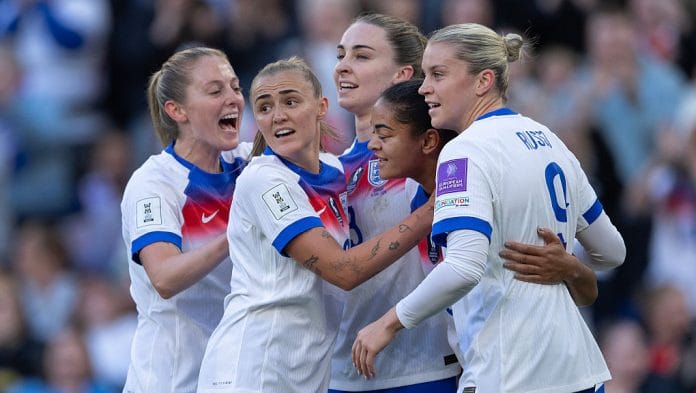
The Women’s World Cup is set to be held in Brazil next summer and provides the biggest stage in women’s football. This October is meant to be filled with playoff games for those not already qualified for the tournament, including several matches featuring the 2023 Cup’s runners-up, England’s Lionesses.
There are also the Under-20s Women’s World Cup and the Under-17s Women’s World Cup later this year, both vital competitions for national teams to discover and foster promising young talent. For countries such as the US, which aren’t eligible to participate in major European tournaments like the Euros or Champions League (both would be unaffected as they’re run by UEFA), these games are often the only opportunity to stay competitive.
“I am massively worried about the direction for and the lack of all of those experiences for American players,” Emma Hayes, head coach for the US women’s national team, told ESPN this month.
The loss of these tournaments would be devastating for the growth of the women’s game, and for the associations that have put effort and money into trying to bring their women’s teams closer to parity with the men’s. But that fact is getting hardly any attention, largely because the world continues to view women’s sport as a charity case.
It’s true that, historically, women’s football has been a lossmaker. But that’s starting to change: FIFA broke even for the first time at the 2023 Women’s World Cup, which generated $570 million in revenue. FIFA’s spending on the 2023 Cup, which included prize money and payments to players, participating organizations and players’ clubs, rose to $152 million, up from just $15 million in 2015. Individual player bonuses in 2023 ranged from $30,000 for reaching the group stage to $270,000 for winning — a lifeline in a sport where many footballers still work a second job, unable to make a living by playing alone. The governing body also previously set a target of paying equal prize money at the men’s and women’s World Cups by 2027, which would mean increasing the women’s pot to $871 million next year.
And it’s not just monetary benefits that are on the line. At the last Women’s World Cup, FIFA organized a physical preparation program aimed at increasing the competitiveness of teams that might not have been part of the tournament before. For debutant nations like the Republic of Ireland, the tournament also significantly increased awareness of the sport, yielding record home attendances and long-lasting fan engagement after the competition was over.
With all of that in mind, there’s an irony in the fact that women are leading the charge for a potential boycott. UEFA Vice-President Laura McAllister and Norway football association President Lise Klaveness, the only two female members of UEFA’s 21-person executive committee, were the ones who spearheaded the initial plan, according to the Athletic. Lucy Bronze, one of England’s most prolific players, also came out in support of the plan, saying it’s for the “good of the game.”
“If that means boycotting competitions, then that has to happen,” Bronze said at a pre-season press conference for her club Chelsea. “It’s for the future of the game… it’s for all the little girls or little boys who come after us.”
If this year’s tournaments don’t go ahead, FIFA will certainly lose out on any returns from the money it’s already sunk into improving the women’s game. But those competitions’ lack of profitability also means a boycott won’t hurt the governing body as much as its member associations would like.
UEFA, along with the North and Central American federation Concacaf and the Asian Football Confederation, have begun discussions about holding rival international tournaments instead, Bloomberg reported. It’s not been stated whether this would include replacements for women’s competitions, but it’s unlikely any substitutes would have the same financial support FIFA provides.
In the end, women are the ones who’ll take one for the team — or in this case, the sport. It’s unfair that they must do so when they already have to fight for the means to play, and even more so because they won’t get sufficient recognition for paying that price.
Without an early departure by Infantino, a boycott may be inevitable. What comes next must see football’s governors consider appropriate reparations for that sacrifice.
Disclaimer: This report is auto generated from the Bloomberg news service. ThePrint holds no responsibility for its content.