



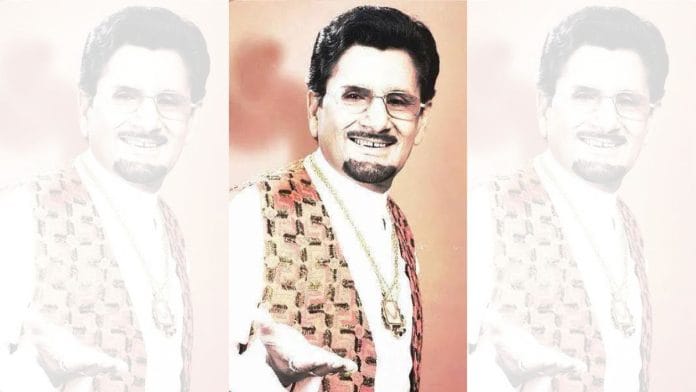
He carried Punjab’s folklore across generations, long before archives, playlists or algorithms bothered to preserve it. His music sings of love that disobeys. It’s about men who rebel, women who defy, and a land that remembers. Kuldeep Manak spent his final years away from the spotlight, but Punjab continues to treasure him.
Born Latif Mohammed Khan in 1951 in Jalal village in Bathinda he grew up far from the patronage networks that traditionally supported classical and folk performers. He learned by listening—absorbing Punjabi qisse, ballads and oral histories passed through village gatherings and akharas. Quisse are folk tales told through musical storytelling.
Punjab remembers Manak fondly to this date.
A statue in his remembrance has been erected in Ludhiana. And in his house his favourite seat has been kept empty, his wife Sarbjit Kaur aid—nobody sits there any longer, but his fans and students of folk music come to this date, bow down and kiss the floor in front of the sofa.
In 2003, he suffered paralysis after a sudden illness, which brought his career largely to a halt. It’s been more than a decade since Manak died of pneumonia on 30 November 2011. His legacy lives on.
Manak rose to prominence in the 1970s and 1980s when Punjab was undergoing political turbulence and cultural churn. While film music and commercial pop slowly entered the scene, he remained devoted to traditional narrative folk forms—especially qisse such as Mirza-Sahiban, Sohni-Mahiwal, Jeona Morh, Rana Chanchal Hariyan and Dulla Bhatti. He was referred to as ‘kalian da badshah’ (king of kalian). These were not merely songs; they were stories of rebellion, forbidden love, betrayal, and resistance—themes that resonated in a Punjab navigating unrest and identity crises.
Also read: Jaspal Bhatti would be an ‘anti-national’ today — satirist who always punched up, not down
A global legacy
Manak’s breakthrough came when he revived tales many believed were fading from popular memory. He restored the urgency of folklore. His most famous numbers, including Mirza Yaar Bulaonda Tera, Jeona Morh, Rana Chanchal Harian and Dulla Bhatti, turned centuries-old legends into anthems of the street. Manak’s voice was direct and almost abrasive.
“Many of the songs he wrote were for my mother and she remembers them fondly,” said his son, Yudhvir Manak, also a noted singer.
Over a career spanning four decades, Manak recorded nearly 100 albums. His cassettes travelled across states and the seas, long before Punjabi music became a global export.
Despite his impact, national recognition remained limited. Punjabi folk artists rarely entered Delhi’s cultural institutions, and Manak remained largely a regional legend. Yet his influence is unmistakable. Contemporary Punjabi artists continue to sample, remix and reference him. Even modern hip-hop tracks borrow emotional tones that trace back to Manak’s raw delivery.
Mirza Yaar was remixed by Babbu Maan at a live performance. Sidhu Moose Wala said Manak was an influence for him
In 2012, prominent artists like Jazzy B, Manmohan Waris, AS Kang performed a tribute to Manak at the Brit Asia Awards.
(Edited by Theres Sudeep)