



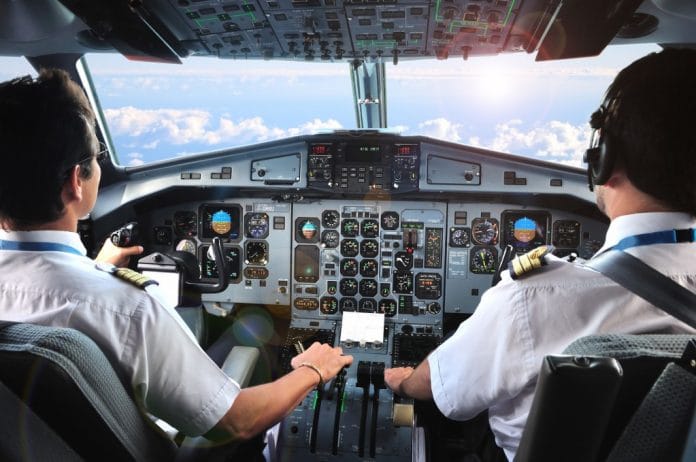
New Delhi: The Flydubai incident has drawn international attention after a co-pilot allegedly stabbed the captain mid-flight, forcing the Dubai-Tel Aviv flight to divert to Saudi Arabia. The injured captain, Smit Machchhar, managed to open the cockpit door, allowing passengers and cabin crew to enter and help overpower the co-pilot.
All passengers survived, while both pilots were hospitalised. Israeli authorities described the episode as a serious security incident and, in some statements, an attempted terror attack.
The role of the cockpit door
The decisive moment in the whole event was the opening of the cockpit door. Under normal circumstances, the door is designed to stay locked and resist forced entry from the cabin.
In this case, the injured captain released the door from inside, allowing passengers and cabin crew to enter the flight deck and intervene.
This shows that while modern cockpit doors are designed mainly to keep threats out, they can still be opened by someone who is already authorised to be inside or by a pilot who chooses, or is able, to release the lock.
Cockpit doors before 9/11
Before 9/11, the US Federal Aviation Administration (FAA) described the traditional cockpit door as simply a privacy door. There were rules requiring the doors to be closed and locked during flight.
But its main purpose was to allow pilots to concentrate on flying without any interruptions or activity from the passenger cabin. It was not designed to withstand force or attacks.
“Doors have not been required to meet any significant security threat, such as small arms fire or shrapnel, or the exercise of brute force to enter the flight crew compartment,” the administration said.
However, after 9/11 terror attacks, the aviation security issue became less about simply preventing hijackers from force-landing a plane, and more about stopping an unauthorised person from taking control of the aircraft in the first place.
How modern cockpit doors work
After the 9/11 attacks, the FAA announced rules to strengthen the cockpit doors and keep doors locked during flight.
Modern commercial-aircraft cockpit doors are now reinforced, multi-layered structures designed to resist physical attacks, small-arms fire, and fragmentation devices, such as grenades.
The doors have several latches controlled from inside the cockpit, along with a manual deadbolt in many designs.
From the cabin, access is requested through a keypad. Entering the correct code sounds a buzzer and turns on indicators inside the cockpit. Pilots can then choose to unlock the door or keep it locked.
Before opening the door, pilots normally verify who is outside through a peephole or camera.
An emergency override code known to cabin crew can also start a timed sequence. If the pilots do not actively deny entry within roughly 30 seconds, the door briefly unlocks so that crew can enter if both pilots are incapacitated.
Also Read: Flydubai’s Boeing 737 plunged 14,000 ft. What kept it from crashing?
Rules governing access
Rules on who can enter the flight deck are similarly strict.
Under United States regulations applicable to major commercial operations, the cockpit door must remain closed and locked throughout the flight, except when authorised persons require access.
Only operating flight-crew members, FAA and National Transportation Safety Board inspectors carrying out official duties, and people specifically authorised by the pilot-in-command may be admitted.
Ordinary passengers are not permitted on the flight deck during flight.
Earlier cases of cockpit entry
These reinforced systems and strict procedures largely ended the pre-2001 pattern of passengers simply forcing their way into the cockpit.
In the late 1990s and 2000, a series of incidents showed how vulnerable the earlier, lighter cockpit doors were.
On an Alaska Airlines flight in March 2000, a passenger broke through the cockpit door and physically attacked the pilots. Having been alerted to the attack, the first officer had already armed himself with an axe.
After a physical confrontation, the pilot made an emergency plea over the intercom, to which seven passengers responded. The attacker was tackled to the ground and later taken into custody by the federal authorities upon landing in San Francisco.
On a British Airways Boeing 747 later that year, a passenger, Nishizawa, threatened and forced a flight attendant to unlock the cockpit door.
After entering, he ordered the co-pilot out of the cockpit and demanded that the pilot fly to a US military base west of Tokyo.
When the pilot refused, Nishizawa stabbed him in the neck and tried to seize the controls, causing it to plunge within 300 metres of the ground. Moments before the tragedy, the deposed pilot and an off-duty pilot stormed the cockpit, restraining the assailant and taking control of the aircraft.
Contemporary media reporting recorded many similar attempts between 1997 and early 2000. Several were successful, often involving passengers who were distressed, intoxicated, or panicked.
After reinforced doors became mandatory, successful forced entry from the cabin became extremely rare.
When people have reached the cockpit in later years, it has almost always been because the door was opened from inside or because the emergency override procedure was used.
One such incident happened when Andreas Prodromou, a flight attendant, entered the cockpit of Helios Airways Flight 522 in 2005 after both pilots had been incapacitated by hypoxia.
Andreas entered the cockpit through the security code 10 to 12 minutes before the crash.
The regulatory systems introduced after 2001 remain highly effective against the classic threat of intrusions. But they cannot, by themselves, neutralise a threat that originates inside the cockpit or one that succeeds in getting a pilot to open the door.