


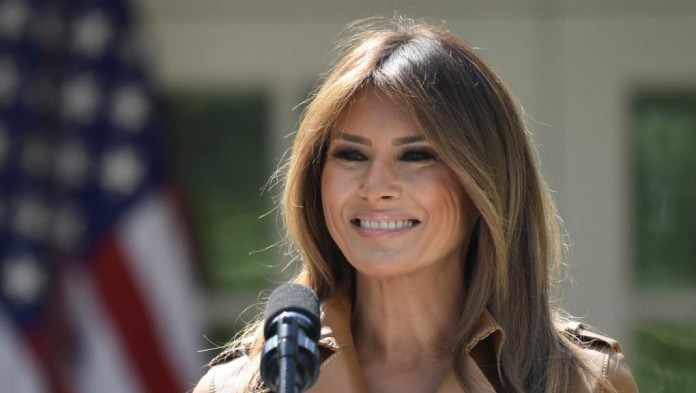
New Delhi: When Russian and Ukrainian officials gathered at the White House on 5 November, Melania Trump gave her staff an unusual instruction. She wanted representatives of the two countries, which have been fighting a war for nearly five years, seated next to each other.
The seating arrangement was deliberate. The US first lady had helped secure a temporary ceasefire in the Russian-occupied Ukrainian town of Oleshky, allowing humanitarian aid to enter and hundreds of civilians to leave. Now, she wanted the two sides to sit together.
But the more intriguing story was how she brought them there.
According to a New York Times investigation published on 22 November, Melania’s diplomatic effort was driven partly by Marc Beckman, her longtime agent and senior adviser, who had built an unlikely network of contacts in Moscow and Kyiv despite having no traditional diplomatic experience.
The first lady has since expressed hope that another ceasefire could be reached before Christmas. So how did she become involved in the Russia-Ukraine war, and what has she actually achieved?
It began with children separated by war
Melania’s involvement began with an issue that had become one of the most contentious aspects of Russia’s invasion of Ukraine: children separated from their families.
In August 2025, she wrote to Russian President Vladimir Putin urging him to protect children affected by the conflict. US President Donald Trump delivered the letter during his meeting with Putin in Alaska.
The communication helped open a channel between Melania’s team and Russian officials.
By October 2025, she said discussions with Putin’s representatives had helped reunite eight children with their families. The effort continued over the following year.
Ukraine has accused Russia of unlawfully deporting thousands of Ukrainian children. Moscow maintains that the transfers were carried out to protect them from fighting.
The International Criminal Court issued an arrest warrant for Putin in 2023 over alleged unlawful deportations and transfers of children from occupied Ukrainian territory.
The unlikely man behind Melania’s diplomacy
At the centre of Melania’s operation is Beckman, a longtime associate whose background lies in business and entertainment rather than international diplomacy.
The New York Times reported that Beckman had established regular communication with Kirill Dmitriev, the head of Russia’s sovereign wealth fund and an economic envoy to Putin.
Dmitriev is an influential figure in Moscow’s dealings with Washington and has been subject to US sanctions.
According to the Times, Beckman said he had been speaking with Dmitriev for more than a year, sometimes several times a day.
He also established contacts with Ukrainian officials, including David Arakhamia, a senior member of Ukraine’s negotiating team.
Arakhamia told the Times that when Ukrainian officials could not reach an agreement with the Russians themselves, they contacted Beckman.
This gave Melania access to an informal communication network operating alongside conventional diplomatic channels.
Her team used those relationships to pursue humanitarian agreements, rather than attempting to resolve the larger political disputes that have frustrated peace negotiations.
How did she secure a ceasefire in Oleshky?
The opportunity came in September, when Melania learned about the worsening humanitarian crisis in Oleshky during an event held alongside the United Nations General Assembly in New York.
The Russian-occupied town, across the Dnipro River from Kherson, had been devastated by fighting and flooding following the destruction of the Kakhovka Dam.
Before the war, roughly 24,000 people lived there. By October 2026, an estimated 1,700 to 2,000 remained, many of them elderly residents facing shortages of food, medicine and clean water.
Melania directed Beckman to contact Russian and Ukrainian officials.
According to Fox News, her team first sought Ukraine’s approval for her to act as an intermediary. Kyiv agreed, and Moscow subsequently authorised the arrangement.
The negotiations became remarkably detailed.
Melania and Beckman examined maps and aerial photographs, discussed which roads could be used for evacuations and worked through arrangements for removing mines.
They also negotiated what military equipment could enter the area and how residents would be transported.
On 23 October, Russia and Ukraine signed an agreement for a temporary ceasefire in Oleshky.
The arrangement allowed humanitarian supplies to enter and civilians to leave through designated routes.
At a White House gathering on 5 November, Melania said nearly 800 people had been evacuated.
The agreement was limited to Oleshky and nearby areas. Fighting continued elsewhere in Ukraine.
Why did she seat the officials together?
The 5 November White House gathering offered a glimpse of Melania’s approach.
According to the New York Times, she instructed her staff to arrange the seating chart so that Russian and Ukrainian representatives would sit beside one another.
It was a striking detail in a war where even getting representatives of the two countries into the same room has often proved difficult.
Among those present were Russia’s Kirill Dmitriev and Ukraine’s David Arakhamia, two men who had played important roles in the negotiations.
Melania used the occasion to thank both sides, encourage further cooperation and hand over letters addressed to Putin and Ukrainian President Volodymyr Zelenskyy.
Ukrainian representatives also presented her with the Order of Princess Olga, First Class, in recognition of her humanitarian efforts.
The carefully arranged seating did not amount to a peace negotiation. But it reflected her effort to keep the channels open during the humanitarian mission alive.
Could Melania help bring an end to the war?
During a Fox News appearance on 20 November, Melania said she hoped Russia and Ukraine could reach another ceasefire before Christmas.
But there is a considerable difference between negotiating a temporary humanitarian pause and ending a war.
The two countries remain divided over territory, sovereignty and security guarantees. The Oleshky agreement did not address those disputes.
Melania’s involvement is also unusual because much of the work has been conducted through personal relationships rather than the conventional machinery of American diplomacy.
For now, the results are limited but tangible: children reunited with their families, humanitarian supplies delivered and hundreds of civilians evacuated from a devastated town.
Whether those personal connections can produce another agreement, let alone contribute to a broader peace settlement, remains uncertain.
It’s astonishing. How come The New York Times report favourably on the First Lady or President Trump?
They keep painting the entire family as a bunch of demons – incarnations of the devil himself – who are hell bent on destroying the world.