



New Delhi: A passenger jet does not simply fall from the sky when the pilots suddenly lose the ability to control it. A Boeing 737 has layers of automation and flight-control systems that can keep the aircraft on a defined flight path, while trained crew can take over if the pilots become incapacitated. But those systems have limits. They are designed to assist pilots, not replace them.
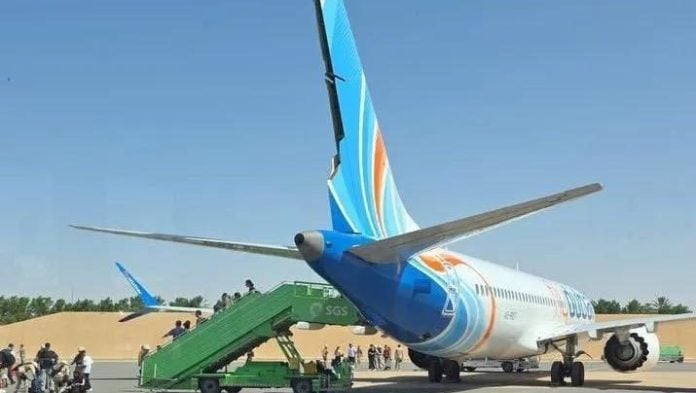
That distinction is at the heart of the flydubai incident, in which a fight in the cockpit was followed by a rapid loss of altitude. The aircraft eventually stabilised and landed safely in Saudi Arabia, after off-duty pilots and crew members on board intervened.
What actually keeps a 737 in the air?
A modern 737 is controlled through a combination of pilot inputs, flight-control computers and automated systems.
The autopilot can control the aircraft’s pitch, roll and heading, depending on the mode selected. The flight-management system provides navigation information and can guide the aircraft along a programmed route. Autothrottle can manage engine thrust.
But none of this means the aircraft is independently capable of dealing with every emergency.
The autopilot follows the instructions and parameters it has been given. If the aircraft enters a situation outside those parameters, or if someone makes significant control inputs, the pilots still have to intervene.
The Federal Aviation Administration’s (FAA) review of the 737 MAX, for example, describes the aircraft’s automation as systems that work within specific conditions rather than as a substitute for flightcrew decision-making.
What happens if one pilot suddenly cannot fly?
Commercial aircraft have two pilots, their jobs are deliberately divided. One is generally the pilot flying, responsible for controlling the aircraft, while the other is the pilot monitoring, who monitors the flight path, instruments, communications and the actions of the flying pilot.
If one becomes incapacitated, the other can take over.
The more unusual question is what happens if both pilots are suddenly unable to perform their normal duties.
That is where the flydubai flight became extraordinary. The aircraft was reportedly carrying additional flydubai pilots who were travelling as passengers. After the cockpit struggle, those pilots reportedly entered the flight deck and helped stabilise and land the aircraft. Flydubai itself said the aircraft was secured by on-duty crew who diverted and landed it safely.
So the aircraft’s survival was not simply a case of “autopilot saved everyone”. Human intervention appears to have been crucial.
Could the autopilot have stopped the plunge?
Autopilot is not an emergency parachute. It controls the aircraft according to the mode selected and the information it receives from the aircraft’s systems.
If an aircraft is already descending rapidly because of inappropriate control inputs, simply having an autopilot onboard does not guarantee that it will automatically recognise the situation and recover the aircraft.
And there is another important question: was the autopilot actually engaged during the descent?
That is not publicly established yet.
The flight-tracking data shows the aircraft lost thousands of feet very quickly, but tracking data cannot reveal exactly what the pilots were doing with the controls or which automation modes were active. Those details should be available from the flight-data recorder.
What about MCAS?
This is where the 737 MAX’s history can cause confusion.
MCAS, the system that became infamous after the Lion Air and Ethiopian Airlines crashes, is not designed to recover an aircraft from any kind of dive.
The system is designed to operate under specific high-angle-of-attack conditions during manual flight. The FAA’s review of the redesigned MAX says MCAS activation is tied to high angle of attack and that the system was substantially changed after the two crashes.
So if a 737 MAX is already pointing down and rapidly losing altitude, MCAS is not automatically supposed to say: “The aircraft is diving, pull it up.”
That is not what the system does.
What did the other pilots actually do?
Reports from passengers suggest that after the injured captain managed to open the cockpit door, people entered the flight deck and eventually other pilots took control.
One passenger told reporters that he initially grabbed the controls and pulled back before other crew members took over. Another passenger said the reserve pilots then stabilised the aircraft and landed it.
That is an important distinction.
A person pulling back on a control column does not by itself amount to safely flying a Boeing 737. The aircraft has to be brought back to a controlled attitude, speed and altitude, while the pilots manage navigation, communications, engines, landing configuration and the emergency itself.
The fact that trained pilots were available to take over would therefore have been significant.
Why didn’t the aircraft break apart?
The rapid descent itself was extreme, but an aircraft can descend very quickly while still generating lift.
The bigger danger is the combination of speed, attitude and aerodynamic loads.
As an aircraft descends steeply, it can accelerate. If its speed becomes excessive, aerodynamic forces increase and the aircraft can approach its operating limits.
AP reported that the aircraft’s descent from around 33,000 to 17,000 feet damaged its rudder. Aviation experts cited by The Guardian described the forces involved as substantial and expressed surprise that the aircraft remained intact.
That makes the eventual recovery particularly important. The aircraft had enough altitude for control to be regained before it reached the ground.
The bigger lesson from flydubai
The flydubai incident shows why automation alone is not the safety net people sometimes imagine it to be.
A modern airliner has multiple layers of protection: automated flight controls, warnings, redundant systems, checklists, two-person cockpit procedures and trained crews.
But those layers are designed to work together.
In this case, the aircraft’s ability to remain flyable gave the people who eventually reached the cockpit time to regain control. The decisive part of the story appears to have been not one piece of software, but the combination of an aircraft that remained controllable, available altitude and trained people who could take over.
Exactly what flight-control modes were active during the descent, and what caused the aircraft to enter it, will have to be established from the flight recorders and the investigation.