


New Delhi: In May 1998, when India conducted five nuclear tests in Rajasthan’s Pokhran, Washington responded with economic sanctions. The relationship between the world’s two largest democracies, already strained by decades of Cold War differences, had taken another hit.
Yet less than two years later, US President Bill Clinton was in New Delhi, receiving a standing ovation in the Indian Parliament. By September 2001, Washington had lifted the sanctions imposed after Pokhran.
At the heart of this diplomatic turnaround were two men who spent more than two years trying to understand each other’s countries: US Deputy Secretary of State Strobe Talbott and Jaswant Singh, a close confidant of Prime Minister Atal Bihari Vajpayee who subsequently became India’s external affairs minister.
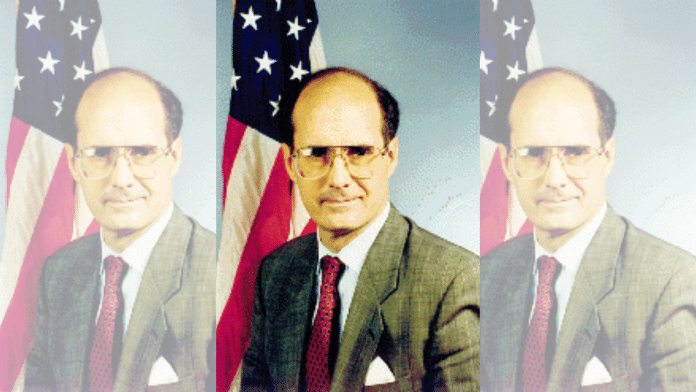
Talbott, who died on Thursday at the age of 80, served as deputy secretary of state under Clinton from 1994 to 2001. A former Time magazine journalist, he went on to head the Brookings Institution for 15 years. But in India, he is perhaps best remembered for his marathon negotiations with Singh, which took them to seven countries across three continents.
Across 14 rounds of discussions, the two helped create the foundations of a relationship that would eventually make civilian nuclear cooperation between India and the US possible.
Why did the US impose sanctions on India?
India’s nuclear tests on 11 and 13 May 1998 threatened Washington’s efforts to prevent the spread of nuclear weapons. Pakistan conducted its own nuclear tests later that month, raising fears of a nuclear arms race in South Asia.
Under a provision of US law known as the Glenn Amendment, the Clinton administration imposed sanctions on India. These included restrictions on financial assistance, defence sales, technology transfers and certain lending activities.
Washington wanted India to sign the Comprehensive Nuclear-Test-Ban Treaty (CTBT), which prohibits nuclear explosions, halt the production of material used to manufacture nuclear weapons and restrict its missile programme.
New Delhi, however, argued that its nuclear weapons were necessary for national security, given its neighbourhood, particularly China and Pakistan.
Vajpayee entrusted Singh with explaining India’s position to Washington. Clinton’s administration assigned Talbott the task of negotiating with him.
What happened during the Talbott-Singh talks?
Beginning in June 1998, Singh and Talbott met in cities including Washington, Frankfurt, Rome and New Delhi.
Declassified American diplomatic records reveal that Singh tried to explain India’s security concerns by pointing out that much of the world enjoyed some form of protection from established nuclear powers, while India had no equivalent security guarantee.
India was also unwilling to accept an international nuclear order that allowed certain countries to possess nuclear weapons while denying others the same right.
Talbott remained opposed to nuclear proliferation, but increasingly sought to identify areas where Washington and New Delhi could cooperate despite their disagreements.
The talks gradually shifted towards practical measures such as preventing further nuclear tests, strengthening controls on the export of sensitive technologies and limiting the risk of an arms race.
On 7 November 1998, Clinton announced a partial relaxation of sanctions, restoring several American financial assistance programmes and easing banking restrictions. India’s voluntary suspension of further nuclear testing was among the developments cited by the White House.
Crucially, India had not agreed to abandon its nuclear weapons.
How Kargil changed the relationship
Another turning point came during the Kargil War in 1999.
Clinton pressed Pakistani Prime Minister Nawaz Sharif to withdraw Pakistani forces from the Indian side of the Line of Control. For New Delhi, Washington’s position helped build confidence that the US was willing to reconsider its traditional approach towards South Asia.
In March 2000, Clinton became the first sitting US president to visit India in 22 years. Vajpayee visited Washington later that year.
The remaining sanctions imposed after the 1998 tests were lifted in September 2001 under President George W. Bush, although certain longstanding restrictions on sensitive technologies continued.
The diplomatic relationship subsequently evolved into the India-US civil nuclear agreement, announced in 2005 and finalised in 2008.
What was Talbott’s legacy in India?
Talbott never persuaded India to sign the CTBT or surrender its nuclear weapons. Yet the dialogue with Singh achieved something that extended beyond the original purpose of their negotiations.
It allowed Washington to pursue a broader relationship with New Delhi without first resolving every disagreement over India’s nuclear programme.
Talbott later chronicled the experience in his 2004 book, Engaging India: Diplomacy, Democracy, and the Bomb.
The significance of those 14 rounds of talks lies in what followed. A relationship that had deteriorated over India’s possession of nuclear weapons eventually developed to the point where the US helped facilitate India’s return to international civilian nuclear commerce.
The two countries had not settled their biggest disagreement. They had learnt how to build a relationship despite it.
Although Talbott helped improve bilateral relations, he remained critical of the subsequent India-US civil nuclear deal, arguing in 2006 that granting India exceptional treatment could undermine international efforts to prevent the spread of nuclear weapons.
That same year, recalling Talbott’s contribution to India’s diplomatic engagement with the world, Singh told him, “You led us across the bridge.”