







Welcome to The First Metro. I am Manasi Phadke, a thoroughbred Mumbaikar, and once every fortnight, I try to bring you a glimpse of India through Mumbai-tinted glasses. Trust me, the hues seem different.
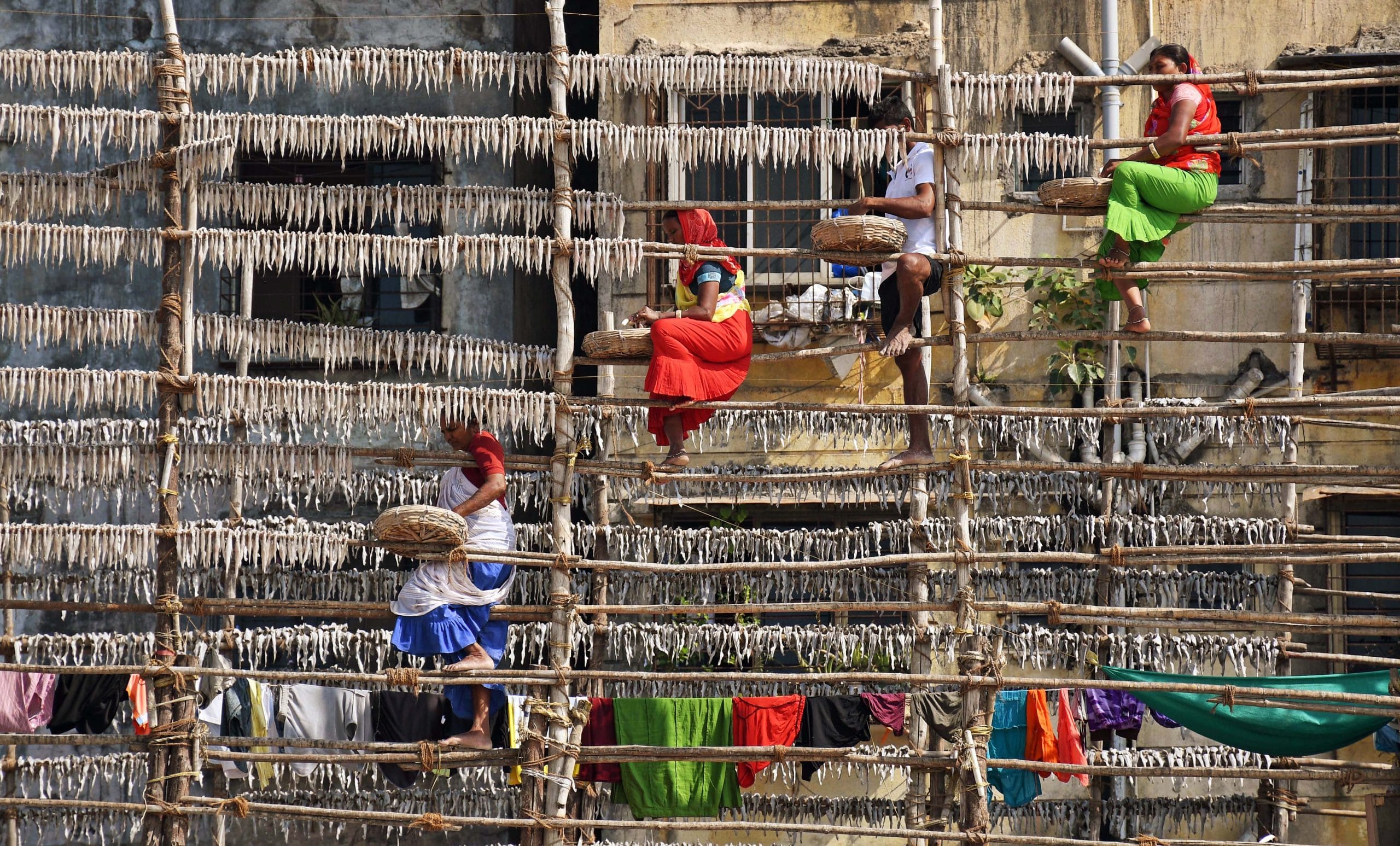
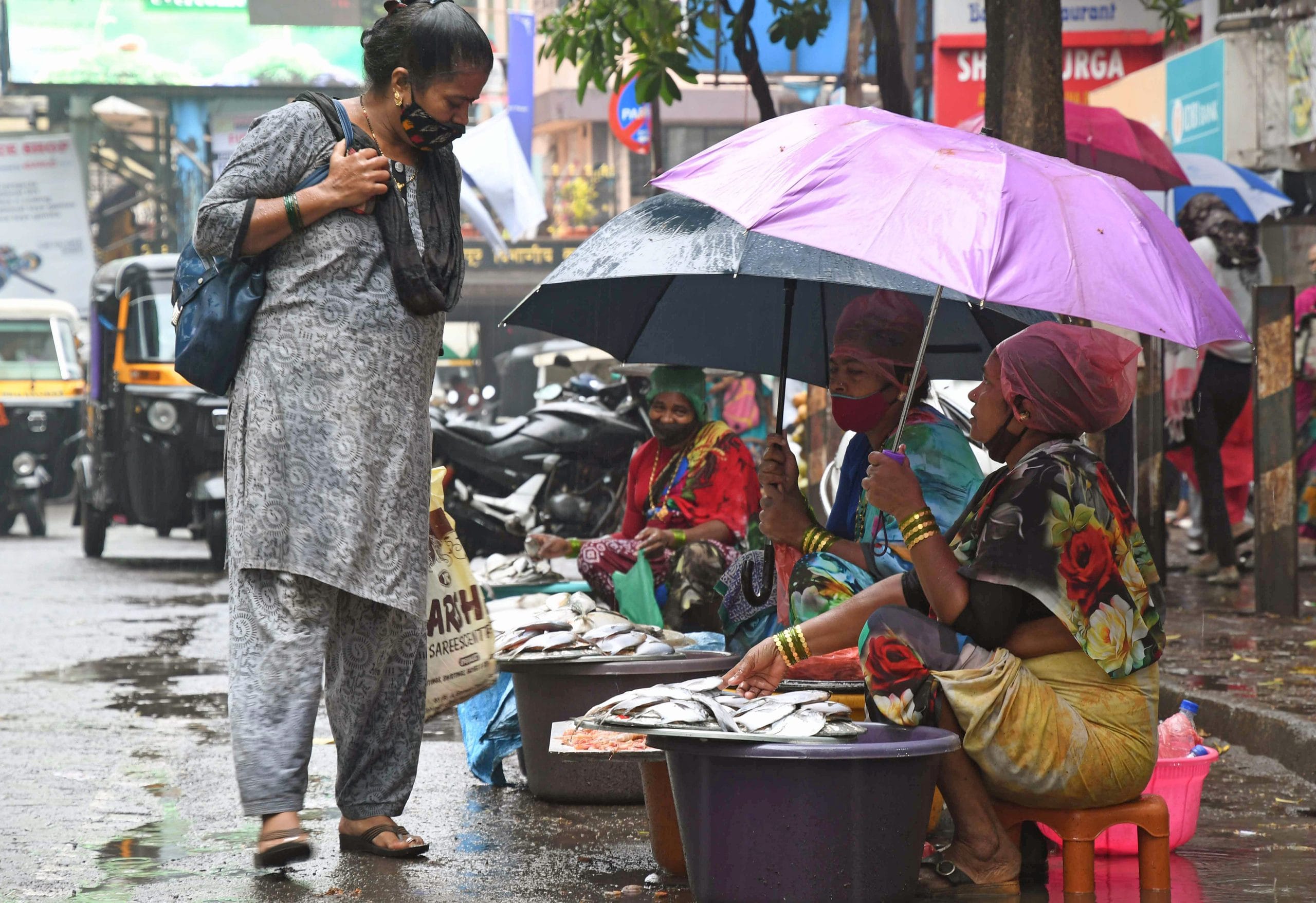
On Thursday, there was some talk about how the BMC had banned fisherfolk from cutting fish at the Vakola fish market. It turned out to be just a rumour, but it sparked intense outrage from politicians and on social media. Eventually, Mayor Ritu Tawde herself had to visit the market to pacify the perturbed fish vendors and tell them that the BMC had issued no such ban nor did it intend to do so.
It was non-news, and yet it played out on local news channels and on social media handles all day.
The Uddhav Thackeray-led Shiv Sena called the move the government’s ploy to target the ‘Koli’ folk, sons of the soil, and asked if people should start taking live chickens and goats home if fish cannot be cut in the market for sale. The Raj Thackeray-led Maharashtra Navnirman Sena (MNS) questioned if the fisherfolk should sell jalebi and fafda instead of fish now, and suggested that whoever can’t stand the smell of fish in Mumbai should leave the city and go to Gujarat.
The strong reaction of the two parties to an unverified piece of news that turned out to be just a rumour could perhaps be dismissed as political opportunism. But, in Mumbai, it really is more than that.
There has always been a silent divide between vegetarians and non-vegetarians in the city. Politicians often make a meal out of it, but the basic ingredients are provided by the city itself.
Mumbai is supposed to be a tolerant city, open to anyone who wants to call it their home. Having said that, there are many times when it feels like the city is just masquerading as open-minded and cosmopolitan, while in reality, it harbours all the same phobias that other Indian cities are afflicted with. These phobias might be lower in magnitude in Mumbai. However, on one very basic parameter, Mumbai probably comes off as the worst and the most restrictive among the Indian metros: food choices.
Tenants are commonly asked if they eat non-vegetarian food; brokers are commonly told not to bring such potential tenants. Certain housing societies are intolerant towards the earthy, brown, fatty and rich scent of meat on the boil wafting out of households. Also, restaurants otherwise known to have non-vegetarian fare on their menu turn all-green in certain pockets of the city. It makes better business sense and helps them stay afloat without any friction with patrons.
Every now and then, an incident revolving around food choices flares up, and it almost always involves a Gujarati-speaking person on one side and a Marathi-speaking one on the other. The latest such incident occurred a year ago, in Ghatkopar, which is such a pucca Gujarati neighbourhood of Mumbai that Rashtriya Swayamsevak Sangh (RSS) leader Suresh Bhaiyyaji Joshi had unknowingly sparked a major controversy earlier this year by declaring in a speech that “the language of Ghatkopar is Gujarati”, and people coming to Mumbai may not necessarily have to learn Marathi.
Last year, a Marathi-speaking person living in a co-operative housing society in Ghatkopar alleged that one of his Gujarati neighbours had called Marathi people “dirty” for eating fish. The MNS had sprung into action mode and it turned into a heated argument requiring the intervention of the Mumbai police.
In this very suburb of Ghatkopar, one of my friends who had relocated to Mumbai from Delhi for a job and had his office at Vikhroli was politely turned down by a broker. “Most owners don’t want a non-veg party for a tenant,” he was told. He eventually found a house in Powai.
There was a time when it was impossible to find eggs in all of posh Napean Sea Road, where Gujarati and Marwari Jains predominantly own luxurious houses.
A friend of mine had just started living in one of Napean Sea Road’s elite, partially sea-facing buildings. His father was a high-ranking official in a bank and had been allotted the opulent house as his accommodation in Mumbai. The friend, a Muslim, invited us over for dinner, and his mother cooked us a delectable meal with succulent mutton and chicken.
This was eleven years ago, when the BMC’s ban on the sale of meat in private as well as corporation markets during four days of the Jain festival of Paryushan had caused a massive outcry, and not just among the politicians. It had exposed a faultline that goes to the gut of the matter–the city’s intolerance in pockets towards non-vegetarianism, and just how much of the city’s political parties have benefited by it.
It had riled up people at large. I remember my Catholic friend fuming one day. “I am all for respecting people’s sentiments, but nobody is asking vegetarians to visit meat markets to be offended by them. And what about my sentiments? When people crinkle their nose at my perfectly cooked pot of sorportel?”
Just then, the television started showing visuals of MNS workers defying the meat ban by holding broilers in their hands and selling chicken near a Jain temple. And my Catholic friend couldn’t help saying, “Saiba bogos, crackpots!”
Back at the Napean Sea Road dinner, with this meat ban issue fresh on everyone’s minds, I asked my friend’s mother if the neighbourhood was as notorious a stickler for vegetarianism as is made out to be outside. She said nobody has objected to her cooking chicken and mutton, but just catering to her family’s traditional tastebuds involves a whole lot of effort. There are no shops in her neighbourhood selling meat or fish. Even eggs are hard to come by, she said. They had to plan ahead, spend the taxi fare to go Grant Road or Churchgate and get the meat.
My guess is that the Licious-es and Zepto-s of the world that have cropped up since then must have addressed this issue to a large extent.
This divide along food lines perhaps has its roots in the breakdown of Mumbai’s chawl system where people lived next to each other, shared walls and open space where all sorts of cooking aromas converged. While this social fabric was most visible in the chawl system, it went much beyond that, in buildings and housing societies. I grew up with two Jain “best friends” and I have lost count of the times when we have eaten together, sitting side by side, with a chicken tikka at the end of my fork.
As the chawls in central Mumbai collapsed, they were replaced by high-rise buildings in prime Mumbai locations with good-looking lobbies and modular kitchens. Real estate prices in these localities gradually skyrocketed and it was largely the wealthier Gujarati and Marwari business families that could afford to buy houses here.
About 20 years ago, when the first of the chawls started falling, making way for tall buildings, Ashok Khamkar, a proprietor of a spice shop in Lalbaug, had gone public talking about how he was denied a house in one of Parel’s tall buildings by the developer because he ate non-vegetarian food. Since then, there have been more such instances of alleged discrimination.
In 2014, the BMC’s general body also passed a motion proposed by an MNS corporator to include a condition in the Development Control Rules that would enable the civic body to take action against developers discriminating against people who eat non-vegetarian food.
Corporators from the MNS and the then undivided Shiv Sena had also lamented how developers have started erecting Jain temples in housing societies to mainly attract only Gujarati and Marwari Jain families, who then allegedly use the temple as a reason to restrict non-veg food. However, after much back and forth, the BMC administration clarified that it wasn’t in its jurisdiction to do so, and it was the police that could take action in such cases.
There have also been multiple instances of high-rise building residents taking objection to fish markets and meat markets in their localities. Some concerns, especially about roadside vending involving hygiene issues and traffic congestion, are not entirely invalid, and are directed more at the BMC to find vendors better, cleaner designated spots to market their wares.
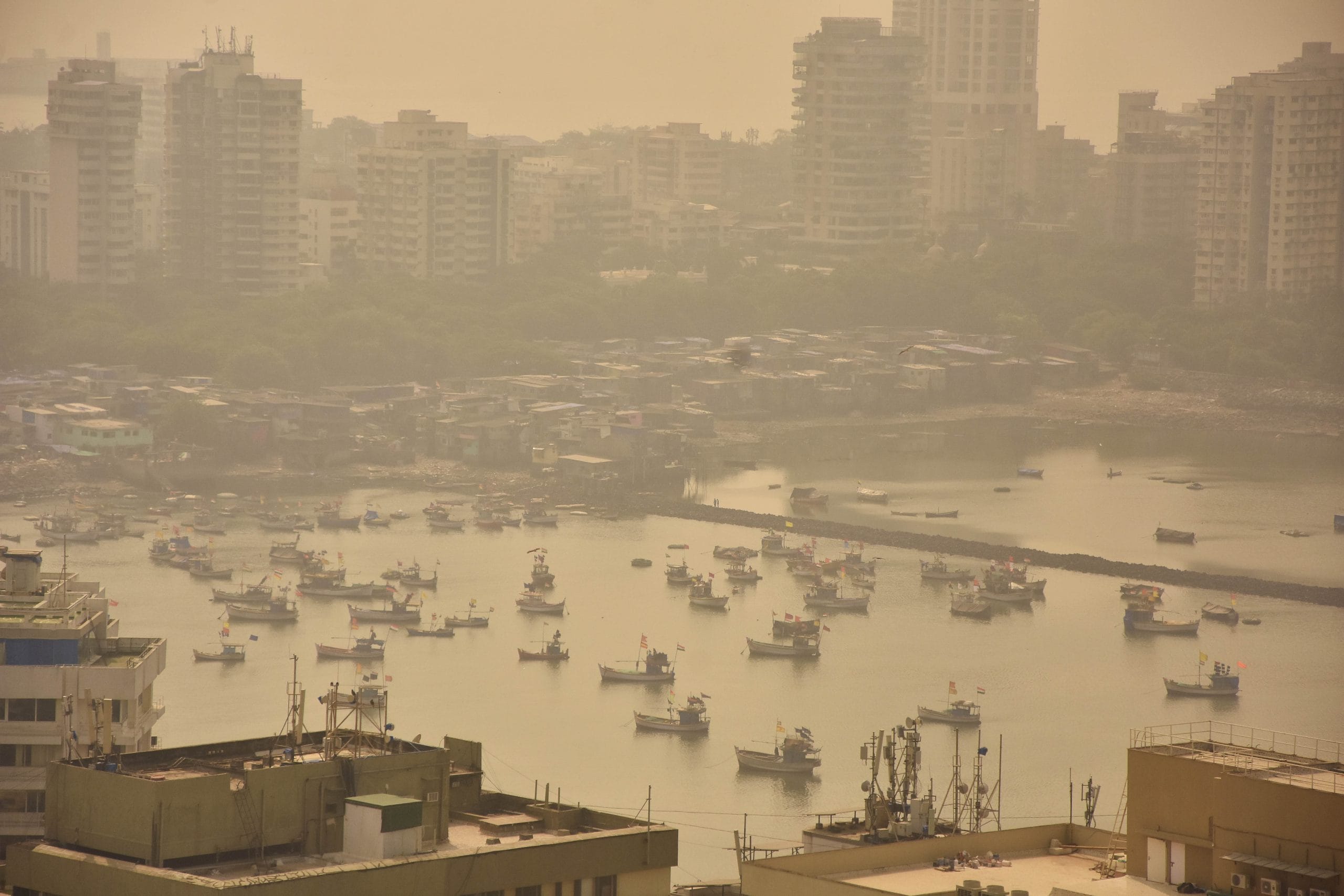
Some disputes, such as the one at Lalbaug fish market, for instance, are a result of how neighbourhoods have changed. The people who live next to the fish market now have not been brought up to tolerate the smell of fish.
Not much has been done legally about any of this, and politics has only helped this food divide thrive, spicing it up every now and then, especially when elections are around the corner.
The Gujaratis, and especially the Jain community among them, have been staunch supporters of the BJP in Mumbai. The party wouldn’t want to get involved in debates about temples in housing premises and supposed rules to protect the sentiments of a certain community. On the other hand, the MNS and the Shiv Sena, with their ‘sons of the soil’ agenda, get an opportunity to sharpen their swords any time there’s an incident about alleged intolerance, especially involving the Marathi manus as its victim.
Mumbai’s great food divide, built on several layers of insecurities fed and fattened by politics, is the foremost and the biggest challenger to the city’s crown of cosmopolitanism.
It is the unlikely combination of mutton curry, dhokla, kadhi and fried pomfret all on one plate, tussling to be the main course. Eventually, that leaves a sour taste.
The First Metro is a subscriber-first newsletter written by a Mumbaikar, on Mumbai—its power, its politics, its people. Subscribers get early access to the newsletter, delivered straight to their inbox.