









I have often defended sports boycotts, especially when India refuses to play with Pakistan. But this new sport spat with Bangladesh strikes me as illogical, badly thought-out, and unlikely to benefit either country.
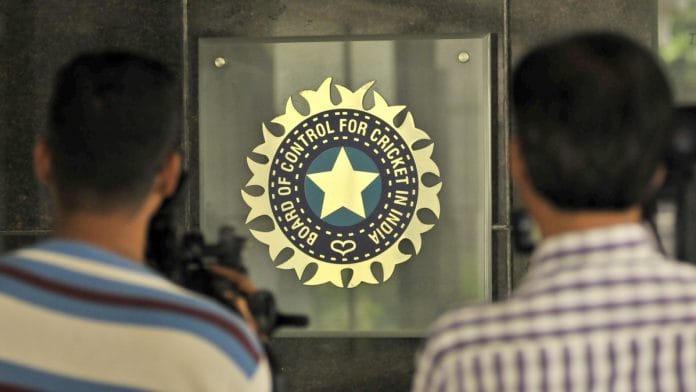
Just follow the sequence of events. Teams from the Indian Premier League were asked to choose players from a pool selected by the Board of Control for Cricket in India (BCCI). The Kolkata Knight Riders chose Mustafizur Rahman. Rahman is a Bangladeshi, but that did not seem particularly relevant at the time.
Then, BJP politician Sangeet Som called the team’s owner, Shah Rukh Khan, a traitor and said he had no right to live in India because he had selected a Bangladeshi player.
This should have been seen for what it is: dangerous, poisonous communal rhetoric used only because Khan is a Muslim and his popularity (among followers of every religion, especially Hindus) agitates the Hindu Right wing.
In fact, nobody in authority told Som to shut up. And so, assuming that the leadership was fine with attacks on this issue, followers of the Sangh Parivar ideology on social media and outside kept up the assault on the actor.
Is a ‘boycott’ warranted?
Things began to get awkward when people made the obvious point: If it was so bad to select a Bangladeshi, then why was he placed in the pool by the BCCI to begin with? Everyone knows that cricket administration in India is a deeply political affair, and cricket boards are run by politicians and their families. So the BCCI had two choices. It could maintain a high-minded silence and wait for the controversy to blow over. Or it could panic because politicians were in the firing line and surrender cravenly to the lunatic fringe by stopping Rahman from playing.
No prizes for guessing which option it chose.
So now, we are in the middle of a full-fledged cricket spat with Bangladesh. The Bangladesh board has said that its team will not travel to India next month to play in the T20 World Cup. India is not safe for Bangladeshis, it says, a reference to the hatred on display from the Hindu Right. Bangladesh will only play India in safe neutral venues.
As I said, I do not take the line that sport should be free of politics. Boycotts can be a useful tool in isolating rogue regimes. But boycotts must be well thought out. The world boycotted South Africa in the apartheid era, and the boycott put psychological pressure on the country to dismantle apartheid. Similarly, there is no point in India touring Pakistan and being buddy-buddy when Pakistan is organising massacres of Indian civilians.
But Bangladesh is a different case. First of all, it is not sending terrorists to India. Nor does it follow a discriminatory system like apartheid.
No Indian can be happy with what is happening in Bangladesh. There is no doubt that Hindus are nervous about their future there, given recent actions by Muslim extremists. The lynchings and violence against Hindus are deeply shocking and distressing.
The question is, how do we respond?
Also read: Jatiya Party Bangladesh is paying the price for enabling Hasina’s authoritarianism
Old Right-wing playbook
The government of India has opted for a calibrated response. While we have expressed our concerns, we have also made overtures to Bangladesh. There was no reason for the foreign minister to fly to Bangladesh to attend the funeral of noted India-hater Khaleda Zia—unless India wanted to reassure the Bangladeshis that, despite the anti-Hindu violence, it still wants good relations. Nor was this an altruistic gesture. Our neighbourhood is complicated, and the last thing we need is to engender hostility with a neighbour whom Pakistan is assiduously cultivating.
Besides, once this my-lynching-versus-your-lynching game begins, where does it stop? Bangladeshis have no hesitation in pointing to violence and systematic discrimination against Muslims in many BJP-ruled states in India. We never boycotted India because of those lynchings, they say. So why are you acting against us?
Quite apart from the foreign policy implications, the controversy also reveals the sleazy, flabby underbelly of communal politics in India. Would the Hindutva Right wing have made such a fuss about a Bangladeshi player if the team that chose him was not owned by a high-profile Muslim? It is significant that Som’s attack did not deal in principles or policies. He called Khan a traitor and asked him to leave India. It is an age-old Right-wing trope: find an issue involving a Muslim country, link an Indian Muslim with the issue, and then say that he is a traitor while suggesting that his loyalties are not with India but with a foreign Muslim country.
By giving in so readily to the forces of hatred, the BCCI has let India down. It has reversed its own policy and sabotaged the foreign ministry’s well-thought-out approach to Bangladesh. It has also needlessly alienated even those Bangladeshis who opposed the extremist mobs.
Worse still, the BCCI decision has given new life to the lunatic fringe of the Hindu Right. It now has the confidence to force policy changes in accordance with its communal campaigns.
India is a great cricketing nation. Our players will go on to win tournament after tournament. But our sports administrators have lost this particular match. They have proved yet again that the fewer politicians we have in sports bodies, the happier we will all be.
Vir Sanghvi is a print and television journalist and talk show host. He tweets @virsanghvi. Views are personal.
(Edited by Prasanna Bachchhav)
5 hindus have been killed in 2 weeks in small country of bangadesh and vir sanghvi is balming indians for backlash. Do Indians have to watch hindus wiped off from bangaldesh ?
What are we getting of this aman ki asha? why hindus population percentage have been falling in bangladesh while we are able to grow muslims in India?
Man India is gonna become afghanistan if such journalists are running the 4th pillar of democracy.Full of poison,always pumping the muslim touch me not sentiment.