




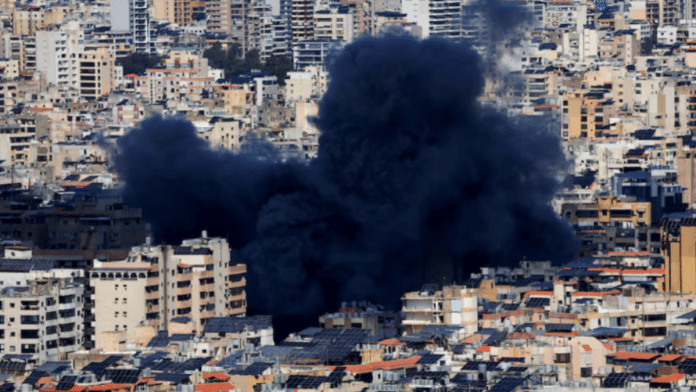
Ten days into the war, Iran reacted to US President Donald Trump’s remark about ending the conflict “soon” and said it will be the one to “determine” when the military campaign against the US and Israel ends.
Trump’s statement came Monday, as oil prices world over hit four-year highs. Prices tumbled down soon after Trump suggested the war could end “very soon”, marking an extraordinary 24 hours in global trade.
Brent crude had surged beyond the $100 per barrel mark Monday for the first time since 2022, triggering sell-offs across Asian and European stock indices. Crude prices later fell sharply to settle at $98.96 per barrel.
The war began on 28 February, with the US and Israel jointly launching a military operation to bomb Tehran. The strikes killed Iran’s senior leadership, key among them its Supreme Leader Ayatollah Ali Khamenei. Iran Monday announced that his son Mojtaba Khamenei will take over the position.
Iran and US-Israel conflict | HIGHLIGHTS
7.30 pm: Blaze at Abu Dhabi industrial complex
In the aftermath of a drone strike, a fire was reported Tuesday at the Ruwais industrial complex in Abu Dhabi, according to Reuters. Facilities operated by the Abu Dhabi National Oil Company (ADNOC) inside the complex have been temporarily shut as a precaution.
5.45 pm: Hegseth says Iran ‘stands alone’
Briefing the media in Washington DC, US Secretary of War Pete Hegseth says Iran “stands alone” and is “losing badly”. Alleging that Iranian forces are “deliberately targeting innocents,” he also reiterated that US President Donald Trump “will not allow” Tehran to develop a nuclear bomb.
Hegseth claimed that today will mark the “most intense day of strikes inside Iran”.
“The most fighters, the most bombers, the most strikes. Intelligence more refined, and better than ever,” he said.
5.30 pm: Tehran says more than 200 women, children killed
The BBC quoted a spokesperson of the Iranian government as having said that more than 200 women and children have been killed in Iran since the US and Israel launched the first wave of strikes on 28 February.
4.55 pm: Qatar sends ‘elevated’ threat alert
Qatar has issued an “elevated” threat alert, telling people to remain indoors.
Separately, Bahrain said it has intercepted and destroyed 105 missiles and 176 drones since Iran started striking US allies in the Gulf.
4.50 pm: More Israeli strikes in Lebanon
Al Jazeera is reporting that an Israeli drone struck the town of Barashit in southern Lebanon.
State-run National News Agency also reported air strikes on Lebanon’s southern towns of Adchit and Breqaa. Four people were injured in Harouf, NNA said.
4.45 pm: 1,300 killed, youngest an 8-month-old, says Iran
The number of people killed in Iran since the start of the war has reached 1,332, according to Iranian government officials, who said an eight-month-old infant was the youngest known victim of the conflict.
4.15 pm: Russia the only winner of war, says EU
Russia is the only winner in the US-Israel and Iran war, European Council President Antonio Costa said in a speech in Brussels.
Costa said Moscow has already gained “new resources” to finance its Ukraine war and “benefits” from reduced attention to the Ukraine front.
The US has already granted a waiver for India to import Russian oil that is at sea. Bloomberg reported Tuesday that Trump indicated to European allies that any further loosening of sanctions on Russian oil would be limited to supplies to India.
4.10 pm: Oppn hits out at Modi government
On reports of commercial LPG cylinder shortage, Congress MP Priyanka Gandhi Vadra said the issue will only worsen.
“The manner in which our government has bent before the US in the trade deal, the crisis will deepen. A war is also going on. So, this will deepen,” she said.
3.50 pm: As attacks continue, Netanyahu says Israel ‘breaking their bones’
Israeli Prime Minister Benjamin Netanyahu said his country’s military action was “breaking their bones”, and that Tel Aviv’s aim was to free the Iranian people from “tyranny” of the clerical regime.
“There is no doubt that through the actions taken so far, we are breaking their bones and we are still active,” he was quoted as saying in a press release.
Hours after the PM’s statement, IDF launched another wave of strikes on Tehran.
*Prime Minister Benjamin Netanyahu at the National Health Command Center: “Our aspiration is to enable the Iranian people to cast off the yoke of tyranny; ultimately, it is up to them. But there is no doubt that through the actions taken so far, we are breaking their bones and we… pic.twitter.com/yu3uG4TY67
— Government Press Office 🇮🇱 (@GPOIsrael) March 10, 2026
3.45 pm: UNHCR says 80,000 Syrians crossed border from Lebanon
Around 80,000 Syrians have crossed from Lebanon into Syria since 2 March to escape the Israeli strikes, according to the UN High Commissioner for Refugees.
UNHCR spokesperson Celine Schmitt told Syria’s SANA news agency that many families left Lebanon quickly, often without taking any personal belongings, and were staying with relatives. No requests for emergency shelter have been recorded so far, Schmitt said.
3.30 pm: G7 leaders to meet today
Group of Seven (G7) energy ministers will meet in Paris Tuesday as they continue to debate a possible release of oil reserves to stabilise markets, French Finance Minister Roland Lescure said. The group, currently presided by France, had said it was ready to take any steps needed to support global energy supply after oil prices surged when the Iran war curtailed output and effectively closed the Strait of Hormuz.
The G-7 stopped short of calling for a release of stockpiles, and prices have since declined sharply, after US President Donald Trump hinted at an early end to the conflict.
“We are gathering the G-7 energy ministers today here in Paris; we are going through the process but obviously all options are on the table,” including an emergency oil stock release, Lescure said on the sidelines of a nuclear energy conference. “We are ready,” Bloomberg reported.
2.45 pm: Turkey says US Patriot system deployed
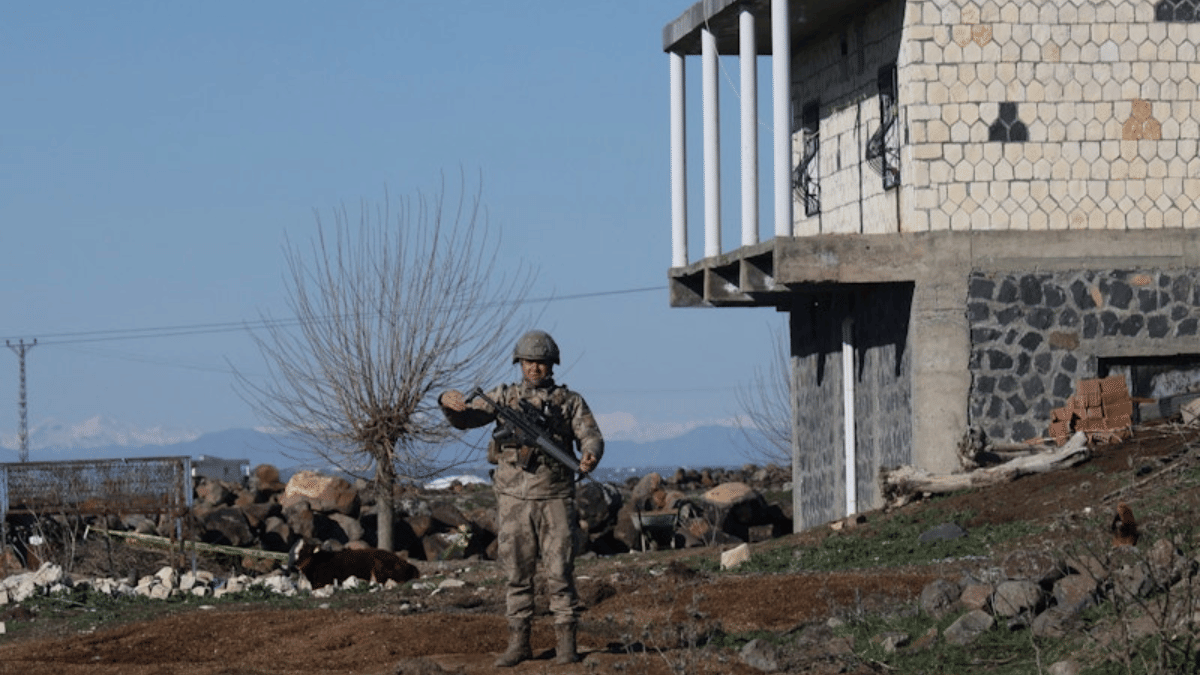
Turkey said Tuesday that a US Patriot air defence system was deployed to its southeast, near a NATO radar base, as part of steps by the alliance to boost air defences in the face of missile threats from the Iran war, Reuters reported.
The system is being deployed to Malatya province, the location of the Kurecik NATO radar base, which provides vital data for the alliance and helped identify two Iranian ballistic missiles heading toward Turkey over the last week.
The report came as Turkey’s President Recep Tayyip Erdogan warned Iran that violations of its airspace “cannot be justified”. In a phone call with Iran’s President Masoud Pezeshkian, Erdogan said Turkey is trying to open the door to diplomacy to help bring the war to an end.
2.30 pm: Pakistan flags air ‘pollutants’ due to Iran war
Pakistan’s Met department has said air quality in the country’s west could deteriorate due to pollution from neighbouring Iran.
Pakistan shares a 900km border with Iran.
Earlier this week, reports emerged of black rain in Iran after US-Israeli airstrikes on oil depots. Some described it as “acid rain”. Iran’s Red Crescent Society had warned that rainfall following the strikes could be “highly dangerous and acidic.”
2.00 pm: Aramco warns of ‘catastrophic consequences’
The world’s largest oil exporter, Saudi Arabia’s Aramco, has warned of “catastrophic consequences” should the Iran war continue to disrupt access to the Strait of Hormuz, Reuters reported.
“There would be catastrophic consequences for the world’s oil markets and the longer the disruption goes on, and the more drastic the consequences for the global economy,” Aramco CEO Amin Nasser said in a Tuesday earnings call.
1.30 pm: Second fatality from Iranian ballistic missile strike, says Israel
A second person died in Israel from an Iranian ballistic missile strike Monday, the country’s emergency response service said.
The service had said earlier that the missile was a cluster munition, and had struck south of Tel Aviv. The second person was critical and died during treatment, it said.
According to CNN, 12 people have died in Israel due to Iranian strikes after the US-Israel launched their military operation in Iran.
11.50 am: ‘India needs to develop supply chains beyond West Asia’
On reports of potential shortage of commercial LPG in India, Congress MP Karti Chidambaram said this would be a “natural fallout” of the West Asia crisis.
“It is the unprovoked attack by the US on Iran that has provoked this. We should develop other supply chains. This is not something one could have foreseen. Going forward, we must develop multiple supply chains…Who can predict what Trump can do? There are no checks and balances in the US, and no counterbalance in the world,” he said, outside Parliament in New Delhi Tuesday.
Meanwhile, Indian Oil said on Twitter it was following the government’s instruction on prioritising domestic supply.
In light of current geopolitical disruptions affecting global fuel supply, steps have been taken to enhance LPG production and prioritise its availability for domestic consumers and essential non-domestic sectors such as hospitals and educational institutions. Requests from other… pic.twitter.com/p368LrDFXk
— ANI (@ANI) March 10, 2026
11.40 am: India invokes Essential Commodities Act
The Indian government has invoked Essential Commodities Act, 1955, to regulate the availability, supply and equitable distribution of petroleum and petroleum products and natural gas as the West Asia conflict rages on.
Separately, BJP MP from Bengaluru South, Tejasvi Surya, wrote to Union Petroleum Minister Hardeep Singh Puri, requesting that the government ensure continuity of LPG supply to the hospitality sector.
BJP MP from Bengaluru South, Tejasvi Surya, writes to Union Petroleum Minister Hardeep Singh Puri, requesting to ensure continuity of LPG supply to the restaurant and hospitality sector pic.twitter.com/1Eq2GAuXmj
— ANI (@ANI) March 10, 2026
11.30 am: Sirens in UAE, Saudi says it shot down two drones
Iran launched new attacks Tuesday at Gulf countries to keep up pressure on the region, while five pro-Iranian militants were killed by an airstrike in northern Iraq, news agency AP reported.
Incoming missile sirens sounded early in the morning in Dubai in the UAE and Bahrain, while Saudi Arabia said it had destroyed two drones over its oil-rich eastern region and Kuwait’s National Guard said it had show down six drones.
In addition to firing missiles and drones at Israel and American bases in the region, Iran has been targeting energy infrastructure which, combined with its stranglehold on the Strait of Hormuz, had sent oil prices soaring earlier in the week.
Separately, Israel’s Israel’s Channel 12 is reporting that Tel Aviv targeted nuclear labs in Tehran last night. There’s no confirmation on this.
11.10 am: Five of Iran football team get humanitarian visa from Australia
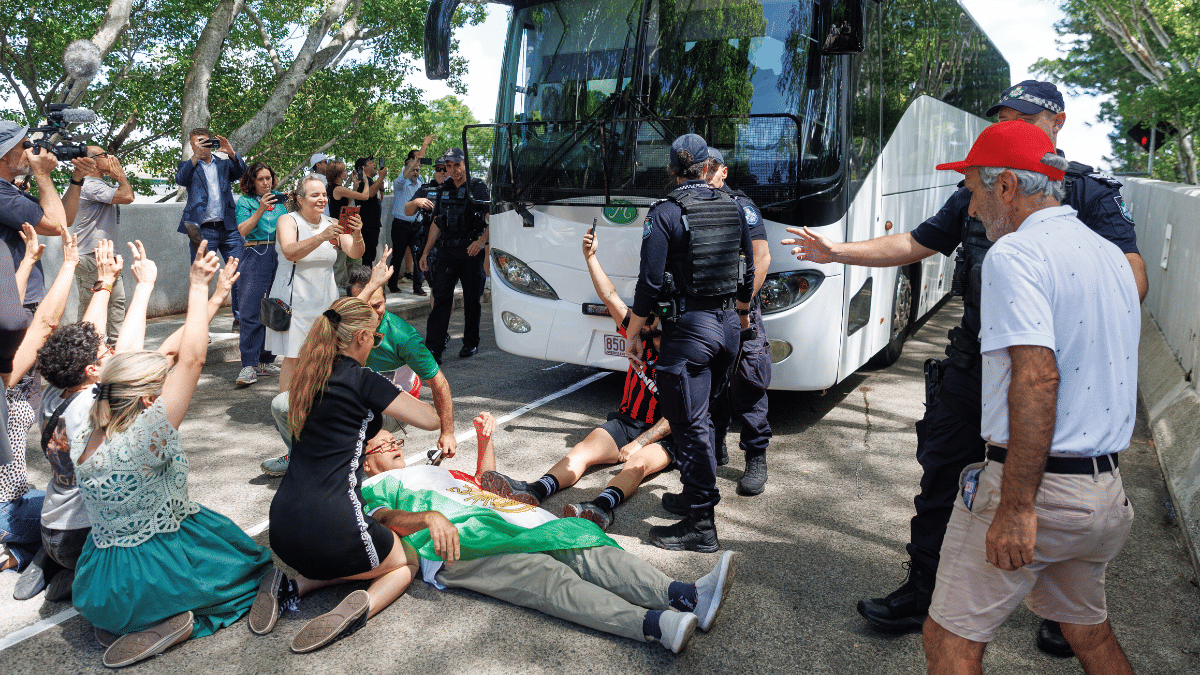
Five members of Iran women’s football team have been granted humanitarian visas in Australia amidst fears after the team declined to sing the national anthem before a match against South Korea last week.
Immigration Minister Tony Burke said the women “were moved to a safe location”, and said that other squad members had been told they are welcome to stay in the country.
“They want to be clear they are not political activists. They are athletes who want to be safe,” he said.
10.55 am: Iraq deploys troops to Iran border
Al Jazeera has reported that Iraq has deployed additional troops to its border with Iran to avoid Iran-affiliated Kurdish groups to move between the two countries.
“Firstly, it signals to Iran that Iraq is serious and does not want Iranian opposition groups launching operations into Iran. Secondly, it shows Iran that Iraq is serious about the 2023 security agreement. Under that agreement, Baghdad said it would clamp down on Iranian Kurdish opposition groups inside northern Iraq,” the report said.
10.50 am: Congress questions government
As parliamentary proceedings are set to begin for the day, Congress leaders are questioning why the government is unwilling to have a discussion on energy security amidst the Iran war.
“The shortage of cylinders is only the beginning of the effects of the war between US-Israel and Iran. The government should have taken preventive measures or made alternative arrangements. What is the govt’s plan of action,” asked Congress MP Mallu Ravi.
Ravi said External Affairs Minister S Jaishankar Monday made a statement, but there was no discussion on the issue. “The functioning of Parliament is stalled, and the government is not allowing the Opposition to raise issues concerning the public,” he said.
Also Read: A quick end to Iran war is in India’s interest. But Modi has no influence over US or Israel
10.25 am: Rupee & markets recover
Sensex rose 809.57 points to 78,375.73 in opening trade Tuesday while Nifty climbed 252.75 points to 24,280.80. Foreign institutional investors sold equities worth Rs 6,345.57 crore on a net basis on Monday, according to exchange data.
Rupee rebounded from its all-time low in early trade Tuesday, rising 7 paise to 92.14 as global oil prices fell after US President Donald Trump said the war with Iran may end soon.
A weaker greenback and a strong opening at the domestic equity markets supported the local unit while heavy FII outflows capped sharp gains, forex traders said.
At the interbank foreign exchange, the rupee opened at 91.92 but fell to 92.14, still up 7 paise from its previous close.
The rupee crashed to its all-time closing low of 92.21 against the US dollar Monday, losing 39 paise during the session.
10.15 am: Iran says ‘no room for diplomacy’
In a CNN interview, a top Iranian official said Tehran is prepared for a long war and signaled it is willing to continue attacking the Gulf countries.
9.30 am: India tells oil refiners to boost production
The Union Ministry of Petroleum and Natural Gas tweeted on Tuesday morning that it has asked refineries in the country to scale up LPG production. It has also introduced a 25-day booking period for LPG supply to avoid potential hoarding and illegal sales.
The full statement:
“In light of current geopolitical disruptions to fuel supply and constraints on supply of LPG, Ministry has issued orders to oil refineries for higher LPG production and using such extra production for domestic LPG use.
The ministry has prioritised domestic LPG supply to households and introduced 25 day inter- booking period to avoid hoarding/black marketing. Non domestic supplies from imported LPG is being prioritised to essential non domestic sectors such as hospitals and educational institutions.
For LPG supply to other non-domestic sectors, a committee of three EDs of OMCs have been constituted to review the representations for LPG supply to restaurants/hotels/other industries.”
9.00 am: The oil rebound
Brent crude futures jumped about 7 percent to settle at their highest price since 2022 after soaring by as much as 29 percent during Monday’s session, as Saudi Arabia and other OPEC members cut supplies. But prices fell in post-settlement trade.
The war has effectively shut the Strait of Hormuz, a chokepoint for global oil and liquefied natural gas transport, leaving tankers unable to sail for more than a week and forcing producers to halt pumping as storage fills.
Trump spoke with Russian President Vladimir Putin and later said the US will waive oil-related sanctions on “some countries” to ease the shortage. According to multiple sources quoted by Reuters, that could mean a further easing of sanctions on Russian oil, which could complicate efforts to punish Moscow for its war in Ukraine. Other options include a possible release of oil from strategic reserves or restricting US exports, sources said.
8.30 am: Trump’s vague statements on end of war, IRGC reaction
On Monday (local time), the US President made a 35-minute appearance at his resort in Miami, and claimed that America has destroyed Iran’s military. After saying the war was “very complete, pretty much” to a reporter in a phone call, he then evaded a reporter’s question about on when the war could wrap up. “Very soon,” he said.
Asked about US Defence Secretary Pete Hegseth saying the conflict was “just the beginning”, Trump said: “I think you could say both… It’s the beginning of building a new country.”
But Trump also warned that US attacks could rise sharply if Iran sought to block tanker traffic through the Strait of Hormuz, which handles one-fifth of the world’s oil supply.
“We will hit them so hard that it will not be possible for them or anybody else helping them to ever recover that section of the world,” Trump said at the news conference.
“If Iran does anything that stops the flow of Oil within the Strait of Hormuz, they will be hit by the United States of America TWENTY TIMES HARDER than they have been hit thus far,” Trump said in a post on his social media platform Truth Social.
“Additionally, we will take out easily destroyable targets that will make it virtually impossible for Iran to ever be built back, as a Nation, again — Death, Fire, and Fury will reign upon them — But I hope, and pray, that it does not happen!” he said.
In response, Iran’s Revolutionary Guards said it would not allow “one litre of oil” to leave the region if attacks from the US and Israel continue.
“It is we who will determine the end of the war… The equations and future status of the region are now in the hands of our armed forces; American forces will not end the war,” it said.
COMMENTS