







Taipei: Nvidia’s AI superchip RTX Spark, Intel’s Arc G-series processors, Dell’s XPS 13, and SK hynix’s HBM4E, or seventh-generation high-bandwidth memory, may well be some of the showstoppers at COMPUTEX 2026 in Taipei.
But one of the world’s leading technology trade shows, which ran from 1 to 5 June and featured 1,500 exhibitors from around the world, is not just about companies launching and showcasing their next-gen hardware.
Rubbing shoulders across the three massive exhibition halls in the city were many small, not-so-famous companies—several of them home-grown—displaying a range of equally eye-catching innovations.
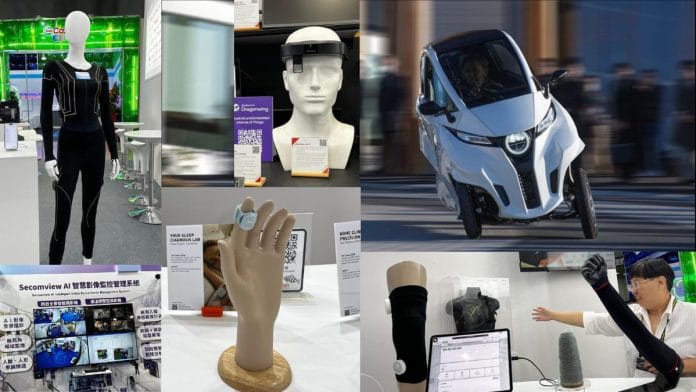
The innovations included smart clothing that monitors heart rate and muscle movement, sensors tracking sleep patterns, and ultra-compact urban electric vehicles. Apart from this, AI voice recognition and video management systems for crime detection, smart building management systems, AI-driven digital dartboards and an electronic chess set also drew crowds, including Nvidia CEO Jensen Huang.
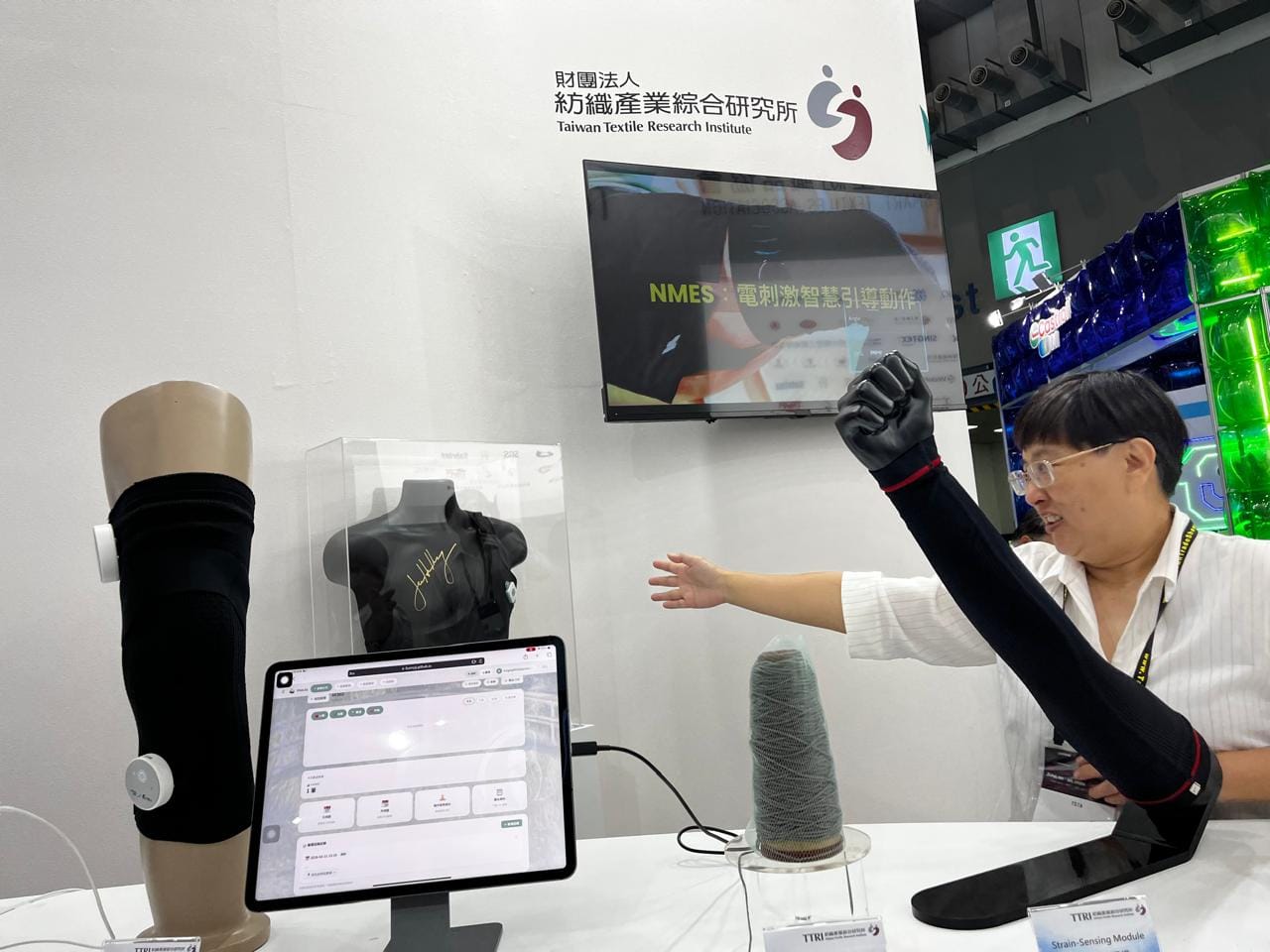
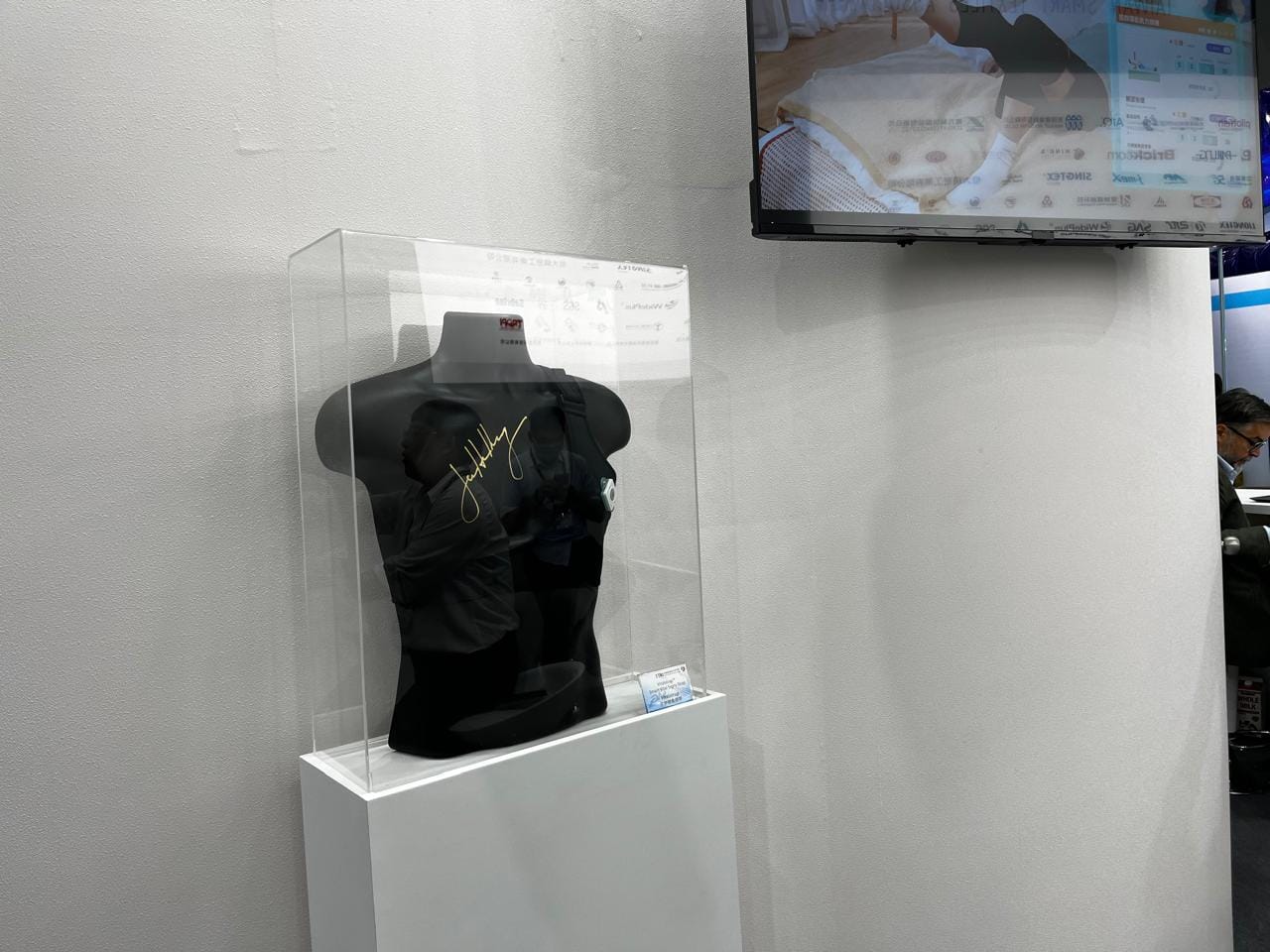
Huang, who enjoys rockstar status in Taiwan, autographed a mannequin wearing gym gear embedded with a strain-sensing module to monitor muscle movement at the Taiwan Textile Research Institute (TTRI) booth inside the Smart Mobility and Drone Tech pavilion at Nangang Exhibition Centre.
Also Read: Can AI write and edit? Delhi conclave examines its growing role in publishing
Smart clothing to detect heart rate, muscle movement
On display at the booth was smart strain-sensing yarn to detect muscle movement during exercise.
“We mix the wires inside the textiles and use this to detect the movement of the body. The wire can be put inside gym gear to detect arm movement. It can be used while exercising. Once connected to the app, it will tell you if your movements are correct. The hardware will connect to the software,” a TTRI representative, who did not want to give her name, told ThePrint.
The device reduces the risk of injury while exercising.
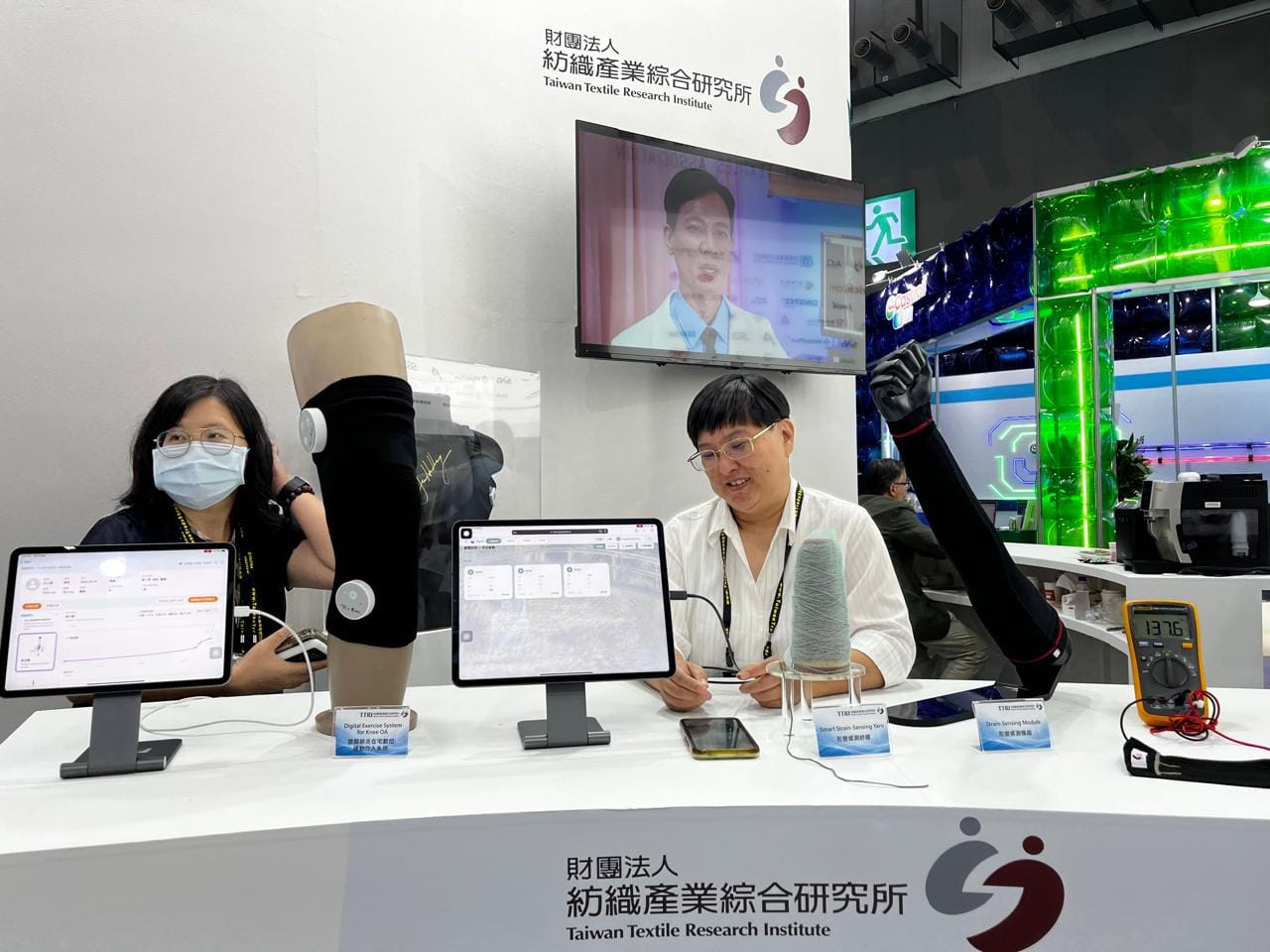
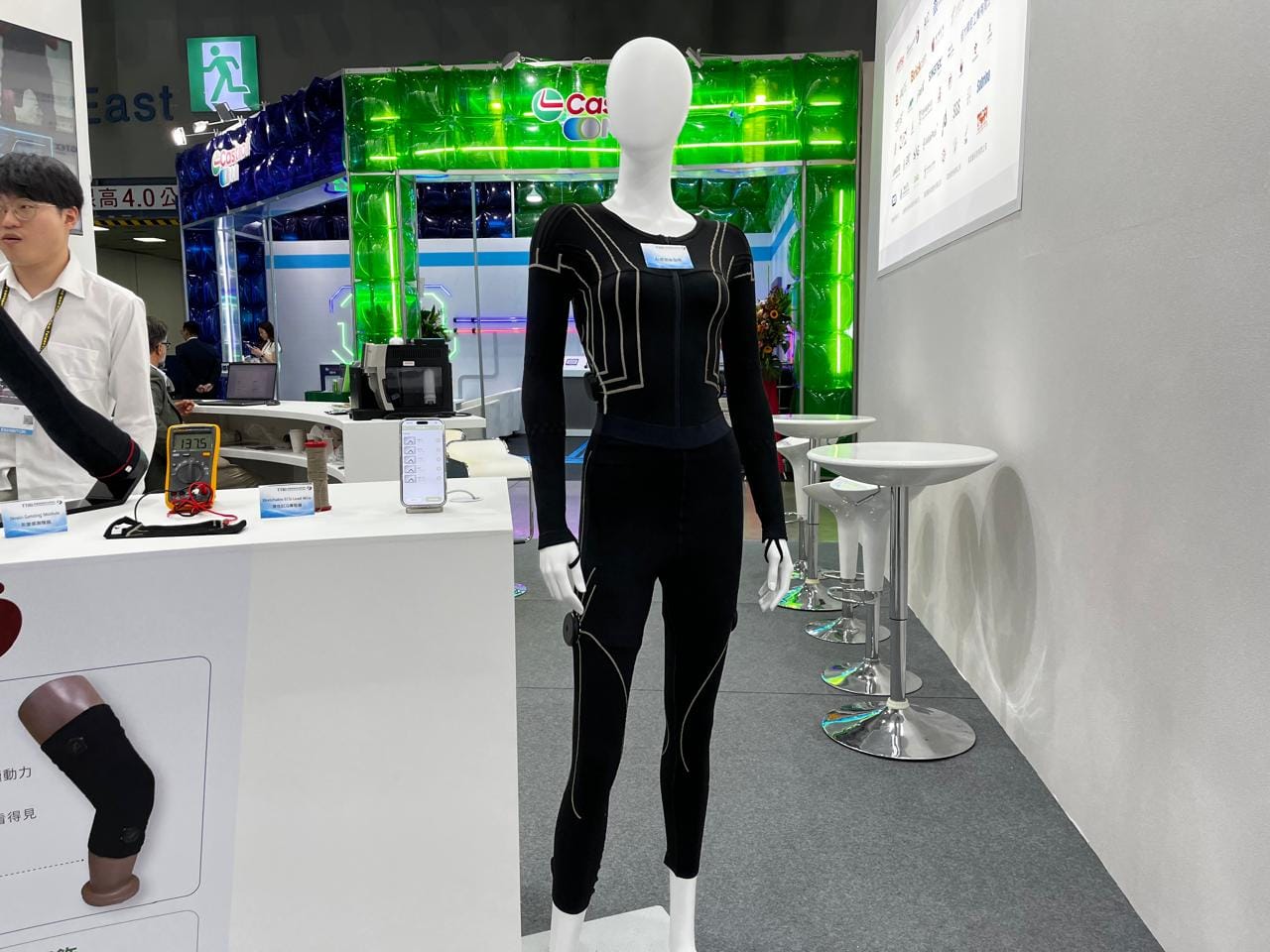
TTRI, a not-for-profit Original Design Manufacturing (ODM) service, which is supported by Taiwan’s Ministry of Economic Affairs does not market the product. “We just design the technology based on the requirements of our clients, who can then brand and sell it.”
AiQ, another Taiwanese ODM smart clothing company, is exhibiting three-lead ECG clothing that records real-time ECG data and tracks heart signals with three leads.
“Through the app, users can see real-time heart data, get alerts, and download reports. It can tell a person if his/her heart rate is going up. It monitors the heart rate and can also tell you if you have heart disease,” Min Li, director, AiQ sales department, told ThePrint.
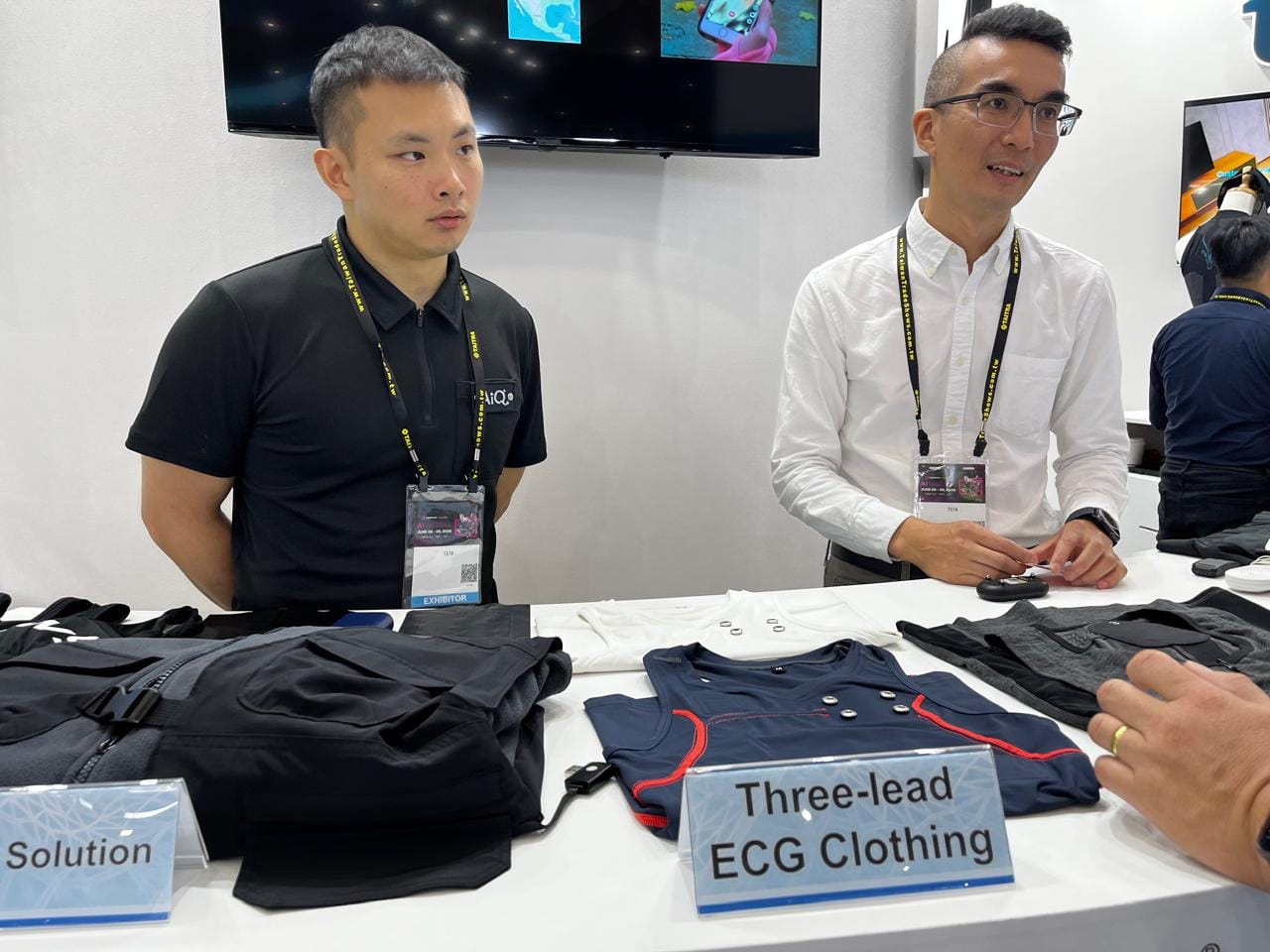
Explaining the functions of the smart clothing, Li said AiQ integrates cutting-edge technology with textile craftsmanship to offer a comprehensive range of services including bio-monitoring, motion capture and textile cables.
For instance, the EMS Stim Suit controls many muscle groups. “We have 3, 6 and 12-channel options to fit different users. EMS solutions could wake up your muscles, improve your performance and relax your muscles. You can place the electrodes in different body areas.”
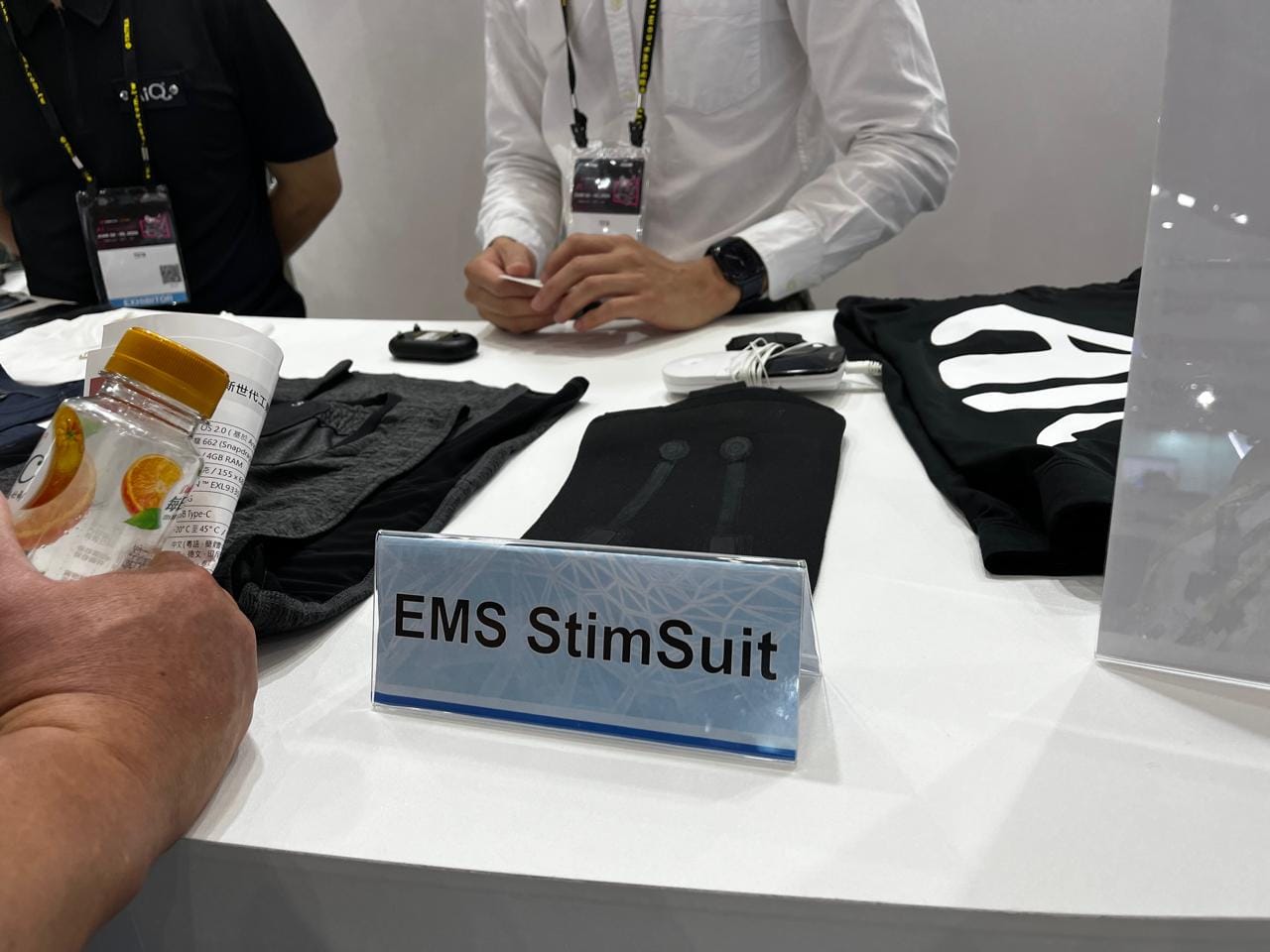
The cost of this smart clothing varies from NT 3,000 to NT 5,000 (Taiwanese dollar).
AiQ also does not sell its products directly to end customers. “We sell to companies, who use their own brand. You can get our products on Amazon under different company names.”
Zenthan Technology, another home-grown company, is also showcasing its sensor-equipped items for human use like heart rate monitors.
Founded in 1992, the ODM company develops heart rate monitoring and sports technology solutions for leading fitness and health brands. Their core technologies include heart rate, motion sensing, electromyography (EMG) sensing and bicycle power meters, said Erica Yen, the company’s sales executive.
AI-enabled device to monitor sleep and chessboard set
Nordic design and innovation consultancy company Pilotfish has showcased some of the smart wearables it has designed, including an ultra-light sleep-monitoring fingertip device.
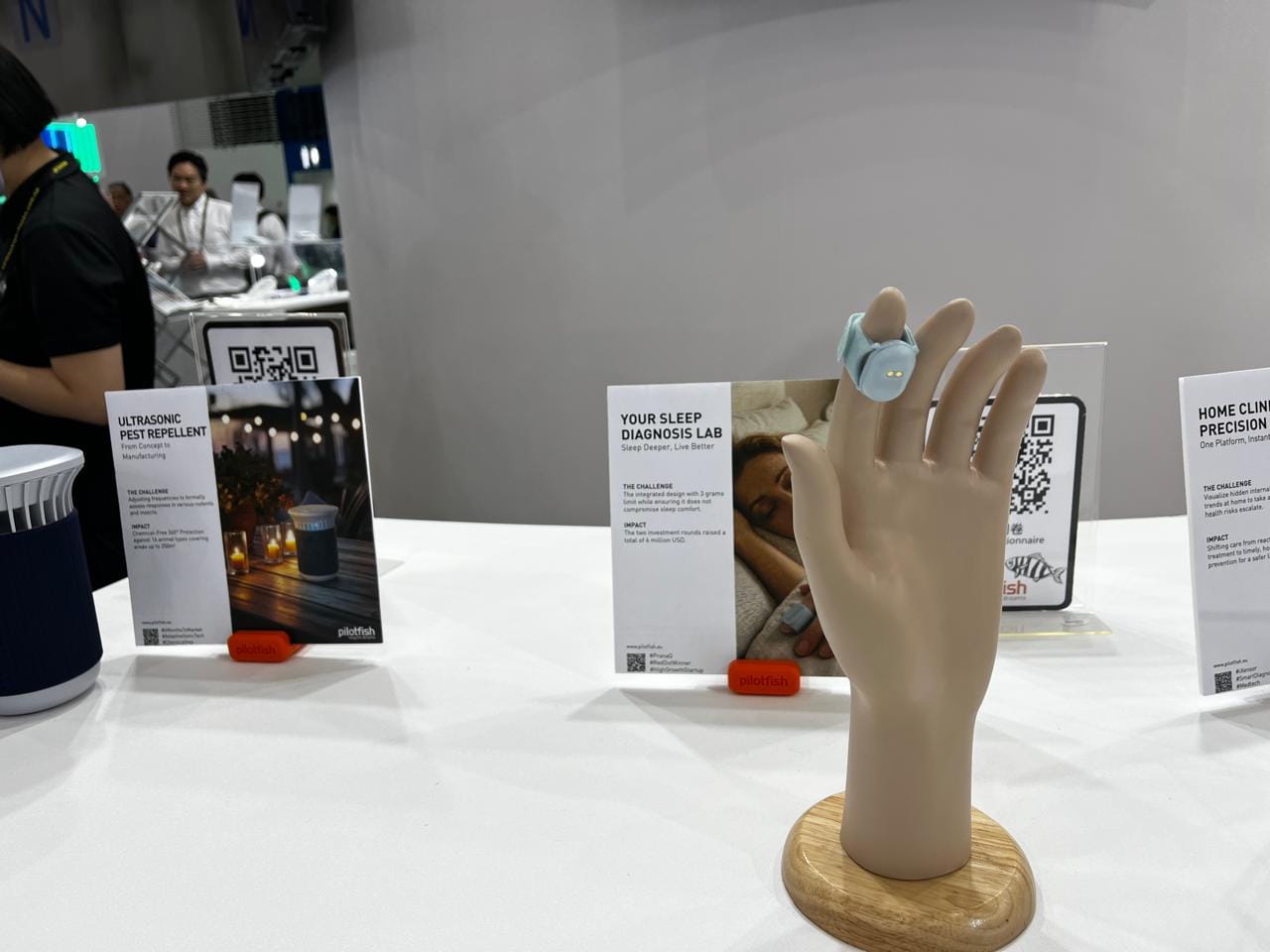
The device uses sensors and AI-powered data analysis to identify sleep apnea and other sleep-related disorders at home.
“One does not have to go to a hospital to get accurate sleep data collected. The challenge was to integrate design with a three-gram limit while ensuring it does not compromise sleep comfort,” Marc Nagel, Pilotfish managing director, told ThePrint.
Nagel said that Pilotfish develops products for clients based on their requirements. “We deliver it to them, and the client can then market it. We either customise or develop from scratch,” he said, adding that they use AI to support their processes.
The wearable fingertip device called TipTraQ was developed by Pilotfish for their client PranaQ. The cost of the device in the US is $200.
The company, which has a big facility in Taiwan, also develops medical devices based on the requirements of their clients. One such device detects cholesterol.
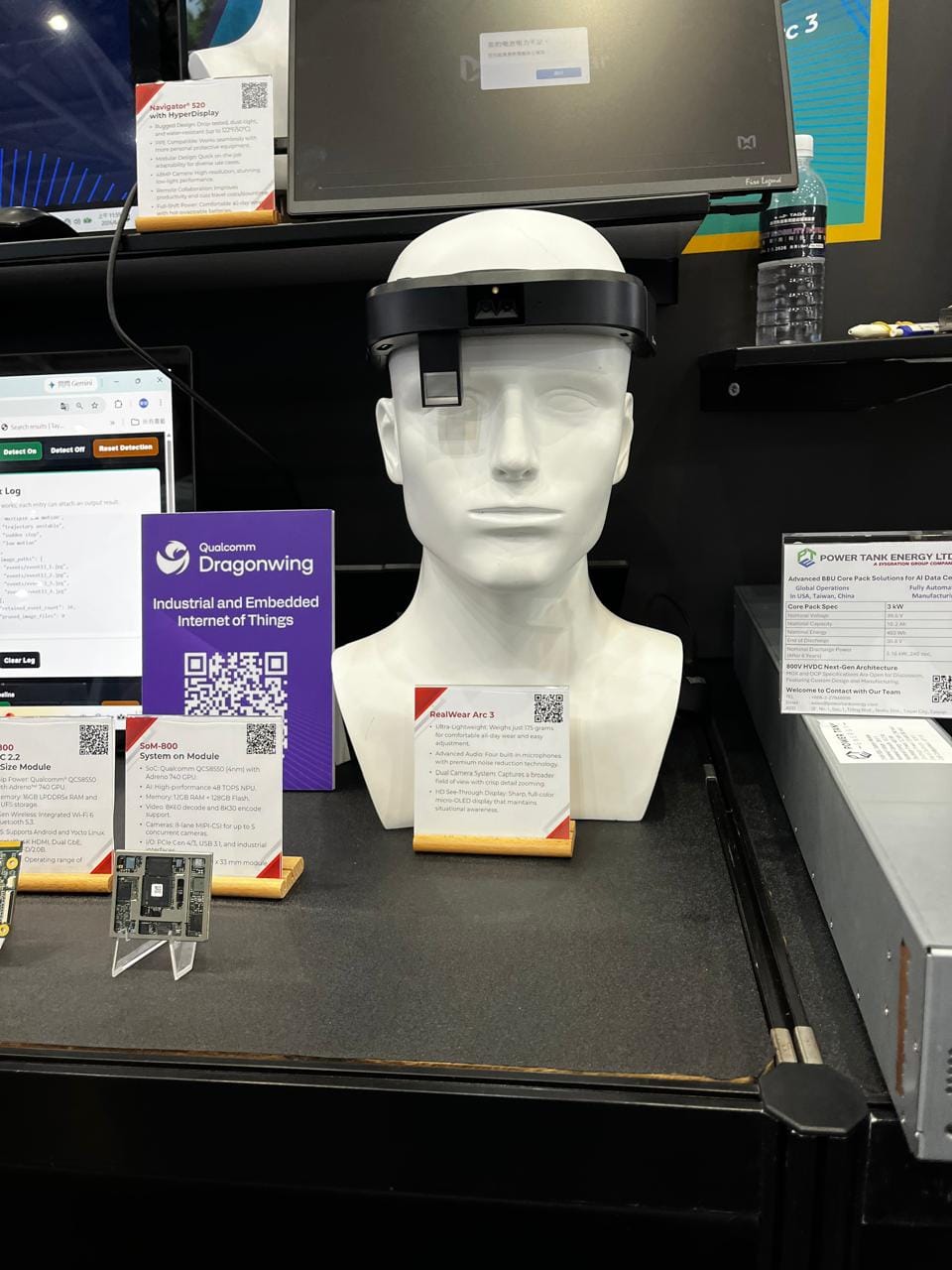
Another leading home-grown ODM and OEM (Original Equipment Manufacturing) company, Sysgration’s stall also drew crowds to its counter showcasing a head-mount device or smart glass developed by it.
Called RealWear Arc3, the 175-gram voice-controlled, assisted reality headset allows frontline workers, especially in the construction industry, to access instant information about their surroundings while keeping their hands free.
“It’s comfortable all-day wear with four built-in microphones with premium noise reduction, high-definition, see-through technology, sharp, full-colour micro-OLED display that maintains situational awareness,” Tony Wang, senior product manager, automotive and mobile division, Sysgration, told ThePrint.
The Taiwanese company is a leading provider of AI, edge computing and unmanned vehicle solutions. “We source the chip from companies like Qualcomm and offer design and manufacturing capabilities to our clients,” he said.
For those looking for heavy-duty mind sport, Hong Kong-based Chessnut had just the right product on display—AI-equipped smart chess sets and digital dartboards.
Smart security for houses, crime detection
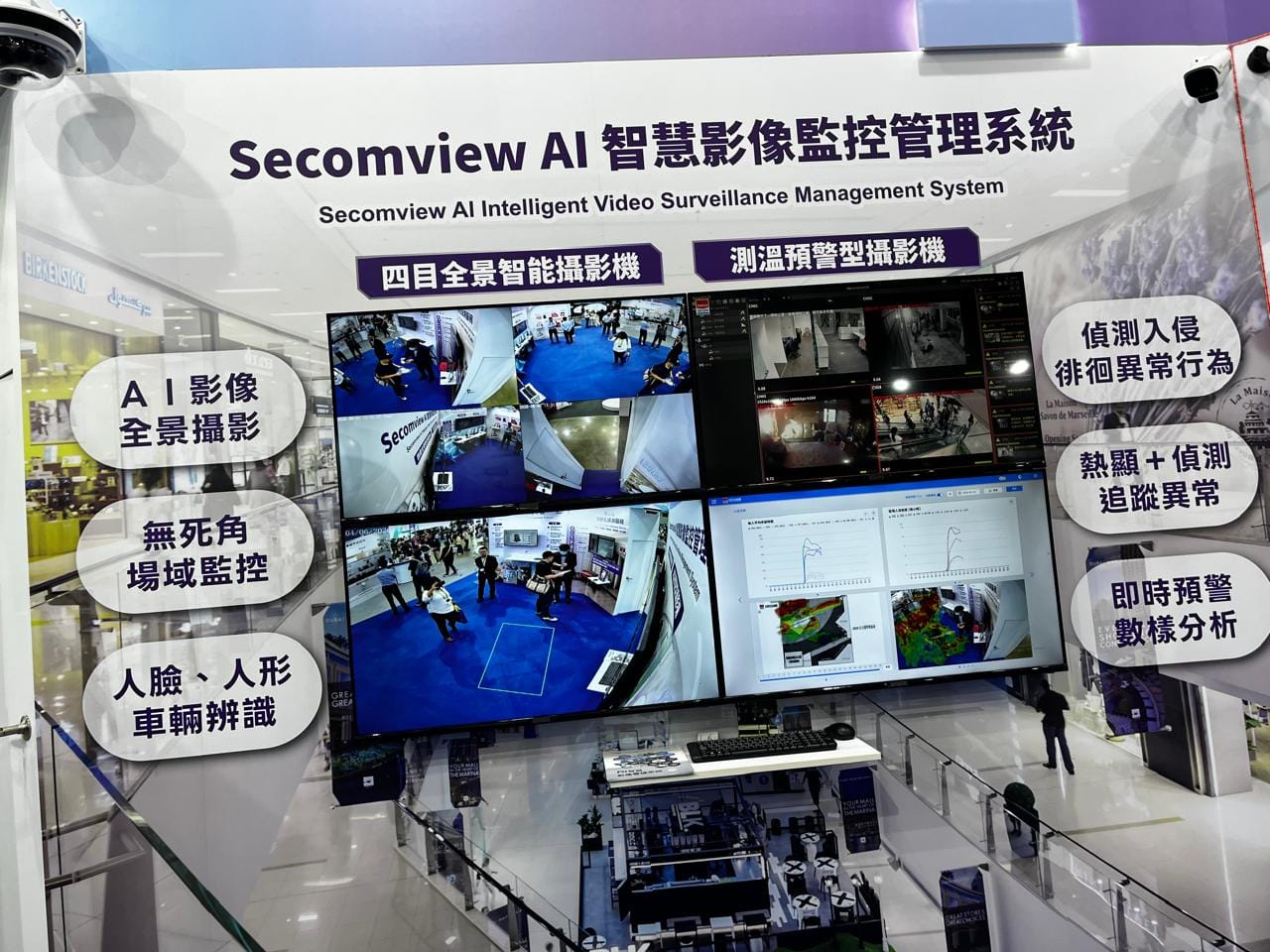
From detecting small electrical faults or fires in your apartment to helping detect crime, Secom Group, one of Taiwan’s biggest security companies, showcased 24×7 real-time smart building management solutions at its stall.
The AI-intelligent video surveillance management system, for instance, can help in swift crime detection.
“If a crime has been committed in your building. You just key in the keywords or use your voice and say, ‘I want to search for somebody who carries a green backpack at 1 pm’, and the computer will match the search for you,” said a Secom marketing executive, who did not want to give her name.
The company, she said, incorporates smart things into the platform and delivers the final product to the market. “We mainly serve customers from Taiwan,” she said.
Lean3, the ultra-light EV
Another hit at COMPUTEX was Lean Mobility’s single-seat, ultra-compact, urban electric vehicle Lean3.
The Taiwan-Japan electric vehicle start-up founded in 2022 by former Toyota chief engineer Akihiro Yanaka displayed its three-wheel setup, designed as a cabin-equipped scooter. It uses an 8.1 kWh lithium-iron phosphate battery and can be driven at a maximum speed of 80 km per hour and a range of up to 100 km.

The EV, classified as a scooter, needs a standard passenger car license. It will be ready for the market by end of 2026.
The reporter is in Taipei at the invitation of the Taiwan External Trade Development Council, organisers of COMPUTEX 2026.
(Edited by Sugita Katyal)
Also Read: Law professors prefer AI over colleagues’ answers 75% of the time, says Stanford study