





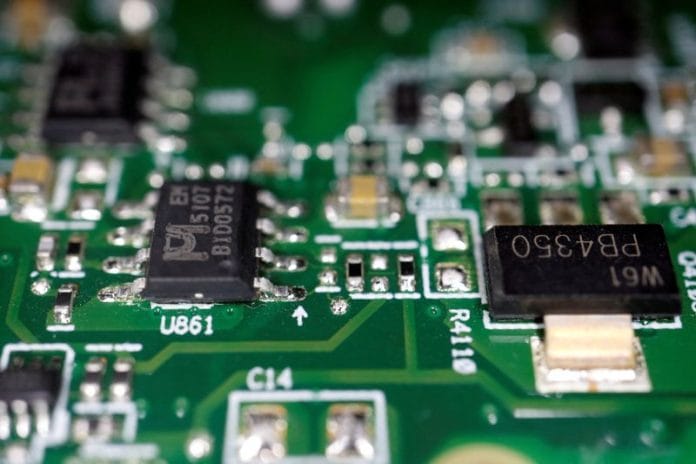

New Delhi: NVIDIA, the global leader in chipmaking, has now given AI labs across the US a new toy—the Vera CPU.
So far, CPUs have been designed for general computing tasks like browsing through websites, making spreadsheets, and running operating systems. But Vera is the first of its kind, designed specially for ‘agentic AI’, the kind of AI systems that can independently reason, make decisions, use tools, and summon and analyse data when required.
“Vera nice, vera nice,” wrote Elon Musk on X, in his characteristic humour, when the Vera CPU made its way to the SpaceX lab.
However, Musk isn’t the only one to get his hands on NVIDIA’s new experiment.
On Friday, NVIDIA’s CPUs were taken to three of the world’s leading AI labs—Anthropic in San Francisco, OpenAI in Mission Bay, SpaceXAI in Palo Alto and then Oracle Cloud Infrastructure in Santa Clara on Monday. The CPUs were hand-delivered by NVIDIA’s Vice President of Hyperscale and High-Performance Computing, Ian Buck.
While the common man’s understanding of AI is limited to chatbots, the next generations of AI are being built to work independently, to plan, reason, and act without human intervention. To do so, AI needs the hardware to keep up with. This is where Vera steps in.
New age CPU
To understand the relationship between a CPU (Central Processing Unit) and a GPU (Graphics Processing Unit), think of an orchestra. The CPU’s task is predominantly organisational, like the conductor of an orchestra—it moves data, it manages a computer’s memory, and it coordinates the tasks of the software. Meanwhile, the GPU is capable of doing complex and massive calculations quickly, as many musicians playing together at once.
However, modern AI systems perform tasks that are far more complex than computers usually did. They run code, they search databases, they summon tools, and they coordinate tasks. In such a scenario, GPUs cannot function to their full potential if their corresponding CPUs cannot feed them the data or manage their tasks properly.
Here is where NVIDIA hopes Vera will be different. One of its main advantages is that it can shuttle data extremely fast between the memory and the processor. This is important because AI data centres need to constantly refer back to the memory for data while simultaneously generating responses. In such systems, GPUs are usually designed to be fast, but if the CPU cannot feed them data quickly, then bottlenecks are formed, slowing down the entire computational process. Vera is designed to make sure GPUs can stay busy, increasing the overall efficiency of the tasks the AI agent is trying to perform.
“As the host CPU in accelerated systems, Vera pairs seamlessly with NVIDIA GPUs—directing data movement, managing memory, and orchestrating system control to keep AI pipelines running at full speed,” NVIDIA explained on its website.
“We’ve now arrived at the era of useful AI, which is the reason why demand is going parabolic, utterly parabolic. What took months now takes weeks. What took weeks now takes days. And what takes days now takes hours. It’s a big deal in productivity, but a gigantic leap in computation requirements,” said Jensen Huang, the CEO of NVIDIA, in a company statement.
(Edited by Ratan Priya)