



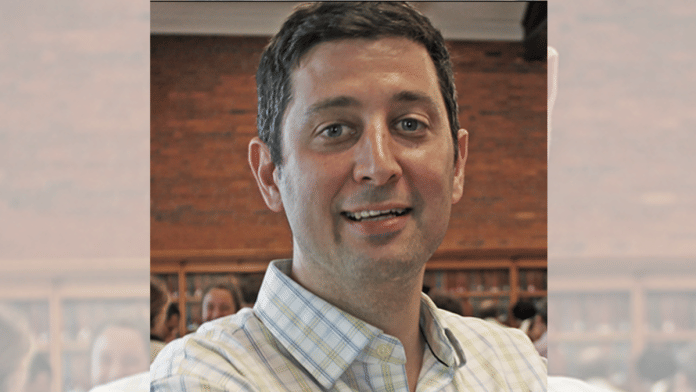
New Delhi: A Harvard University physicist, who used Anthropic’s Artificial Intelligence model Claude to produce 36 scientific manuscripts in three months, is unsure of how to prepare the next generation of scientists, as skills once considered essential can now be handed to AI.
“I still don’t know how to train graduate students,” wrote Matthew Schwartz, a professor of theoretical physics. He said that two years ago he would have recommended a course in Python programming for engineers as essential. Today, he said, it is unnecessary. Even learning how neural networks work is of limited use, since Claude can find and build the latest machine learning methods on its own.
Schwartz also questioned how research is funded, arguing why a scientist would apply for three years of grant money to compute a problem that an AI model might solve overnight.
He called for humans to be given credit for the conceptual work behind AI-assisted research. He warned that AI could upend the usual pattern in science, where the person at the top takes the credit and those doing the work receive little. The question of credit, he wrote, “won’t be resolved by pretending the human contribution was the typing”.
Schwartz made the remarks in a guest post on Anthropic’s website on 1 October, describing work across 18 fields with 19 human co-authors. The projects were chosen from about 400 candidate problems in ecology, genetics, economics, linguistics, earth science and cosmology.
Among the results, the team solved what Schwartz calls Watson’s “final problem”, the last of a set of calculations mathematician George Watson began in 1939.
It solved an equation in ecology that had gone unsolved at scale for 20 years, and analysed 5.7 billion pairs of human gene mutations to find evidence of a process most genetic studies ignore. It also checked the replication files of 4,452 economics papers from five journals and built a database of word stress covering 6,072 languages. Schwartz said several results are still being verified.
He released the software behind the work as BootLoops, an open-source toolkit that its repository says was written by Claude under his supervision. Schwartz says it can be run with Claude, Gemini or ChatGPT.
The announcement comes amid a race among AI companies to show their models can do original research. In May, OpenAI said its model had resolved the unit distance conjecture, a mathematics problem posed in 1946.
Four months on, OpenAI said its AI agents had shown that the Navier-Stokes equations, which describe fluid flow, can break down, a result tied to one of the $1 million Millennium Prize problems that has drawn debate among mathematicians. Google DeepMind teams have reported solving open problems posed by mathematician Paul Erdős.
Schwartz said such breakthroughs have mostly come in mathematics, where a problem can be stated fully and an answer checked absolutely, and that most science does not work that way. His approach was to stop treating Claude as a human scientist and look for what he calls “Claude-shaped” problems, those that need coding, mathematics and the ability to read papers and data at speed, rather than deep conceptual thinking.
This is Schwartz’s second such experiment. In March, he described using an earlier model, Claude Opus 4.5, to complete a quantum field theory paper in two weeks, work that typically takes a year. He then rated the model at the level of a second-year graduate student.
For the new project, he used Claude Fable 5, released this summer. Claude reproduced the results of one of his papers in about 20 minutes, work that had taken him weeks, and then computed 30 complex integrals used in particle physics, 15 of which had never been calculated.
Claude then began spotting the same equations in other fields. In ecology, it solved an equation proposed in 2005 to test whether the mix of species in a forest is driven by chance. Using data from Barro Colorado Island in Panama, the team found that tree species change 4.5 times faster than the theory allows.
But Schwartz said such findings were often technically correct but of little interest to scientists in those fields.
Plant biologist James O’Dwyer told him ecologists would likely shrug at the forest result, since the theory’s limits were already known. O’Dwyer proposed a new direction, and together they built a model of how tree species live, grow and reproduce. In genetics, Harvard biologist Michael Desai redirected the work towards pairs of mutations on a single chromosome, which led to the gene conversion finding.
Schwartz also listed the model’s failings. Claude often declared tasks finished when they were not, once describing a proof as complete except for one unproven step that turned out to be the whole proof. It could not estimate how long tasks would take, and would grind through calculations for days instead of building tools to finish them in minutes.
He said AI would speed up science but not replace the scientific method, since progress still depends on collecting and checking real-world data.
(Edited by Nardeep Singh Dahiya)
Also Read: Scholars are using AI for research work, but worry about ‘AI shame’, says new study