







New Delhi: Mexican President Claudia Sheinbaum said Monday that the country has no issue hosting Iran’s World Cup team after its training base for the 2026 FIFA World Cup was shifted from the US to Mexico. The tournament is scheduled to run from June 11 to July 19.
Iran will continue to play its group-stage matches in the United States as planned but its base has been moved to Tijuana, Mexico.
The development comes against the backdrop of the US and Israeli military campaign against Iran, which began on 28 February. Before tensions escalated, Iran’s team had reportedly planned to set up its base in Tucson, Arizona. However, the fallout prompted the Iranian football federation to shift its base camp to Mexico.
“Our request to change our base camp to Mexico has been confirmed by FIFA. With this move, we will avoid visa issues and several other complications to a good extent,” Iranian football federation president Mehdi Taj said Sunday.
FIFA officially confirmed the move Tuesday while releasing the list of all 48 base camp sites across the United States, Canada and Mexico.
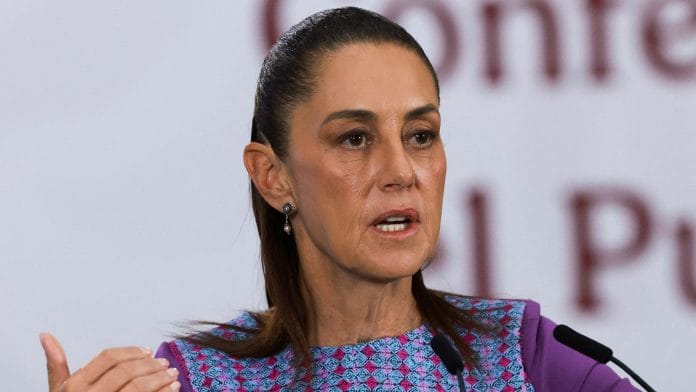
“The United States doesn’t want the Iranian team to stay overnight in the US. They asked us if they could stay overnight in Mexico, and we said yes. We have no problem with that,” Sheinbaum said during a press conference Monday.
While accommodation and facility details are yet to be announced, Sheinbaum said the Mexican government is working with FIFA to finalise the remaining arrangements before the tournament begins.
The FIFA World Cup 2026 is intensifying an already ongoing political face-off between Sheinbaum and US President Donald Trump.
At first glance, Mexico’s decision to host the Iranian team may appear to be a routine gesture of cooperation between co-host nations. However, analysts argue that the move also carries diplomatic significance in the context of strained US-Mexico relations.
Trade disputes, immigration tensions and rising nationalist rhetoric are expected to complicate coordination between the World Cup co-hosts, particularly between the Trump administration and anti-Trump political voices in Canada and Mexico.
The 2026 FIFA World Cup is rapidly transforming from a sporting event into a volatile political arena wherein the traditional debates, where conversations around visa disputes, diplomacy and geopolitical tensions are beginning to overshadow traditional football rivalries such as Messi vs Mbappé and Brazil vs Argentina.
Nishtha Modgil is an alum of ThePrint School of Journalism, currently interning with ThePrint.
(Edited by Harini TS)