


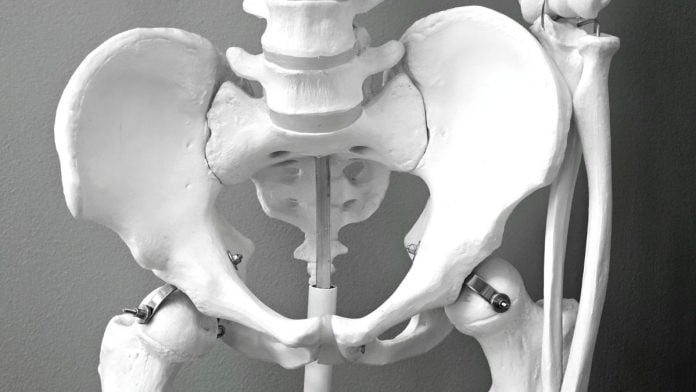
New Delhi: Spanish researchers have developed a new type of stem-cell treatment that could reduce bone loss that often leads to osteoporosis, a condition that makes your bones brittle, porous and easy to break. When they tried it out on patients, it reduced the number of fractures per year by nearly 94 per cent.
The study, published in Cell, focused on mesenchymal stem cells (MSC), the cells that eventually go on to become osteoblasts — the cells responsible for producing and repairing bones. Scientists harvested these MSCs from a patient’s bone marrow and grew them in the laboratory.
The technique usually meets hurdles when these stem cells are injected into the patient’s blood stream, because very few of them actually reach the bone marrow. To avoid this pitfall, scientists coated the stem cells with a special sugar molecule that helped them navigate the body and travel towards the bone marrow. This method had been tried in mice earlier and was proven to be successful. This is the first time it has been tried in human beings.
“It’s quite remarkable. The trial showed an almost 100 percent efficacy sustained for several years – and no side effects,” Ajit Varki, a physician and scientist at the University of California, San Diego, told Nature.
Also read: Vaccines during pregnancy may lower risk of premature birth, Australian study finds
Brittle bones
Osteoporosis is a common disease that turns bones weak, thin, and porous. Patients lose bone mass and face the risk of fractures even from a small bump, a minor fall, or even coughing and bending suddenly.
The first in-human trial included 10 women over the age of 50 who had developed advanced osteoporosis. First their MSC cells were harvested and then engineered in the laboratory and infused back into their body.
Scientists monitored the women over two years and found that the number of fractures they suffered fell from nearly eight per year to 0.5 per year, a 94 per cent reduction. When researchers conducted bone-biopsies of the patients they found that the area covered by the bone tissue had also increased.
“The efficacy signal was completely unanticipated. Our major concern was that we were going to see a marked increase in fractures . . . but we looked at all the data and—boom—that’s when we saw that there were no more fractures,” said co-author Robert Sackstein.