



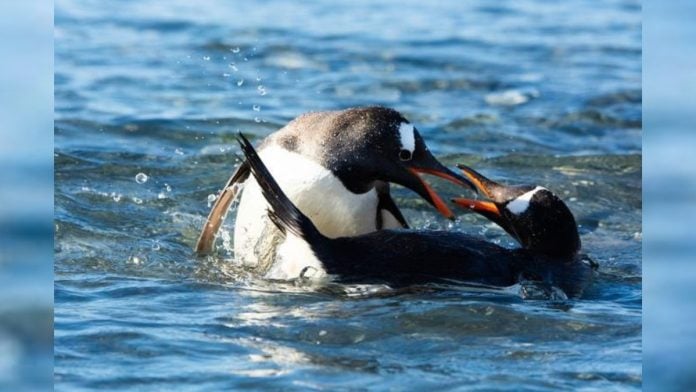
New Delhi: An international team of scientists have discovered a new penguin species for the first time in over a century. The Gentoo penguin might not be the most well known among Antarctica penguins but scientists are calling it a “cryptic species” because of the genetic differences that distinguish it from other penguins.
The findings, published in Communications Biology, proved that the Gentoo penguin, once considered a species spread across Antarctica isolated islands, is actually four different species. While three of these had already been identified earlier as sub-species of the Gentoo, scientists are urging their peers to now classify all four of them as full-fledged species of their own.
“In Antarctica, of course other species (of penguins) are threatened by climate change. But the gentoo is of most concern in the sub-Antarctic region. It’s very important that conservation institutions in all the different countries involved recognize and take appropriate action to save these three gentoo penguin species,” senior author Juliana Vianna, professor at a Chilean university, said in a statement.
The Gentoo is known to inhabit several islands north of Antarctica. These are governed by numerous countries including Chile, South Africa, France, the Netherlands, Australia, and even New Zealand. The newly discovered species are found on the Kerguelen Islands, also called the Desolation Islands by the French, located over 3,200 km away from any permanently inhabited land.
The newly recognised species, also called the southeastern Gentoo penguin or the Pygoscelis kerguelensis, was identified based on a new genomic analysis of the Gentoo penguin population. The team of researchers analysed genome sequences of 64 individuals across 10 breeding colonies spanning the entire geographical range of the Gentoo. It soon became apparent that an entire species had gone unnoticed.
Also read: Indian scientists spot hydrogen from 8 billion years ago. It could help decode dark energy
A unique species
The Gentoo, unlike other penguins that are pickier when it comes to their diet, are happy to eat whatever is available before them. This very habit is likely to lead to the creation of sub species because the Gentoo population would not migrate or travel much for food, and instead develop behavioural and ecological adaptations specific to their isolated islands.
The genomic analysis revealed that southern Gentoo in Antarctica had adapted to the extreme polar environments by having a larger number of genes linked to heat generation and storing fat. The eastern Gentoo adapted genes give it a better diving capacity and a more energy-efficient metabolism, suggesting that it might have had to survive long durations underwater where food was scarce.
“There’s probably no species of penguin where the taxonomy has been more debated than the gentoo penguin. For over 100 years it’s been controversial as to how many species or how many subspecies there are. What this paper does is try to address that question using cutting-edge integrative approaches,” co-author Rauri Bowie, a curator in UC Berkeley’s Museum of Vertebrate Zoology, said in a statement.
Although the penguin species now has a new name, much like its brethren, the southeastern Gentoo is also threatened by effects of global warming in the region. Bowie and Vianna have spent nearly a decade understanding the origins and diversity of penguins. As penguin populations migrated across Antarctica, they split off and began settling in different parts of the cold islands giving rise to separate species over time.
However, as climate change eats into penguin habitats, Vianna warns that the habitat loss, warming oceans, and exposure to other predators could make life harder for the Gentoo.
“In terms of climate change, island species that have really low population sizes could be compared with the sub-Antarctic gentoo penguins. Galapagos and other island penguin species, because they’re endemic to these islands, will find no place to go after a change in their environment. Those islands are very isolated, and these penguins cannot adapt easily to colonize any other region,” Vianna added.