


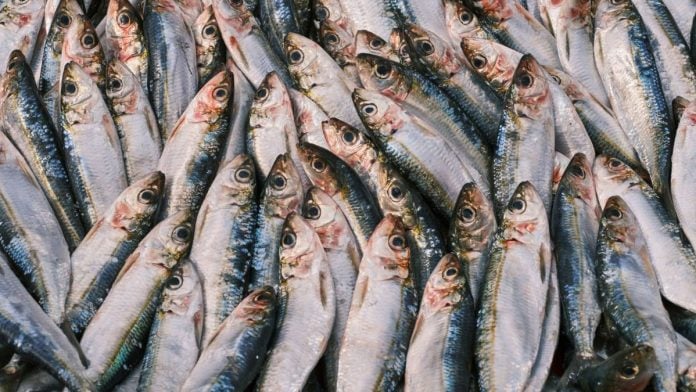
New Delhi: As the El Niño strengthens and threatens to alter ocean temperatures and fish habitat, there are two fish in particular that are likely to be affected more than others — Indian oil sardine and the Indian mackerel.
According to an Indian National Centre for Ocean Information Services (INCOIS) report, the warming oceans could also reduce the average size of these two commercially important fish.
“Marine heatwave conditions are already widespread across the Northern Indian Ocean, with moderate-to-extreme marine heatwaves observed over substantial portions of both the Arabian Sea and Bay of Bengal,” read the report.
According to Nature, during the 2015 El Niño too, the catch of sardines that season had fallen by 82 per cent compared to 2012. The impact of the El Niño on sardines is not directly linked to warming oceans. Instead the El Niño changes the habitat and food supply of the fish, impacting them indirectly.
Also read: Climate change is redrawing Japan’s forest map. Heat-adapted trees survive more now
A strengthening El Niño
The El Niño is a climate phenomenon that develops first in the central and eastern equatorial Pacific. It is characterised by warmer-than-usual sea surface temperatures and can weaken India’s summer monsoon and affect temperatures and marine ecosystems across the Indian Ocean.
“Probability of ENSO phases shows El Niño as the dominant phase from August 2026 through March 2027, with probabilities ranging from 80-98 per cent, followed by ENSO-neutral conditions as the second most likely phase with probabilities of 5-20 per cent, while La Niña remains the least probable phase with probabilities of less than 2 per cent,” the report added.
The impact on catches, especially sardines, is not visible during a strong El Niño, instead they become more apparent only a few months later. During the next monsoon or breeding season, fishermen often realise that the lack of enough nutrients has taken a toll on sardine populations. While some scientists have noticed a decline in sardines, others have also seen large schools of sardines gathering closer to the shore where they are easier to catch.
Speaking to Nature, sardine fishermen have already begun reporting smaller catches, and shorter fishing trips. As the El Niño grows worse these finishing communities may have to rely more on other varieties of fish, or seaweed farming until the El Niño and its effects pass.