





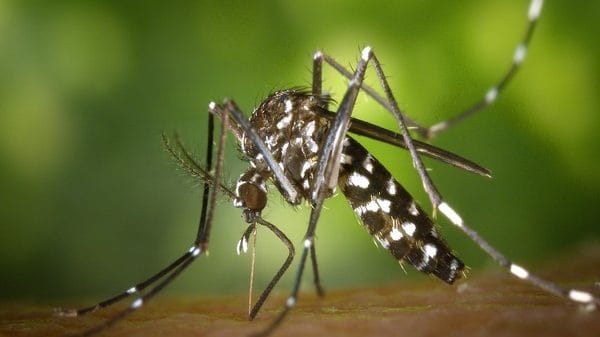


New Delhi: As climate change warms the Earth, malaria may have finally found its way even to hills where it was once too cold for mosquitoes to survive.
The study titled ‘Seasonal bionomics of Anopheles mosquitoes in the cold-western Himalayan region of Kangra, Himachal Pradesh, India’, published in Nature, found that mosquitoes have begun breeding in spring-fed pools, shaded streams, humid corners inside houses and cattle-sheds, and any other pockets of warmth they can find across the lower-lying Himalayas.
Researchers at the National Institute of Malaria Research (NIMR) and the Indian Council of Medical Research tracked the population of mosquitoes across 22 villages on the fringes of the Himalayas over the course of four years.
In Himachal Pradesh’s Kangra, known for its green valley and the Beas River, researchers found that indoor temperatures were about three degrees warmer than outside, and nearly eight per cent more humid. Initially, researchers found several mosquito species, but none that could carry malaria. However, from 2017 to 2021, they found 10 to 13 species of Anopheles mosquitoes, known to be vectors of malaria, in the region.
“The conditions have changed. Temperature and relative humidity have been on the higher side in the last decade, and these species are finding favourable conditions,” Taru Singh from the Environmental Epidemiology Division at NIMR told Nature.
Also Read: Japan has a new type of heatwave. It’s moist, deadlier
What the mosquitoes revealed
Samples of adult mosquitoes were also collected from the region, which was then transported to the NIMR headquarters in Delhi. During their analysis, researchers identified the mosquitoes and tested to see what they had been feeding on.
The team highlighted that although several mosquitoes had begun to survive in the warmer temperatures in Kangra, the consequences were not immediately apparent. There were still no outbreaks, and an analysis of the mosquitoes’ diet revealed that they had been predominantly feeding on cattle.
If the mosquitoes are concentrated in cattle sheds, that would make it easier for any kind of intervention aiming to address them.
“Our findings suggest that climate change is more likely to intensify vector survival and post-monsoon transmission rather than extend the transmission season into early summer. These results provide ground-level evidence that malaria elimination in Himalayan foothill regions will depend on seasonally targeted, ecologically informed vector control strategies,” the study read.
Researchers also recommended interventions, such as cattle-based insecticidal measures, fogging, and indoor sprays of certain chemicals, which may not have any serious consequences on human health.
They now plan to study the emergence of mosquitoes in the areas along the Himalayan belt more systematically.
“We can’t ignore these fringe areas. They are potential disease zones,” Singh said.
(Edited by Insha Jalil Waziri)